Short answer
In homicide cleanup, cleaning removes blood, tissue, tracked residue and investigation materials, while disinfection applies a registered product for its full contact time to inactivate remaining pathogens. Because homicide scenes are often held for days, blood may be dried and widespread, so thorough cleaning must come first. Absorbent materials are usually removed, and keepsakes need individual assessment.
Removal vs treatment: the practical difference
Think of cleaning as removal and disinfection as treatment. Cleaning takes material away: blood, tissue, fingerprint powder, footprints, dust and debris. It uses detergents, water, brushes, scrapers and absorbent materials, and it leaves a surface free of the matter that was on it.
Disinfection happens after that. A technician applies a registered disinfectant to the cleaned surface and keeps it wet for the time printed on the label, so the chemical can inactivate microorganisms that cleaning did not carry away. Without prior cleaning, the disinfectant's performance is compromised. Without disinfection, some pathogens may remain.
At a homicide scene, both steps are necessary on every hard surface that had contact with blood or other potentially infectious materials. Neither one replaces the other, and a provider who describes only one is leaving out half the job.
A useful comparison is washing a cutting board after preparing raw meat. You scrub off the visible residue first, then sanitize. Skipping the scrub and pouring on a sanitizer would leave the residue behind, and with it much of the risk. Homicide cleanup follows the same logic on a larger and more serious scale, with products and procedures designed for bloodborne pathogens.
Why are homicide scenes often harder to clean?
Several features of homicide scenes make the cleaning step especially demanding. Investigations can hold a property for days, so by the time cleanup begins, blood has often dried and bonded to surfaces. Dried material takes more time and more careful technique to remove than fresh material, and aggressive scrubbing can damage finishes.
The affected area may also be larger than it looks. Responders, investigators and anyone else present may have walked through blood before the scene was secured, leaving tracked residue in hallways, on stairs and near doorways. Firearm incidents can leave contamination along the path of a projectile, including inside walls or furniture.
Investigative work adds its own residue. Fingerprint powders, chemical reagents and adhesive from evidence markers all need to be removed. These are cleaning tasks, and they must be finished before disinfection can be effective.
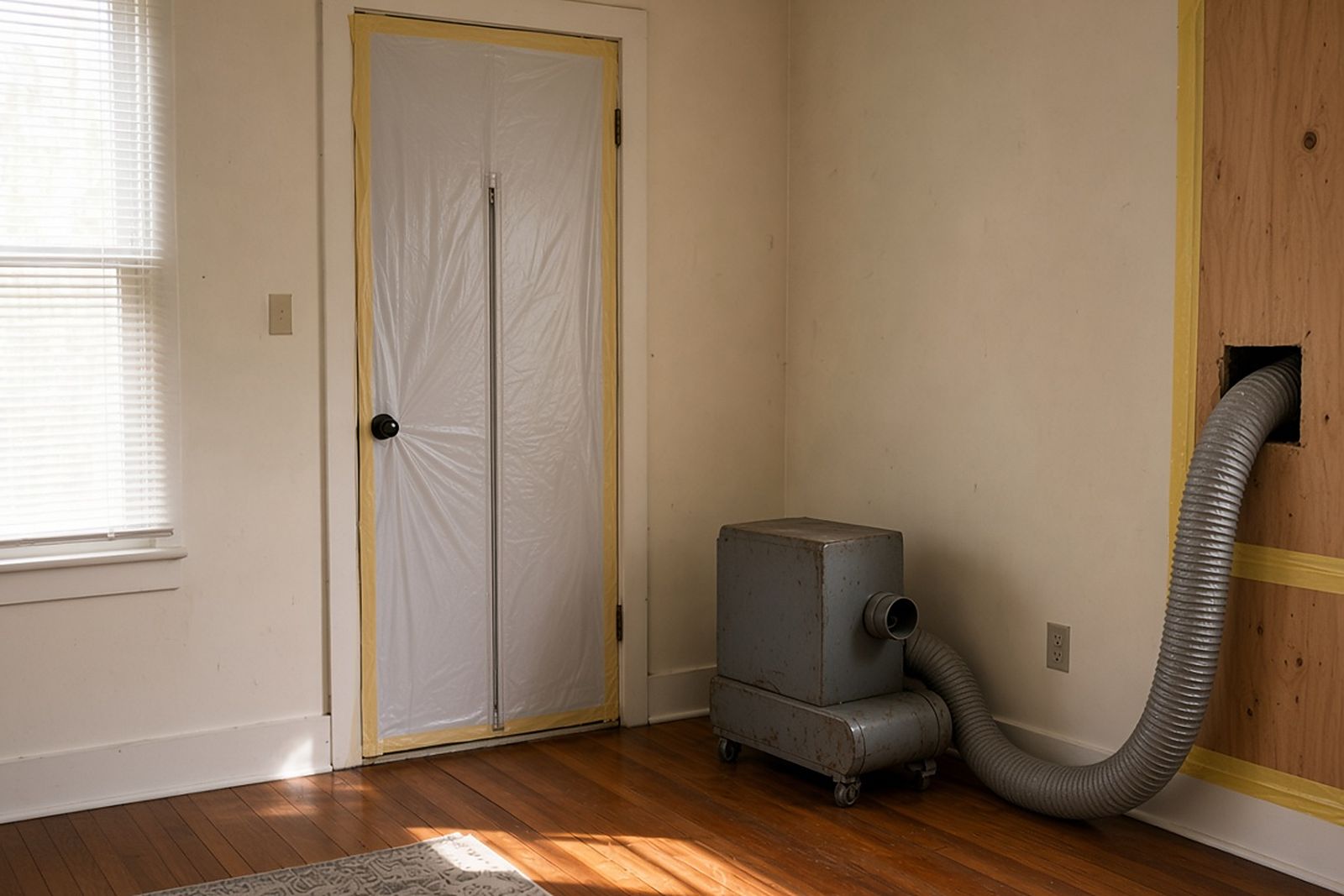
Heating, ventilation and air conditioning systems deserve attention too. If a return vent sits near the affected area, fine particles and odor can be drawn into the ductwork. Crews may close vents during work and inspect or clean nearby registers afterward, so that contamination is not quietly redistributed through the home.
Virus survival and choosing a disinfectant
Survival varies by virus. Research published in the Journal of Infectious Diseases in 2014 by Paintsil and colleagues found that hepatitis C virus in dried blood remained infectious for up to 6 weeks at 4°C and 22°C (room temperature) in a laboratory study. Real-world conditions differ, but the finding explains why dried blood at a scene that has been closed for days still calls for disinfection.
Other viruses are more fragile. The CDC states that HIV does not survive long outside the human body, such as on surfaces, and cannot reproduce outside a human host. That is reassuring for families, but it does not change the professional approach, because crews cannot know which pathogens may be present and treat all blood as potentially infectious.
The takeaway is balanced. You do not need to fear every surface in your home, but you do need a provider who cleans and disinfects methodically rather than relying on appearance.
Professional crews choose products whose labels specifically address bloodborne pathogens. The U.S. Environmental Protection Agency keeps List S, a reference of registered disinfectants with label claims against HIV, hepatitis B and hepatitis C. Asking a provider whether its product appears on that list is a simple, reasonable question.
Beyond the pathogen claims, the product must be compatible with the surfaces being treated. Some disinfectants can discolor fabrics, etch stone or damage finished wood. An experienced crew weighs both factors and may use different products in different parts of the home.
Whatever the product, the label directions govern its use. That includes dilution, application method, required contact time and any rinsing needed afterward, particularly on surfaces that will touch food or skin.
Ventilation and worker protection matter during this stage. Some disinfectants release fumes that can irritate eyes and lungs in enclosed spaces, which is one reason technicians wear respirators and why families are asked to stay out until the work is complete and the space has aired out.
What gets removed, and what can be kept
Absorbent materials that have taken in blood usually cannot be reliably disinfected, because contamination sits deep in fibers or pores where products cannot reach. After a homicide, this often includes carpet and pad, rugs, upholstered furniture, mattresses, curtains, some drywall and unsealed wood.
These materials are typically cut out or removed, packaged as regulated waste and taken for proper disposal. The surfaces beneath them, such as a concrete slab, subfloor or wall framing, are then cleaned and disinfected. If contamination has penetrated structural wood, the crew may remove that section as well or, after cleaning and disinfection, apply a sealer.
A provider should explain each removal decision and include it in the written scope. Families deserve to understand why a favorite chair or rug could not be saved.
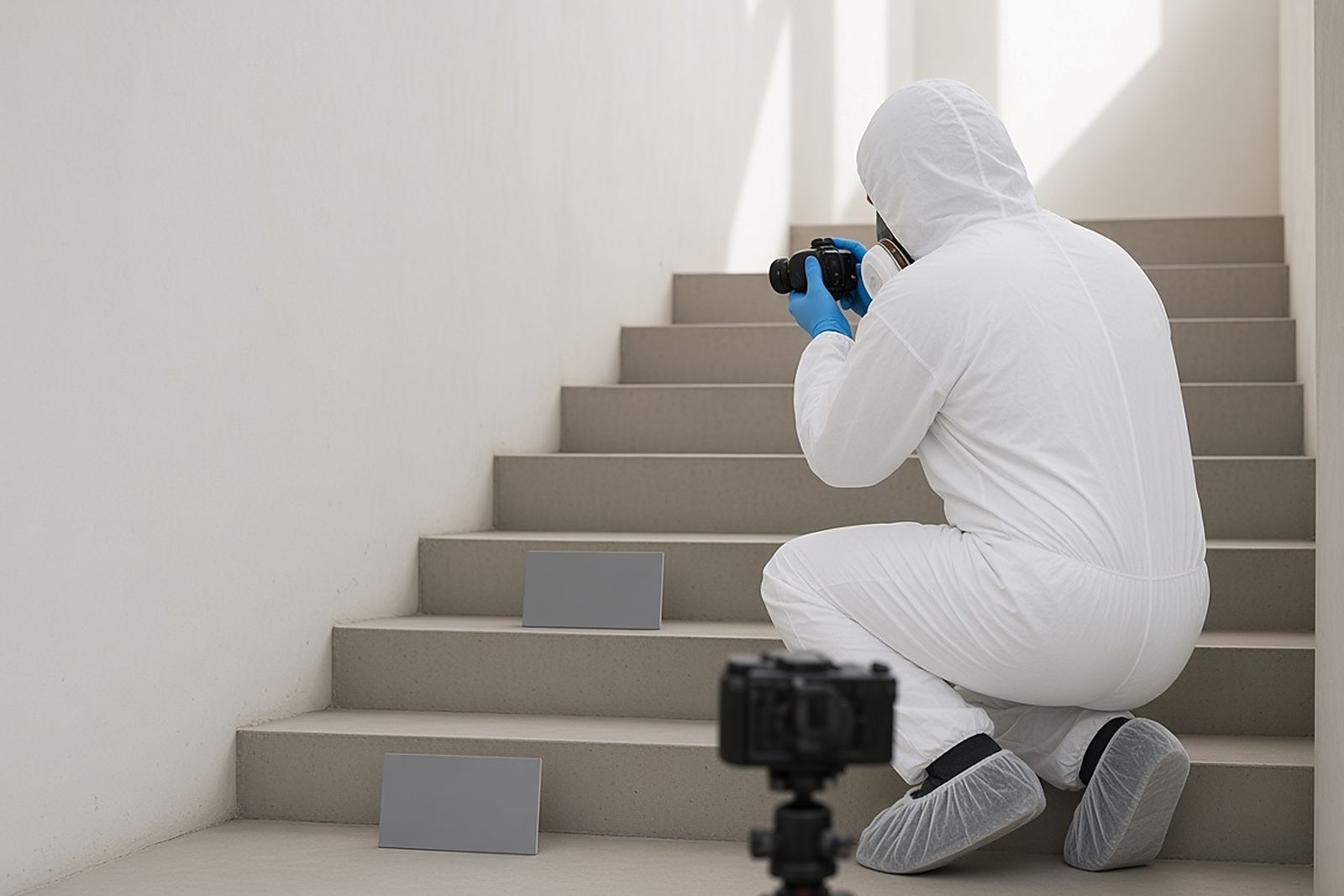
Removal is sometimes more extensive than families expect. A stain that looks small on the surface of a carpet may have spread much wider in the pad underneath, and a spot on a wall may extend inside the cavity. Crews often cut back until they reach clean material, then photograph the boundary so the family can see where contamination ended.
Some belongings can often be kept. Hard items such as jewelry, watches, eyeglasses, ceramics, metal picture frames and many electronics can frequently be cleaned and disinfected. Photographs, documents and books are more delicate, and their condition determines whether they can be safely restored or should be photographed and discarded.
Clothing and textiles are the most difficult. Items with light contact may sometimes be laundered or professionally cleaned, while heavily affected ones usually cannot be returned. A caring provider will explain the options for each item that matters to the family and ask before disposing of anything personal.
Items held by police as evidence follow a separate process and may be returned later through the investigating agency.
- Hard, nonporous keepsakes: usually cleanable and returnable
- Paper and photos: assessed individually; photographing is an option
- Clothing and textiles: depends on the extent of contact
- Evidence items: returned through the investigating agency, if at all
Both steps in one home: an illustration
A worked example, invented for illustration, shows the sequence. A woman is killed in the living room of her house, and police hold the property for five days. When the family's chosen provider arrives, blood has dried on hardwood floors, a leather sofa and a painted wall, and tracked residue leads down the hallway to the front door. Fingerprint powder covers the front door and a side table.
The crew contains the living room and hallway. It removes an area rug and a fabric armchair as regulated waste. It softens and lifts dried blood from the hardwood and wall with appropriate cleaners, vacuums and cleans the fingerprint powder, and cleans the tracked path along the hallway. After inspection, it applies a disinfectant with bloodborne pathogen claims and keeps each surface wet for the full contact time.
The leather sofa cleans well but has a seam that absorbed fluid, so the family agrees to its removal. The woman's bracelet and a framed photo are cleaned and returned in a sealed bag. The family receives photos, an inventory and a disposal record. The case is fictional, but the sequence mirrors professional practice.
Confirming both steps, and why not to do it yourself
Ask for a completion summary that lists which areas were cleaned, which were disinfected, the product used, the contact time followed and every material removed. Photos should show conditions before cleaning, after cleaning and after final treatment in key areas.
Some providers use ATP surface testing to confirm that organic residue has been removed. That is a measure of cleaning thoroughness rather than a direct measure of disinfection, and an honest provider will describe it that way. Visual inspection under good lighting remains an important part of the final check.
Waste handling and documentation requirements differ by location, so ask which state program your provider's disposal records are meant to satisfy. When the paperwork is clear and complete, you can be confident the home was not just made to look clean, but was made safe.
If anything in the summary is unclear, ask. A good provider will gladly explain terms such as contact time, regulated waste or ATP in plain language, and will correct any gap in the paperwork before closing the job.
Beyond the health risks, cleaning after a homicide can be deeply traumatic for loved ones. The volume and spread of material, the need for protective equipment and the requirement to handle regulated waste all point toward trained professionals.
Choosing a qualified provider lets you step away from the physical work and focus on grief, on each other and on the legal process ahead. That is not avoidance. It is a reasonable way to protect yourself during one of the hardest times a family can face.