Homicide Cleanup: Education
Science and technology used in some homicide cleanup scopes, with explicit limits for ATP, disinfectants, enzymes, fogging, air equipment, and moisture tools.
The education category explains the ideas behind homicide cleanup without assuming any technical background. Articles cover how blood and other body fluids soak into soft building materials. They explain why a stain that comes back weeks later means the contamination goes deeper. They also cover what investigators leave behind after working a scene, such as fingerprint powder and chemical sprays. You will also find plain meanings for words on estimates and insurance forms. Examples include regulated waste, sealing off the work area, air filters and plastic walls that keep dust inside the work area, and surface checks.
Get an email reply about homicide cleanup
Send a short message to the follow-up inbox. A coordinator can reply by email. This form does not send emergency help; call 911 first if anyone is in danger.
This background matters because several groups often handle a homicide scene at once, and each uses its own words. A detective, an adjuster, a property manager, and a cleanup supervisor may all describe the same room differently. Knowing a little of the science helps you follow along and notice when things do not match. Readers who understand why some materials cannot be saved often feel less pushed by upsells. They also feel surer about which suggestions are truly needed.
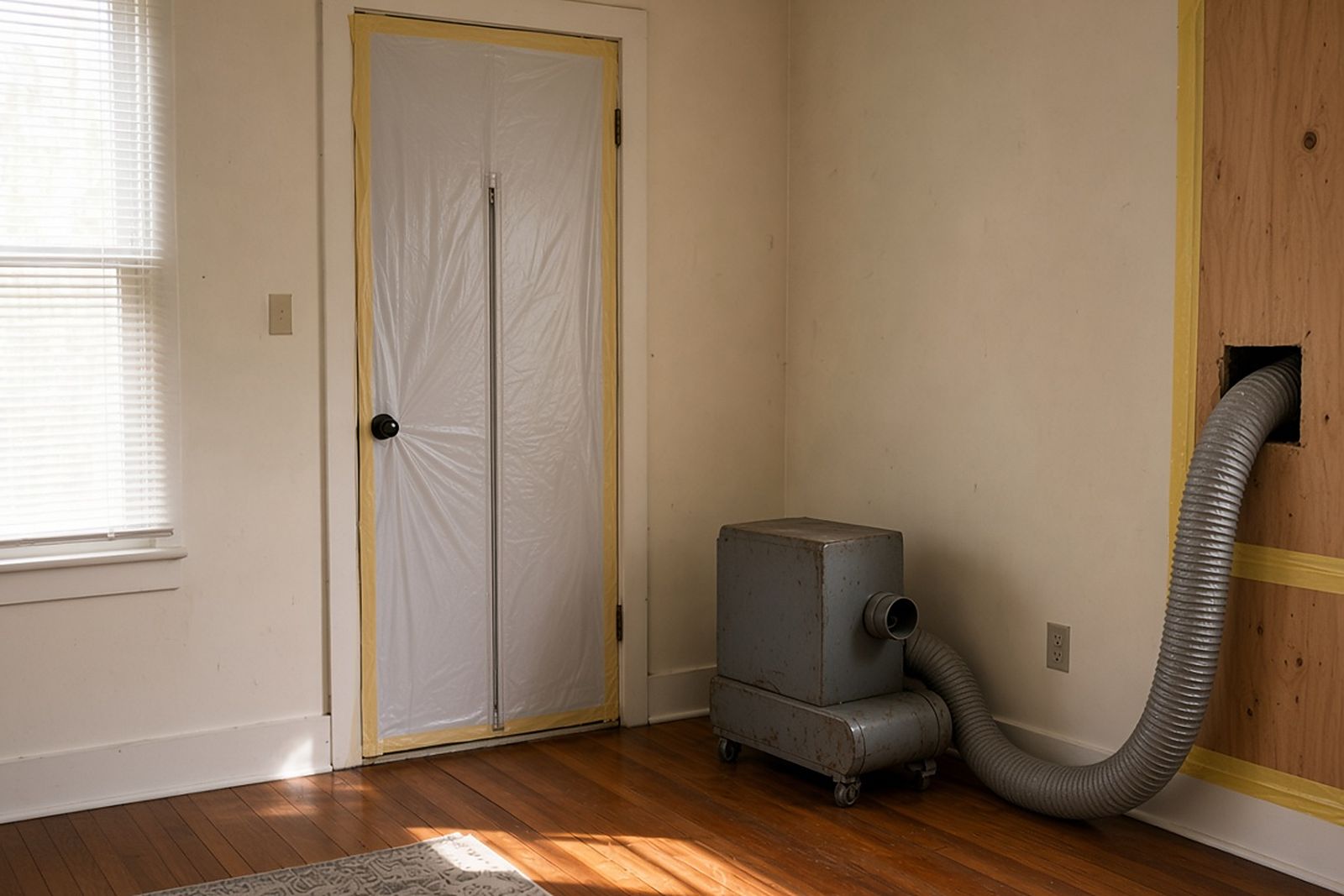
The Science Behind Homicide Cleanup
The science of homicide cleanup: why scenes reach farther than they look, how evidence holds change the chemistry, and how crews verify a home is safe again.
Homicide cleanup applies infection control, material science and chemistry to a scene that has often been held for investigation. Fine droplets can travel well beyond the main area, fluids migrate into porous building materials, and time under an evidence hold adds drying, odor and sometimes decomposition. Crews map the full extent, remove what cannot be decontaminated, clean before disinfecting and verify before you return.
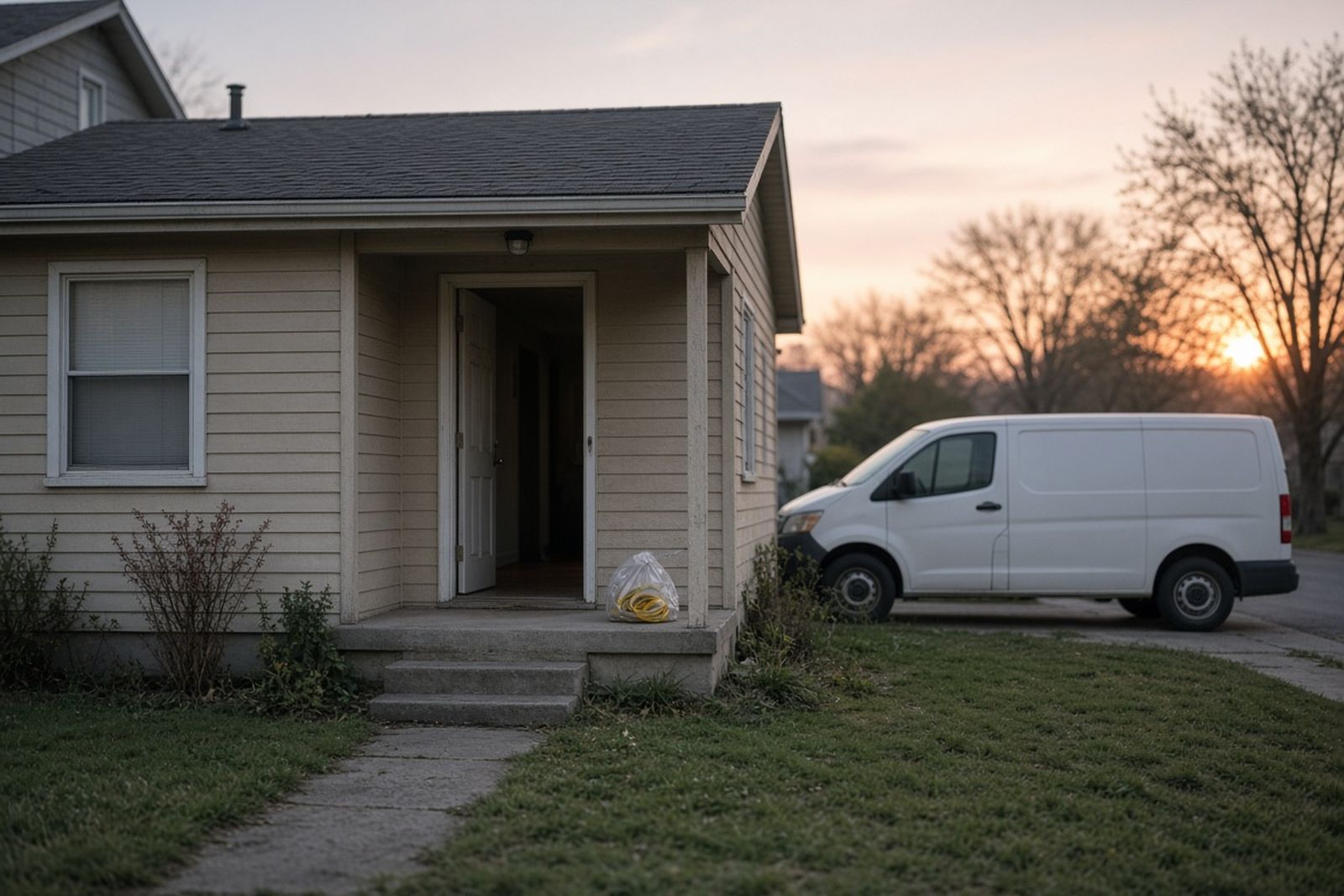
How to Evaluate Equipment Proposed for Homicide Cleanup
What to look for in the equipment a homicide cleanup provider proposes, from protective gear and structural tools to disinfectants, sealers and verification.
Evaluate proposed homicide cleanup equipment by linking each item to something the technician found at your property. Look for protective gear matched to the hazards, named EPA-registered disinfectants, tools for removing flooring and drywall, containment and air filtration sized to the work, encapsulating sealers when structure stays, and verification tools that produce written records. Question gear that is generic, oversized or unexplained.

The Difference Between Cleaning and Disinfection in Homicide Cleanup
How cleaning and disinfection differ after a homicide, why long-dried blood and tracked residue need both, and what it means for belongings you want to keep.
In homicide cleanup, cleaning removes blood, tissue, tracked residue and investigation materials, while disinfection applies a registered product for its full contact time to inactivate remaining pathogens. Because homicide scenes are often held for days, blood may be dried and widespread, so thorough cleaning must come first. Absorbent materials are usually removed, and keepsakes need individual assessment.
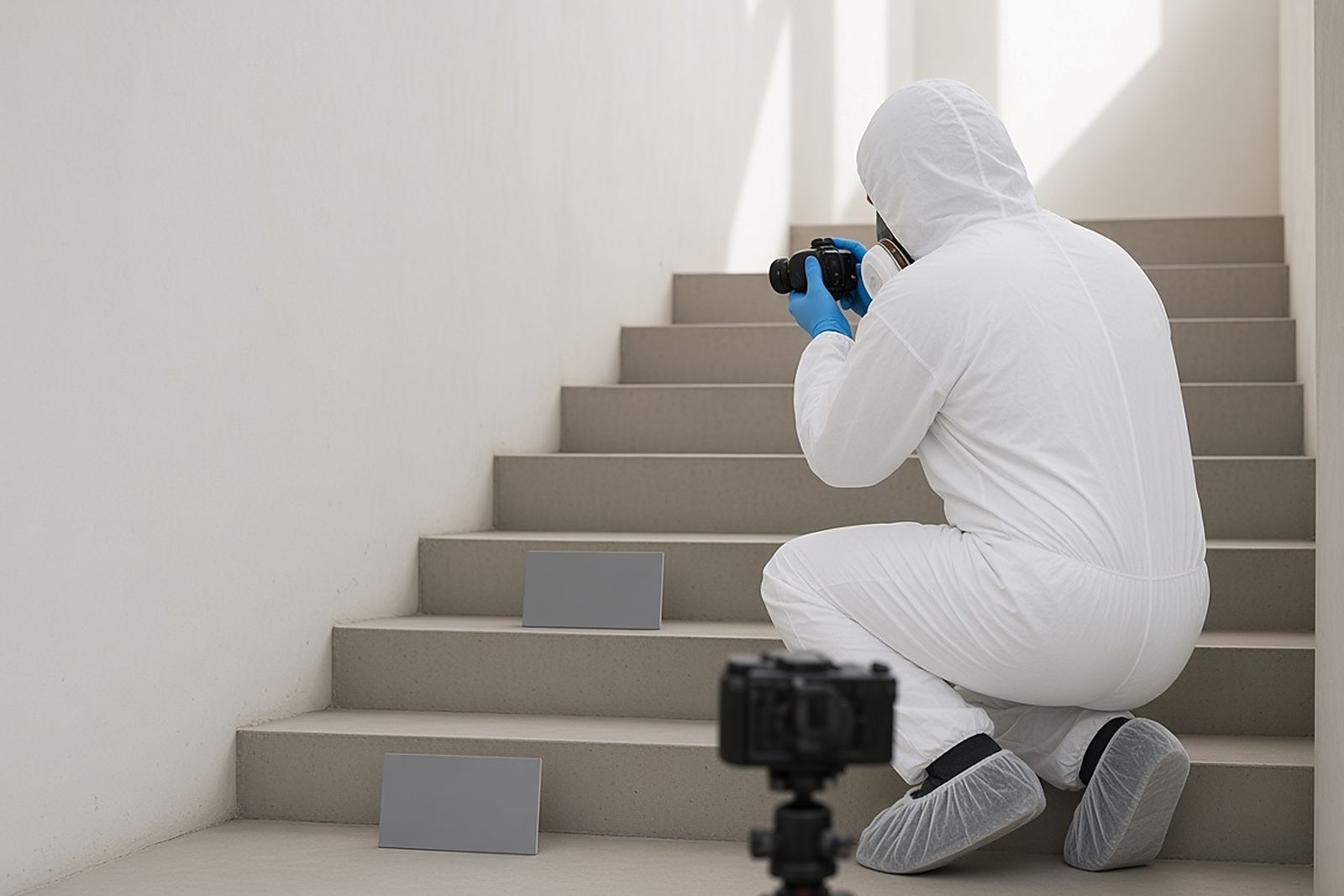
When ATP Testing Helps—and When It Does Not—in Homicide Cleanup
How ATP swabs are used after homicide cleanup, why they miss evidence residue and hidden spread, and what a trustworthy verification package includes.
After a homicide, ATP testing can show whether hard surfaces that stayed in the home still carry organic residue. It cannot detect fingerprint powder or chemical reagents left by investigators, identify pathogens, look inside floors or walls, or offer a universal pass line. Use it as one line of evidence with photos, removal records, disinfectant logs and a walkthrough.
How to Evaluate Technology Used in Homicide Cleanup
A plain-language way to judge homicide cleanup technology, from HEPA vacuums for print powder and forensic lights to foggers, ozone and digital reports.
Judge every tool a homicide cleanup provider proposes by what it does in your property, what it cannot do, whether it changes the scope and why a simpler method falls short. Tools that find hidden contamination, capture fingerprint powder and dust, and document the work clearly tend to earn their place. Fogging, ozone and UV add-ons need specific justification and safety precautions.
When Enzymes or Microbial Products Fit Homicide Cleanup
Where enzyme and microbial cleaners help after a homicide, why they cannot remove print powder or disinfect, and how they fit a plan for multi-area scenes.
Enzyme and microbial products can help break down dried organic residue in porous hard surfaces such as concrete, brick, grout and subfloor seams, especially when a scene was held for days before release. They do not disinfect, do not remove fingerprint powder or reagents and cannot save soaked furniture or carpet. In homicide cleanup, they are a targeted supporting step within a larger, documented plan.
Sourced figures on education
- 34.9%
Among 2022 homicides with known circumstances, 34.9% were precipitated by an argument or conflict and 15.0% were related to intimate partner violence.
Read with care: NVDRS links death certificates, coroner/medical examiner and police reports; 2022 is the first year with all 50 states, and location is recorded for the injury site, not always the residence of the decedent.
Source: CDC (2022)United States, 2022, homicides with known circumstances (70.6% of cases)
- 23.5%
23.5% reported high-level need for help with practical or administrative tasks.
Read with care: Pandemic-specific and self-selected; overlapping follow-up studies must not duplicate baseline findings.
Source: Harrop et al. (2021)711 UK adults bereaved March–December 2020; nonprobability recruitment.
- 25
25 participants described better understanding of possible reactions to homicide loss.
Read with care: Selected intervention participants; no causal treatment-effect estimate.
Source: Alves-Costa et al. (2018)29 UK programme participants; short-term and 2–5-year follow-up groups.
These figures are public research and agency data, not this network's own job records. Keep each number with its population, year and limits; none of them predicts cost, timing or outcome at a specific property.
What research has found
Findings from published studies of people and properties in situations like this one. They describe what researchers observed in a specific group; they are not predictions for your case.
Access difficulties remained even when support existed.
Caregivers also described positive developments and finding meaning in their commitment.
Education: common questions
Why can't the investigation residue simply be wiped away like dust?
Fingerprint powders are very fine. When disturbed, they can float through the air or get pressed into textured surfaces. Some chemical treatments leave a film that reacts with ordinary cleaners. Removing them the right way usually starts with a special filtered vacuum. Then comes a cleaner that is safe for that surface. Dry wiping or sweeping can push the particles deeper or send them into the air ducts.
What does it mean when a provider talks about fluid migration?
It means how far fluid soaked in beyond the stain you can see. Fluid can soak down through carpet into the pad and subfloor. It can also wick sideways into drywall and baseboards. A surface can look clean while the material under it is still soiled. Providers use moisture readings, close inspection, and sometimes small test cuts to trace how far the fluid went. Then they decide what must be removed.
Is homicide cleanup different from other kinds of trauma cleanup?
The main safety steps are the same as other trauma work. But homicide scenes often cover larger areas and leave investigation residue behind. They also involve closer contact with police, even after release. There may be more parties with an interest in the property, such as an estate and insurers. These things shape the plan, the paperwork, and how quickly choices can be made.
Do I need to understand the science to make good decisions?
No. The education articles are here for people who feel calmer when they understand why providers remove certain materials or clean before they disinfect. Many families make good choices by asking a few clear questions and comparing written plans. If technical reading feels like too much right now, skip this category. You can come back to it later, or ask someone you trust to read it for you.
How do the educational articles help when reviewing a provider's scope?
They explain the reasons behind common items on a plan. Examples include removing carpet pad, sealing bare wood framing, or handling investigation residue separately. With that background, you can ask whether each item fits your home. You can also notice when something seems to be missing. The articles help you spot claims worth questioning, such as a promise that one product or machine will replace thorough cleaning.
Are these articles useful for people who work alongside families, such as advocates?
Yes. Victim advocates, clergy, funeral staff, and property managers often get questions about cleanup without having seen the work up close. The education articles give plain explanations they can share with families or sum up for them. They are general background, not professional training. Still, they can help someone supporting a family explain why certain steps matter and what to ask a provider.
Which educational topic do families most often wish they had understood earlier?
Many are surprised that contamination can reach well past the area they can see. They are also surprised that soft, absorbent materials often cannot be saved. Knowing this early helps families accept a larger job and avoid letdowns about furniture or flooring. The articles on the science of homicide cleanup and on cleaning versus disinfecting explain both topics. They use calm, plain language without graphic detail.
Related community polls
Every count is a real visitor vote; nothing is seeded or padded. One vote per poll per device, and you can change your answer.
What was hardest to arrange after the scene was released?
When did you first learn that a victim compensation program might help?
More on homicide cleanup
Homicide Cleanup services
Learn what homicide cleanup involves for families, estates, and landlords. Topics range from sealing off several rooms to lists of belongings and final records.
Costs explained
What drives the price, published cost ranges, and how to read a written quote line by line.
Insurance and payment
Which policies may respond, how to document a claim, and what to do if coverage is denied.
Planning tools
Planners, checklists, and organizers for the weeks after a homicide. They cover police holds, estate authority, landlord duties, and victim compensation.
Community polls
Shared experience from families, advocates, and landlords on what was hardest after a homicide and what help mattered.
Knowledge quiz
A calm review of police holds, authority, sealing off work areas, disinfecting, waste, and records. The study guide is written for grieving families and the people helping them.