Short answer
After a homicide, ATP testing can show whether hard surfaces that stayed in the home still carry organic residue. It cannot detect fingerprint powder or chemical reagents left by investigators, identify pathogens, look inside floors or walls, or offer a universal pass line. Use it as one line of evidence with photos, removal records, disinfectant logs and a walkthrough.
Why would a homicide cleanup company offer ATP testing?
After a violent death in a home, families and property owners often ask a direct question: how will we know it is really clean? The rooms may look ordinary when the crew leaves, but the memory of what happened can make it hard to trust your eyes. ATP testing offers a number, and numbers can feel reassuring.
ATP, or adenosine triphosphate, is present in living cells and in organic soils such as blood. A technician wipes a swab across a defined area, places it in a handheld reader and gets a relative light unit value. In general, a lower value means less organic material was on that part of the surface.
Many reputable providers use ATP as part of their quality checks. The key is knowing what the number covers, so it neither alarms you nor lulls you into thinking every question has been answered.
Two layers of residue: biological and investigative
A homicide scene often has two layers of residue. The first is biological: blood and other bodily fluids from the event itself. The second comes from the investigation: fingerprint powders on doors, windows and furniture, chemical reagents used to reveal traces, adhesive from evidence markers and tape, and openings where investigators cut out carpet or drywall as evidence.
ATP is designed for the first layer. It responds to organic material, so it can show whether blood residue remains on a cleaned countertop or a sealed hardwood floor. It is not designed for the second layer. Most fingerprint powders are mineral, metallic or synthetic, and many reagents leave chemical residue that an ATP meter will not register.
That means a room can produce excellent ATP readings while still carrying investigative residue on door frames or light switches. A thorough provider cleans both layers and documents each separately.
Where ATP falls short
ATP does not name organisms. It cannot tell you whether hepatitis B, hepatitis C or HIV is present, and a low reading is not a pathogen clearance certificate. It simply says how much organic soil the swab collected.
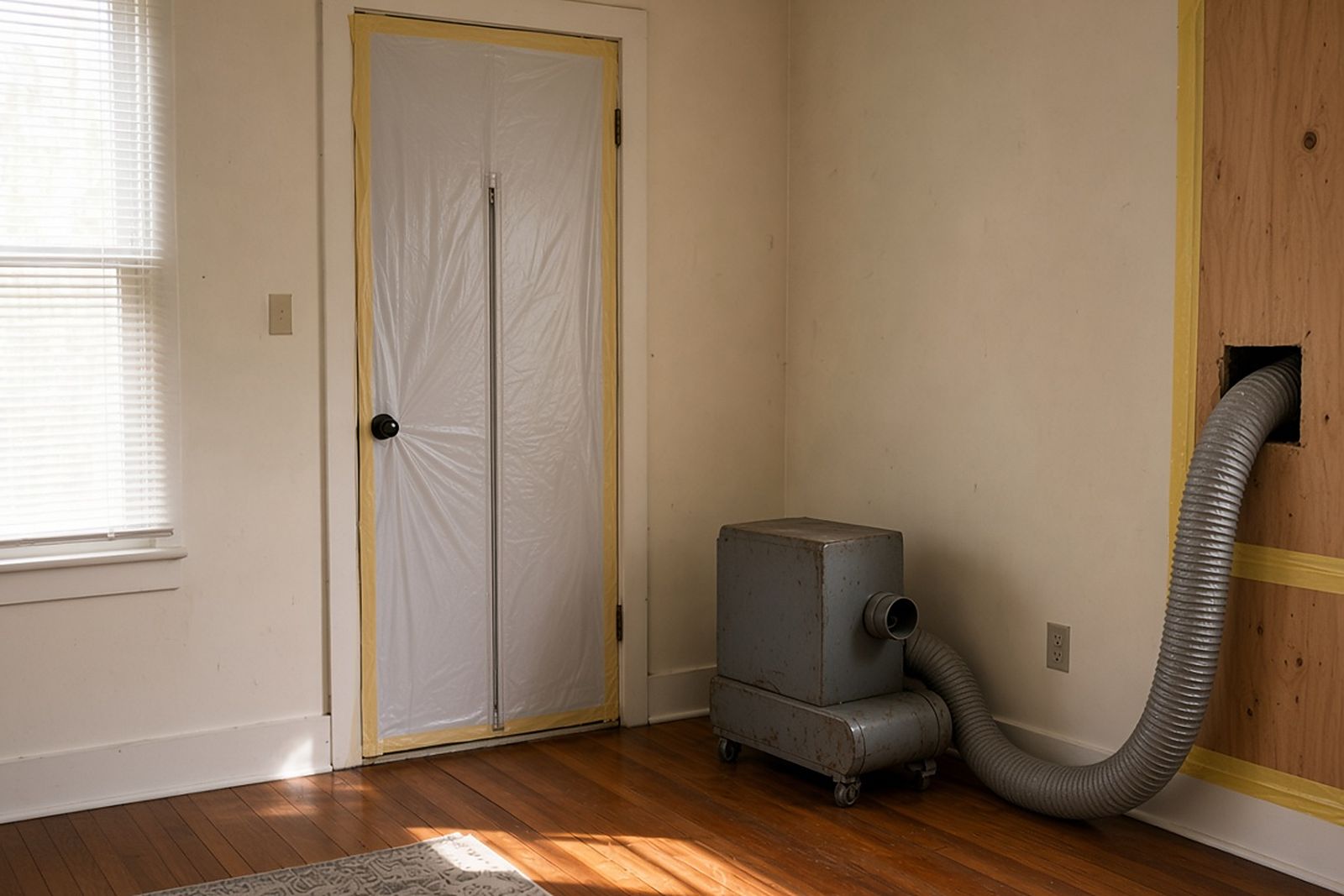
It also stays on the surface. In a homicide, fluids may have spread across more than one room, soaked into upholstered furniture or seeped beneath flooring and along joists. Those hidden paths are found through inspection, moisture checks and, when necessary, removing materials. A swab on a freshly cleaned floor cannot see below it.
No universal pass mark
There is no single national pass mark for ATP in this work. Each brand of meter uses its own scale, and results can change with surface texture, pressure and swab technique. If an insurer, landlord or buyer expects a particular verification method, ask them to put it in writing before closeout.
ATP also tells you nothing about lingering odor, the safety of the products used or how the space feels to the people who must live or work there again.
What a complete verification package includes
The most trustworthy closeout after homicide cleanup combines several kinds of evidence. Each one answers a different question, and together they give a family, landlord or insurer a clear picture of what was done.
ATP readings belong in that package when hard surfaces remained in place. They should sit alongside proof that porous materials were removed, that investigative residue was addressed and that disinfectant was applied as its label directs.
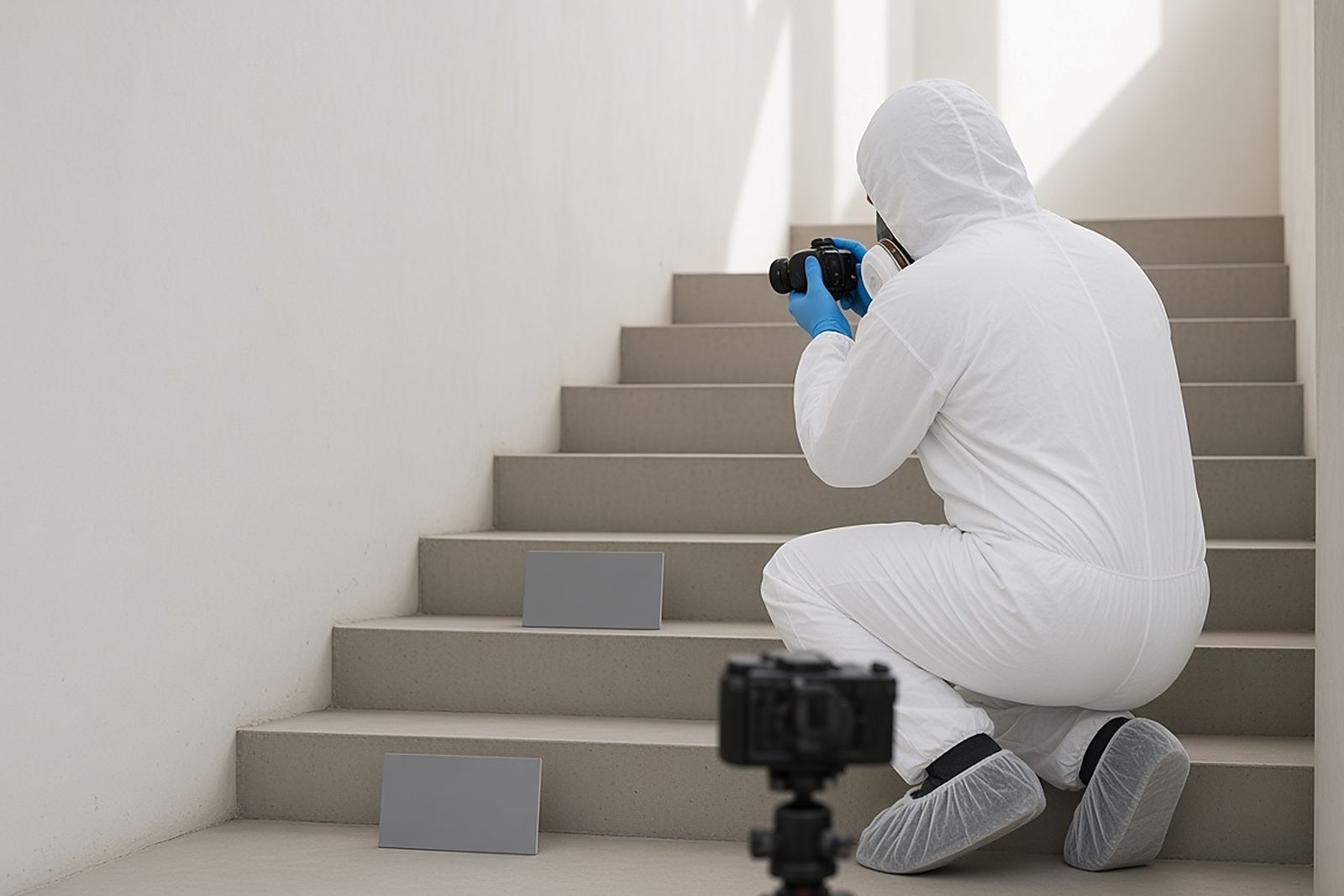
- Photos of each area before and after, cross-referenced to the scope
- A record of removed materials and why each was removed
- Notes on fingerprint powder and reagent cleanup by room
- Disinfectant product name and the contact time on its label
- Findings from checks under flooring and inside cavities
- ATP readings tied to specific, labeled swab points
- Waste packaging and disposal records
- A signed walkthrough with the owner or a representative
Can ATP help check areas beyond the main scene?
Sometimes, yes. During a violent event and the emergency response that follows, traces can be carried out of the primary room on shoes, equipment or hands. Entryways, stair rails, bathroom fixtures and door hardware along the path to the exit are common places where small amounts of residue turn up.
For those secondary areas, a provider may inspect visually, clean and disinfect as a precaution and then swab a few representative hard surfaces. Low readings there can reassure a family that the rest of the home was not overlooked. If a reading is higher than expected, it points the crew toward a spot that deserves another look.
Shared buildings and porous items along the route
This is also where ATP can be most helpful for shared buildings. In an apartment complex, a landlord may want a record that the hallway, elevator buttons or stairwell railing near the unit were checked. A handful of documented readings, paired with photos, can answer that question simply.
What ATP still cannot do in these areas is replace judgment. Carpet runners, fabric chairs and other porous items along the route need inspection and, where affected, cleaning or removal. A swab from a nearby hard surface says nothing about the fibers a few feet away.
How do I judge whether the ATP numbers are meaningful?
Look at where the swabs were taken. Readings from surfaces in and near the affected rooms, such as a door handle the crew cleaned, a kitchen counter or a hard floor that stayed in place, tell you something about the work. Readings from untouched rooms tell you very little.
Check whether the report names the meter, lists every swab point and states the company's own acceptance level for that meter. If a reading was high, the report should show that the spot was re-cleaned and retested, not simply left out.
Ask when the swabs were taken. Surfaces should be cleaned, disinfected for the full label time and dry before testing. Swabbing too early can produce misleading numbers. A photo of the meter screen beside each surface is a simple way to make results credible.
If the report will go to a court-appointed administrator, an insurer or a buyer, you may want someone independent of the crew to take the final readings. That is a choice, not a requirement, but it can prevent later disputes.
An illustrative closeout
An illustrative closeout, not taken from a real case, shows how the layers fit. A man is killed in the kitchen and hallway of a rented duplex. Investigators process the scene, dust several doors and a window with fingerprint powder, and remove a section of hallway carpet. The landlord and the victim's sister jointly hire a cleanup company after police release the unit.
The company removes the remaining hallway carpet and pad, finds that fluid reached the subfloor along one seam and cleans and seals that area. In the kitchen, vinyl flooring is lifted after the supervisor finds staining at its edge. Countertops, cabinets and appliance fronts are cleaned and disinfected. Powder is removed from each door and window frame.
At closeout, the supervisor swabs the countertop, two cabinet faces, a refrigerator handle and the hallway door frame. All readings are low on the company's meter. The report pairs them with photos, removal notes and a line confirming powder cleanup room by room. The landlord uses it for the insurer, and the sister keeps a copy for her compensation application. The details are fictional, but the layered approach is what you should expect.
Is ATP testing worth adding to my cleanup?
ATP is most useful when a lot of hard surfaces stay in place and someone outside the family, such as an insurer, a buyer or a future tenant, will want documentation. It is less valuable when most affected materials are removed and replaced anyway.
Ask the provider why they recommend it, where they would swab and what they do if a result comes back higher than expected. A good provider will tell you it is a check on cleaning quality, not a guarantee of safety. Be cautious if a provider uses low ATP readings to argue against removing porous materials that were clearly affected.
Ask whether testing is part of the standard closeout or an added charge, and get that in writing with the rest of the scope.
Beyond the test results
Families bereaved by homicide carry a particular kind of grief. It often comes with an investigation, court proceedings and public attention, all layered on top of loss.
Returning to a home where a loved one was killed can be difficult no matter how clean it is. You do not have to be the one who walks through at closeout. A relative, friend, attorney or victim advocate can review the results and the room on your behalf.
Victim advocates in many police departments and prosecutors' offices can also connect you with counseling, support groups and help applying for victim compensation. Asking for that help is part of taking care of yourself, not a sign that you are not coping.