Short answer
Evaluate proposed homicide cleanup equipment by linking each item to something the technician found at your property. Look for protective gear matched to the hazards, named EPA-registered disinfectants, tools for removing flooring and drywall, containment and air filtration sized to the work, encapsulating sealers when structure stays, and verification tools that produce written records. Question gear that is generic, oversized or unexplained.
Why the equipment list matters
When you are grieving a homicide loss, reading an equipment list may be the last thing you want to do. Still, it is one of the clearest windows into how a provider plans to treat your home. A list tied to your rooms, floors and walls shows that someone looked carefully. A list that could apply to any property shows the opposite.
Homicide scenes are often larger and more complex than other cleanups. Material may reach ceilings and fixtures, spread along the route people took afterward and soak into flooring during an investigation hold. The equipment needs to match that complexity without piling on items that add cost and nothing else.
If reviewing the list feels like too much, ask a relative, friend or victim advocate to go through it with you. The questions in this guide are simple enough for anyone to use.
What protective gear is reasonable for this kind of scene?
Crews at a homicide scene face bloodborne pathogens, sharp debris, dust from removed materials and chemical products. The OSHA Bloodborne Pathogens Standard requires employers to provide protective equipment appropriate to the exposure, and to train workers on its use.
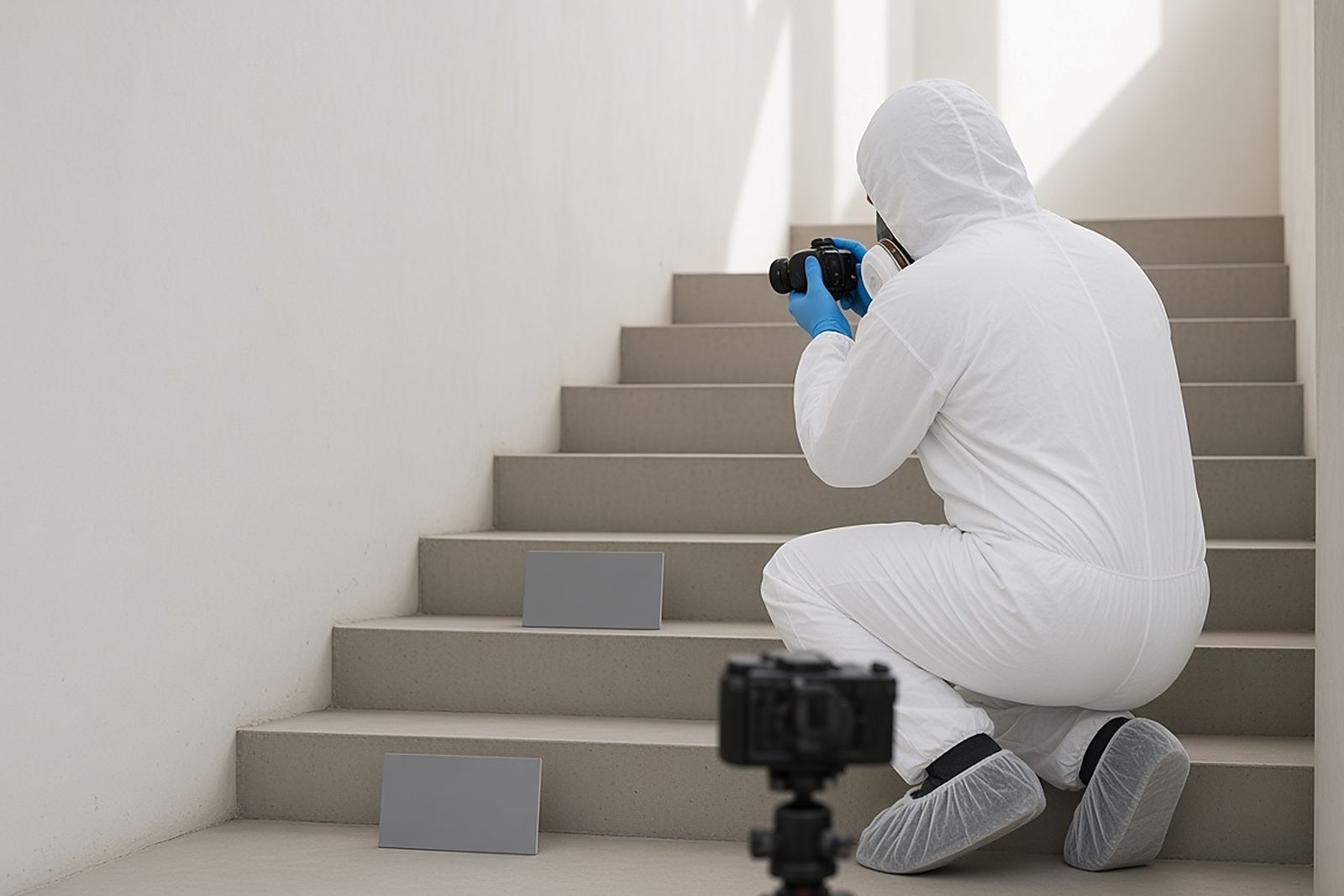
A reasonable kit includes fluid-resistant coveralls, double nitrile gloves, cut-resistant outer gloves when handling broken materials, eye and face protection and boot covers. Respirators should be chosen for the specific task, such as particulate filters for cutting drywall or combination cartridges when chemical vapors are present, and technicians should be fit tested for the model they wear.
Ask where the crew will put on and remove gear. A designated doffing area near the exit of the work zone keeps contamination from traveling into the rest of the house.
It is also fair to ask about the program behind the gear. Employers covered by the bloodborne pathogens standard are expected to keep a written exposure control plan, train workers and offer hepatitis B vaccination. A provider does not need to hand you private employee records, but it should be able to confirm that these pieces are in place.
Tools for removing flooring and walls
Because homicide scenes are frequently held for investigation, fluids may have had time to reach carpet pad, subfloor, baseboards and the bottom of drywall. Removing those materials safely calls for specific tools: utility knives and carpet cutters, oscillating multi-tools for precise cuts in drywall and flooring, flat bars for baseboards and trim, and sometimes a circular saw set to a controlled depth for subfloor.
Precision matters. The aim is to remove what is contaminated, not to demolish a room. Ask how the crew will decide where to stop cutting, and how they will protect wiring, plumbing and ductwork inside walls and floors.
Moisture meters and bright, angled lights help technicians find the true edge of contamination. Cameras document each stage so you, your insurer and any contractor who repairs the space can see what was found.
Reaching high places takes its own equipment. Fine droplets on ceilings, fans, crown molding and the tops of cabinets require stable ladders or small scaffolds, extension poles and drop cloths below. If your scene involves a vaulted ceiling or stairwell, ask how the crew will reach those surfaces safely and what they will do to protect the floor beneath while they work.
- Carpet cutters and utility knives for soft flooring
- Oscillating tools and controlled-depth saws for drywall and subfloor
- Flat bars for baseboards, trim and hardwood
- Moisture meters and inspection lights for finding the edge of damage
- Cameras for stage-by-stage documentation
Disinfectants and sealers: naming the products
A good proposal names the products. Cleaners, such as detergents or enzyme formulas, are used first to break down and remove organic material. Disinfectants follow, and they should be EPA-registered with label claims for bloodborne pathogens such as hepatitis B and HIV.
Look up the label or ask the provider to send it. Check that the product is approved for the surfaces in your home and note its contact time, the period the surface must stay wet. Ask how the crew will keep vertical surfaces and ceilings wet long enough, since those areas dry quickly.
Be cautious about unnamed products described only with marketing terms. You cannot verify what you cannot identify.
Not every stained board has to be replaced. When subfloor, joists or framing are structurally sound but stained, providers often clean and disinfect them and then apply an encapsulating sealer. The sealer locks in residual staining and odor so that new flooring can go on top.
Sealers are a finishing step, not a shortcut. They should go on only after contaminated material is removed and the surface is cleaned, disinfected and dry. If a proposal suggests sealing over visible residue without cleaning first, that is a warning sign.
Ask which sealer will be used, whether it is suitable for the material and whether moisture readings will be taken before it is applied.
Sealing also affects your repair plans. Flooring installers and painters may want to know which product was used, so ask the provider to name it in the closing report. That small detail can prevent problems with adhesives or finishes later.
Is air filtration or odor equipment really necessary?
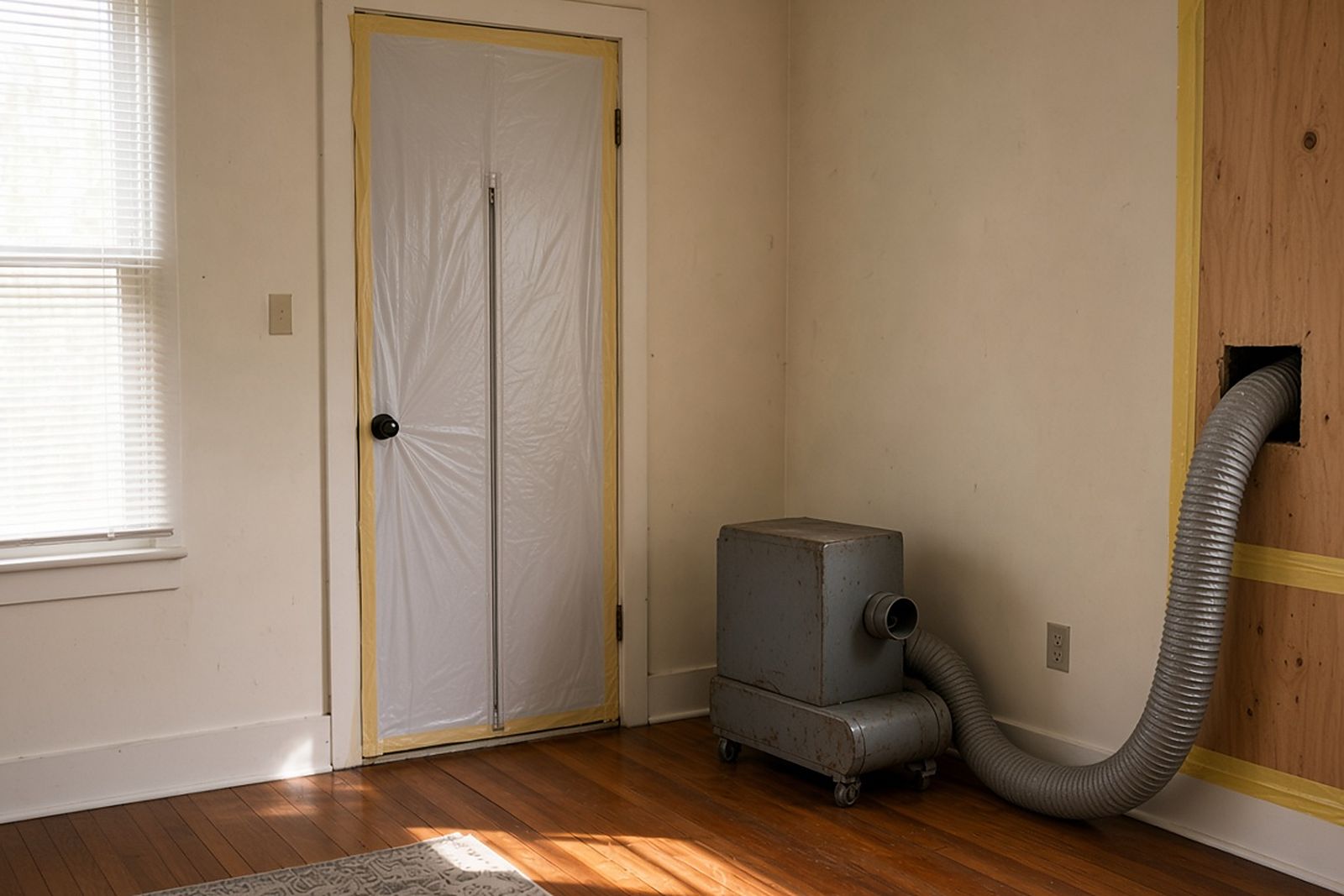
HEPA air scrubbers and negative air machines capture fine particles and, in the case of negative air, keep the work area at lower pressure so dust and odor do not escape. They are useful when crews are cutting out drywall or flooring, when the scene spans several rooms or when odor developed during the hold.
Odor equipment, such as ozone or hydroxyl generators, may be proposed as well. Ozone requires the home to be empty of people, pets and plants and can damage some materials. Whatever the method, odor treatment should follow removal and cleaning, not replace them.
Ask how many machines are planned, where they will run, for how long and how the provider will confirm the result.
Heating and cooling systems deserve a line on the list when odor or dust is involved. Covers for supply and return vents during work, a new system filter afterward and an inspection of nearby ductwork are modest steps that keep odor from resurfacing weeks later.
Specific vs generic: two proposals on paper
Proposals for the same house can look very different on paper. For a two-story home held for several days, with a contaminated bedroom and droplets on a ceiling fan and upper walls, two patterns are worth recognizing.
A specific proposal lists protective gear with fit-tested respirators, a named enzyme cleaner and a named EPA-registered disinfectant, carpet cutters and an oscillating tool for the bedroom carpet and baseboards, a ladder and extension tools for the fan and upper walls, HEPA air scrubbers, an encapsulating sealer for the subfloor after moisture checks, and ATP testing with photos in the final report.
A generic proposal lists a single line for protective equipment, an unnamed hospital-grade disinfectant, whole-house thermal fogging and ozone treatment, and an emergency surcharge. It does not mention the ceiling, the baseboards or verification.
The first is tied to what the technician saw. The second leans on dramatic equipment without addressing the work.
Waste containers, verification tools and closing records
Materials removed from a homicide scene are packaged as regulated waste. The proposal should mention appropriate bags and rigid containers, labeling, sharps containers for any sharp debris and a plan for transport to a permitted facility.
Ask who will transport the waste and whether you will receive disposal records. Those records are useful for insurance and victim compensation claims. Requirements for packaging, storage and transport differ across jurisdictions, so ask which state program oversees the hauler your provider uses.
Personal belongings may need their own supplies. Clean, labeled bins or bags for items being saved, and separate containers for items the family wants to review later, help keep keepsakes apart from waste. Ask how the crew will track what is saved, cleaned or discarded, and whether you will receive a written inventory.
Verification is where equipment becomes proof. ATP meters measure leftover organic residue on swabbed surfaces. They do not identify specific pathogens, but readings recorded before and after cleaning give you objective evidence. Inspection lights reveal droplets and residue that ordinary lighting misses. Moisture meters confirm that surfaces are dry before sealing.
Ask for a closing report with photos, readings, product names and contact times, a list of materials removed, waste records and any repair needs. If equipment appears on the invoice but not in the report, ask why.
Finally, remember that you are allowed to ask questions at every step. A provider who welcomes them is more likely to do careful work in a home that means so much to your family.