Short answer
Homicide cleanup often happens while a family is absorbing traumatic grief, speaking with investigators and facing public attention. You can protect yourself by letting a trusted person manage the cleanup, staying away during the work, deciding later which belongings to keep, pacing your return to the home and connecting with victim advocates and homicide survivor groups. Persistent distress deserves professional support.
Why does homicide cleanup feel so overwhelming?
Losing someone to homicide is unlike most other losses. It is sudden, violent and often wrapped in unanswered questions. At the same time, the family may be dealing with detectives, reporters, a funeral and, eventually, a court case. Cleanup of the home can arrive in the middle of all this, asking for decisions when people have barely slept.
Traumatic loss leaves a lasting mark on many survivors. In a 1991 National Institute of Justice study of 206 immediate family members of homicide victims, 23.3% developed PTSD at some point in their lives. More recently, a 2024 study in JAMA Network Open found that among adults bereaved by a traumatic death, including homicide, 40.3% met presumptive criteria for PTSD and 23.7% for prolonged grief disorder.
Those numbers are not predictions about you. They are a reminder that intense reactions are common, that they are not a sign of weakness and that support is worth seeking early.
You do not have to be involved
Many families find it healing to hand the entire process to someone else. A sibling, adult child, close friend, pastor or victim advocate can speak with cleanup companies, review the scope and be present for the walkthrough if someone needs to be there.
If you are the property owner or executor, you may need to sign the agreement, but you can authorize a helper to make everyday decisions after that. Let the cleanup company know who that person is and how you want to be updated, whether that means daily summaries, a single call at the end or nothing at all until the work is done.
Some people do want to be involved, because it gives them a sense of control when so much else feels out of their hands. That is okay too. The important thing is that the choice is yours, and that you can change your mind.
If children or teenagers live in the home, think about where they will be during the work. Keeping them with trusted relatives for a day or two, and telling them simply that helpers are taking care of the house, can spare them from seeing equipment and sealed containers leaving the property.
A crime scene and a family place
A homicide often happens in a home filled with ordinary memories: holidays, meals, children growing up. After the loss, the same rooms can hold both love and horror. Many families feel torn between wanting every trace of the event gone and wanting nothing about the home to change.
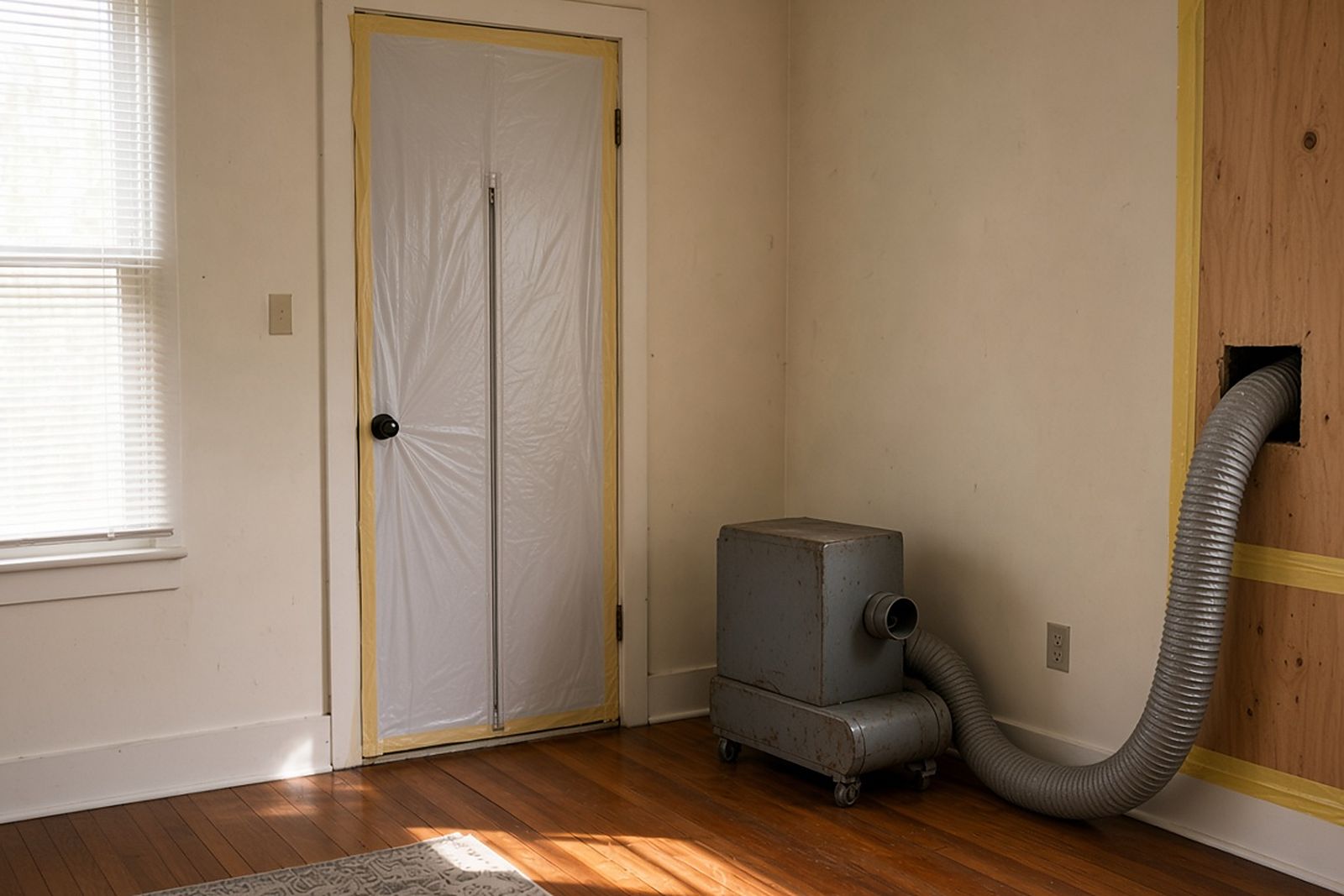
It may help to think of cleanup as removing what was done to the space, not the life that was lived there. A careful crew removes contaminated materials and restores the area while leaving the rest of the home as it was. Photos on the walls, furniture in other rooms and personal belongings can be left untouched unless you ask otherwise.
Families sometimes choose to change something small afterward, such as a paint color, a light fixture or the arrangement of a room, to mark that the space is safe again. Others leave everything exactly as it was. There is no correct approach.
Your loved one's belongings
You do not need to decide right away what to keep. Ask the cleanup company to set aside personal items from the affected area, clean what can be safely cleaned and store them for you. Items from other rooms can simply stay where they are until you are ready.
Some belongings may be held by police as evidence. Others may be damaged beyond safe cleaning. A respectful provider will explain which items cannot be returned and offer to photograph them first. Having that photograph can matter more than people expect.
When you do go through belongings, consider doing it with someone you trust and in short sessions. Clothing, handwriting and familiar scents can bring strong emotion. Stopping when you need to is not failure. It is a way of honoring both the person and yourself.
- Ask for saved items to be packed in labeled, sealed containers
- Request a written list so you know what exists before you open anything
- Set aside items for other relatives who may want a keepsake
- Take breaks and involve a support person when sorting
How can I manage outside attention during this time?
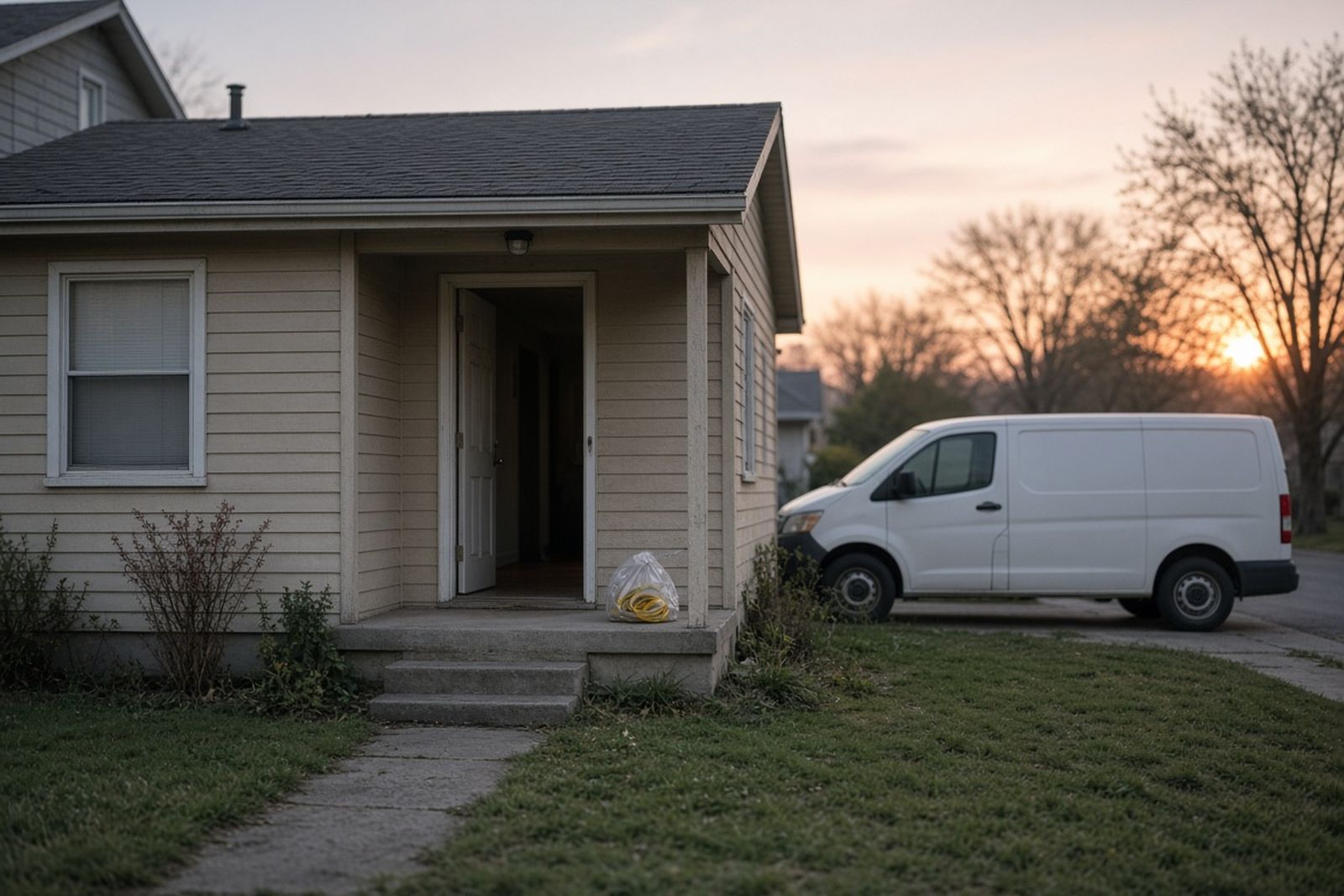
Homicides can draw reporters, curious neighbors and online speculation. That attention can feel invasive when you are trying to grieve. Choosing a cleanup company that uses unmarked vehicles and keeps its crew from speaking with bystanders helps protect your privacy while work is underway.
You may also want to designate one family spokesperson, or ask a victim advocate to help with media requests. It is completely acceptable to decline all interviews. Turning off news alerts and limiting time on social media can reduce exposure to painful coverage.
If neighbors ask about the work, a simple answer such as saying the family has hired professionals to take care of the house is enough. You do not owe anyone details.
Court proceedings can renew attention months or even years later. When a hearing or trial date approaches, it may help to plan ahead: arrange for someone to collect mail and field calls, and decide in advance whether you want to attend or receive updates from the victim advocate instead.
Should I stay in the home or move?
Families answer this question in very different ways. Some feel closer to their loved one in the home and choose to stay. Others find that daily reminders make healing impossible and decide to sell or move. Many are unsure for months.
If you can, avoid making a permanent decision in the first weeks. A professionally cleaned and repaired home gives you options: you can live there, rent it or sell it later without pressure. If staying feels unbearable right now, a temporary stay with relatives or in another rental can buy time.
When the home is sold, disclosure rules may apply depending on where you live; a real estate attorney can tell you what, if anything, must be disclosed. Keeping the cleanup records will help if questions come up.
Pacing yourself: one family's path
The account below is illustrative rather than a real family's. A father is killed in his kitchen during a robbery. His wife is hospitalized overnight for injuries, and their two adult daughters take charge of the house. One daughter handles police and funeral arrangements. The other, with a friend's help, arranges cleanup.
The cleanup company agrees to text the second daughter once a day and to set aside the father's reading glasses, a watch and a notebook found on the counter. The crew finishes in two days. The friend walks through the kitchen first and confirms that nothing looks out of place.
The mother decides she cannot live there yet and stays with one daughter for several months. The family joins a support group for homicide survivors and, over time, repaints the kitchen together before deciding whether to keep the house. The family in this example is fictional, but many real families describe a similar gradual path.
Support for survivors, and care in the weeks after
Support designed for people bereaved by homicide can make a real difference. In a study of a psychoeducational program for homicidally bereaved individuals by Alves-Costa and colleagues in 2018, 20 participants valued discovering that others had similar experiences. Meeting people who understand the specific weight of this kind of loss can ease isolation.
Victim advocates, often based in prosecutors' offices or police departments, can connect you with counseling, explain the court process and help with crime victim compensation applications, which may cover some cleanup and counseling costs depending on eligibility. Grief counselors who specialize in trauma are another option.
If grief ever feels so heavy that you think about harming yourself, call or text 988 to reach the 988 Suicide and Crisis Lifeline. Reaching out is a sign of strength, and you deserve care while you carry this loss.
Once the house is clean, the rush of immediate tasks may slow, and grief can feel louder in the quiet. Try to keep basic routines, such as eating, sleeping and short walks, even when they feel pointless. Accept practical help with meals, errands or childcare.
Expect difficult days around court dates, holidays and anniversaries, and plan for support on those days. Healing after homicide is slow and uneven, and it is shaped by the people around you. Letting others in, even a little, is one of the most protective steps you can take.
Physical symptoms are common after traumatic loss, including headaches, stomach trouble, exhaustion and difficulty concentrating. Mention them to your doctor, who can check your health and point you toward support. Taking care of your body is not selfish; it gives you the strength to keep going for the people who still need you.
Sources
- National Institute of Justice (Amick-McMullan, Kilpatrick & Resnick) — Homicide as a Risk Factor for PTSD Among Surviving Family Members
- JAMA Network Open — Prevalence and Co-Occurrence of Psychiatric Conditions Among Bereaved Adults
- Alves-Costa et al. — Self-perception of adaptation among homicidally bereaved individuals following a psychoeducational intervention