Short answer
Judge every tool a homicide cleanup provider proposes by what it does in your property, what it cannot do, whether it changes the scope and why a simpler method falls short. Tools that find hidden contamination, capture fingerprint powder and dust, and document the work clearly tend to earn their place. Fogging, ozone and UV add-ons need specific justification and safety precautions.
Why question the technology: five questions for every tool
After a homicide, you may speak with several cleanup companies in a single afternoon. Some will describe their process in terms of people and steps. Others will describe it in terms of machines: forensic light sources, foggers, ozone generators, thermal cameras, specialized vacuums and software.
Equipment can make the work more thorough, safer or better documented. It can also be used to justify a larger bill or to cover for weak fundamentals. The goal is not to avoid technology but to understand what each piece is doing in your home, so you pay for tools that help and skip those that do not.
Expertise is not required on your part. A few plain questions, asked of every tool, will tell you most of what you need to know.
It also helps to know that no piece of equipment interacts with the criminal case. Cleanup begins only after investigators release the property, and nothing the crew uses is meant to gather evidence. If a provider suggests its tools could help the investigation, that is a claim to treat with caution; questions about evidence belong with the detective.
Ask the provider to explain each tool in terms of your property, not in general. If the answer is clear and tied to something they observed, the tool probably has a purpose. If the answer is generic, or if every item is described as mandatory, press further.
A confident provider will also tell you when something is optional or unnecessary. That honesty is often a better sign of quality than any machine.
- What does this tool measure or accomplish at my property?
- What are its limits, and what can it miss?
- Will its results change what we remove, clean or record?
- Why would a simpler method not be enough?
- What precautions does it require for people, pets or belongings?
Fingerprint powder and investigative residue
Investigators often leave fine powder on doors, windows, furniture and walls, and sometimes chemical residue on floors. Removing it without spreading it is harder than it sounds. Dry wiping can smear dark powder across light paint, and ordinary vacuums can blow fine particles back into the air.
Vacuums with HEPA filtration are designed to capture fine particles, which makes them useful for lifting loose powder before wet cleaning. Microfiber cloths and cleaning solutions suited to each surface then remove what remains. On textured walls, upholstery or porous stone, the provider may need several passes or a specialized cleaner.
Ask how the provider handles powder on your specific surfaces and whether any finishes might need touch-up painting afterward. That is a realistic answer, not a sign of poor work.
Can detection tools find contamination I cannot see?
Hidden spread is a major concern at homicide scenes, which may involve several rooms and paths between them. Fluids can travel under flooring, along joists or behind trim, and small traces can be carried on shoes through hallways and onto stairs.
Moisture meters and thermal imaging cameras can help point an inspector toward damp areas beneath surfaces, especially soon after the event. Bright inspection lights and simply lifting carpet or removing a baseboard are often just as important. Some providers use forensic-style light sources or chemical indicators to look for faint traces on cleaned surfaces. Those can help focus attention, but they may react to substances other than blood and do not show depth or confirm a surface is safe.
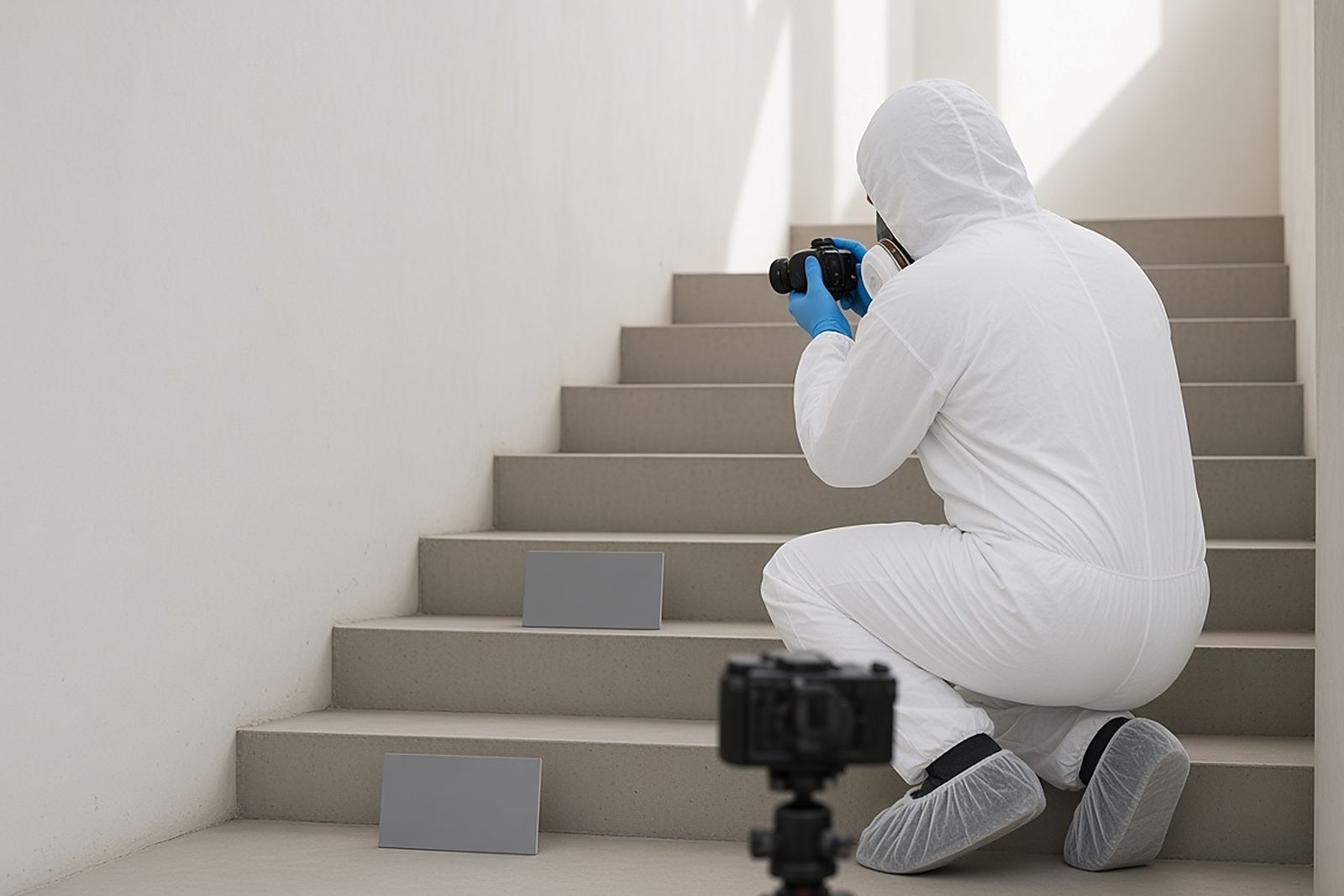
Treat detection tools as guides for a skilled inspector, not as verdicts. The key output is a set of photographed findings that explain why materials were removed or cleaned.
Ask what happens when a detection tool and the inspector's eyes disagree. For example, if a meter shows moisture under a floor that looks clean, a careful provider will investigate further rather than dismiss the reading. If a light source shows a faint reaction on a surface that was already cleaned, they will clean it again and note it. Good providers treat surprises as information, not inconvenience.
Foggers, ozone and UV vs thorough cleaning
Foggers, ozone and UV have a place, but rarely as a main step. Foggers disperse disinfectant or deodorizer as a mist. They may supplement thorough cleaning in certain cases, but a mist does not reliably reach beneath materials or remove soil, and the product must still be used exactly as its label directs.
Ozone generators are sometimes used for stubborn odor. Ozone irritates the lungs, so rooms must be empty of people, pets and plants, and it can damage rubber, some fabrics and electronics. It does not remove the source of an odor. If contaminated material remains, the smell comes back.
Ultraviolet lamps can inactivate some microorganisms on surfaces in direct light but not in shadows, seams or porous materials. They do not replace cleaning.
If one of these is proposed, ask why your situation needs it, how long you must stay out and what the plan is if the problem persists.
Some bloodborne pathogens can remain infectious on surfaces longer than people expect. The CDC states that hepatitis B virus remains infectious for at least 7 days on environmental surfaces. That is one reason cleanup must be complete and methodical, with every affected surface cleaned and disinfected according to label directions, regardless of what machines are on site.
Worker protection is another core element. Crew members who handle blood should be trained under OSHA's Bloodborne Pathogens Standard and wear appropriate protective equipment. A provider that invests in trained people and sound procedures usually uses equipment thoughtfully, too.
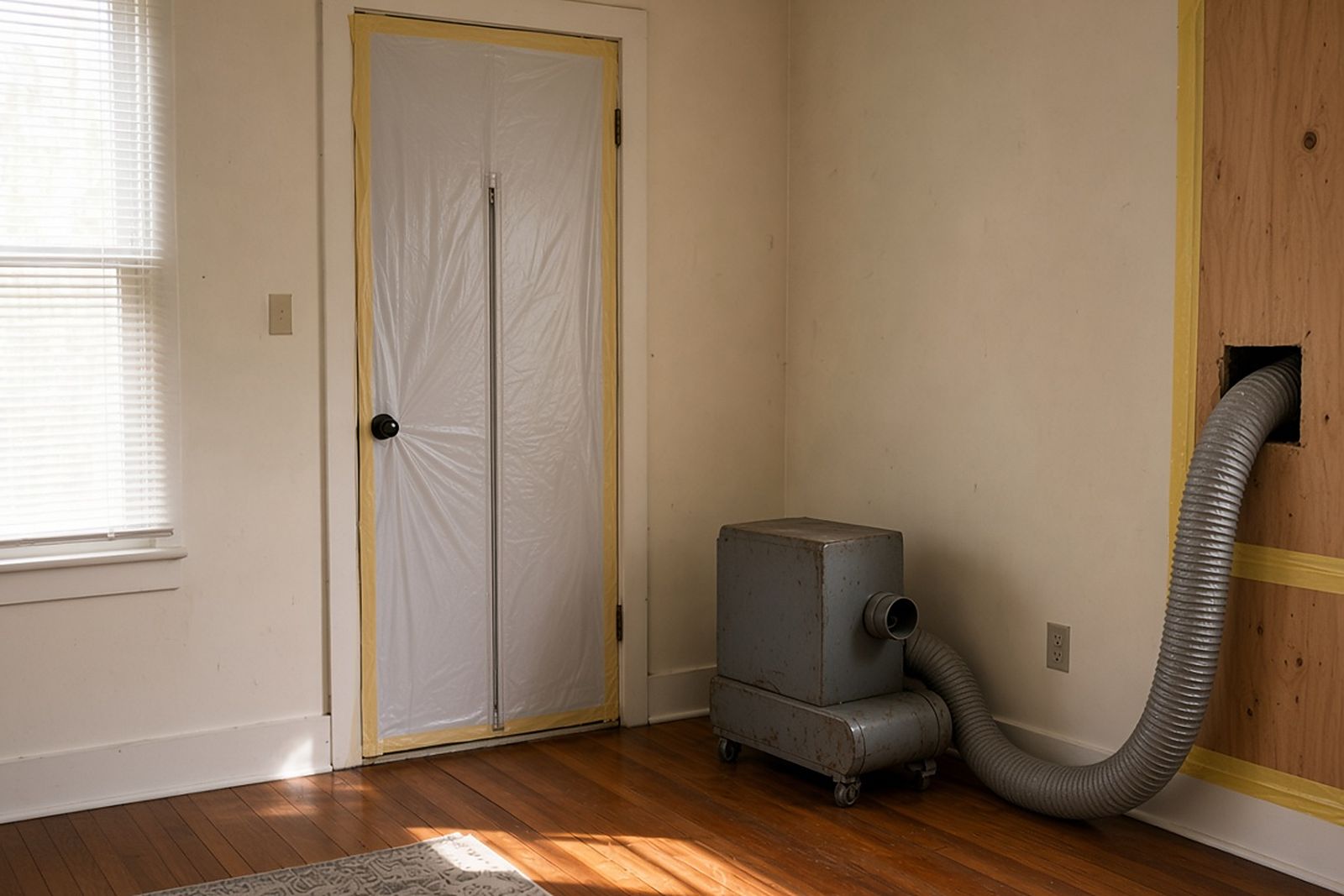
Containment belongs in this core as well. Plastic sheeting, sealed doorways and covered return vents are simple, inexpensive measures, yet they often do more to protect the rest of a home than any advanced machine. Ask how the provider plans to keep dust, powder and odor from reaching rooms that were never affected.
Documentation: the most useful technology
Good documentation may be the most useful technology in homicide cleanup. Time-stamped photos, marked floor plans and organized digital reports make it easier for insurers, landlords, estate administrators and victim compensation programs to understand the work.
Many families do not want to see images of the scene. Ask whether the report can be delivered with photos in a separate file, or sent directly to your insurer, attorney or victim advocate. Some providers offer online portals; ask who will have access and whether you can limit it.
Clear records can also answer questions that arise months later, such as when the property is sold or when a contractor needs to know what was done beneath a new floor.
Ask, too, how long the provider keeps records and in what format. If a compensation claim or insurance question takes months to resolve, you may need a copy long after the job is finished. A provider that stores reports securely and can resend them on request saves you from having to track down paperwork during an already difficult time.
Two proposals, compared
Two proposals for the same home, sketched here for illustration rather than drawn from a real case, show the difference. A woman is killed in the kitchen of her home, and traces are found in the dining room and front hall. Investigators leave fingerprint powder on several doors, cabinets and a window. Her brother, the executor, requests two proposals.
The first company proposes whole-house fogging, three days of ozone, UV treatment in every room and replacement of all kitchen cabinets. When asked, it cannot say why cabinets that show no contamination must go, and says ozone is included on every job.
The second company inspects with moisture meters and lifts the edge of the kitchen vinyl and dining room rug. It proposes removing the rug and a section of vinyl, cleaning and disinfecting the subfloor, cleaning and disinfecting cabinet faces, HEPA vacuuming and wet-cleaning powder from every dusted surface, and running an air scrubber during removal. It suggests odor treatment only if needed after source removal and offers a digital report with photos sent to the insurer. The brother chooses the second proposal. The situation is fictional, but the contrast is realistic.
What support is available while decisions like these are made?
Weighing proposals and asking technical questions is hard at the best of times, and much harder after a violent loss. It is entirely reasonable to ask a relative, friend or victim advocate to do this for you.
Victim advocates in police departments and prosecutors' offices can also point you toward counseling, homicide survivor support groups and help with compensation paperwork. Leaning on them now can make the months ahead a little more manageable.
It is also normal for decisions to feel harder than they would have before the loss. Trauma can affect concentration and memory. Writing down each provider's answers, or asking a helper to take notes during calls, can make comparisons easier and spare you from repeating painful conversations.