Short answer
A defensible homicide cleanup scope starts from the investigative release, maps every affected room and path, and ties each action to a photographed finding. It treats evidence residue separately from biological contamination, protects belongings and possible evidence, names chemistry and waste handling, lists exclusions, requires written approval for changes and ends with records that insurers and compensation programs can use.
What will this example show, and what will it leave out?
This article follows one invented homicide cleanup from first phone call to final report. The people, the house and every finding are fictional. The goal is to show the reasoning behind a well-built scope so you can recognize one when a provider hands it to you.
Nothing here describes the violence itself. A careful provider does not need those details to plan the work, and you should never feel pressured to share them. What matters for the scope is where contamination and investigative residue are, what they touched and what will be done about each.
Your own situation may look very different. Treat this as a teaching tool, not a template, and rely on the provider who actually inspects your property for decisions.
Before the company arrived
In this made-up case, a woman in her sixties was killed in her two-story home. Her adult son lives in another city. Police processed the scene over several days, and the medical examiner's office handled her body. The lead detective then released the house to the son, who is also the named executor in her will, but asked that a detached garage remain closed for two more days.
The son was assigned a victim advocate through the county prosecutor's office. The advocate explained that the state's crime victim compensation program might help with cleanup costs if he applied and the claim met the program's rules, and that he should keep every invoice and report.
He found a cleanup company, confirmed they had handled homicide scenes before and asked them to call the advocate if they had questions about paperwork. He told them he did not want to see photographs unless it became necessary.
Before any visit, the company's intake coordinator asks the son only practical questions: the address, the release date, which rooms investigators focused on, the type of flooring and whether anyone is staying in the house. The coordinator also asks how he prefers to receive updates, and he chooses a short email at the end of each day.
How does the assessor start without overstepping the release?
The supervisor begins by confirming the release in writing with the son and noting the garage restriction at the top of the scope. The crew will not enter the garage until the son forwards the detective's second release.
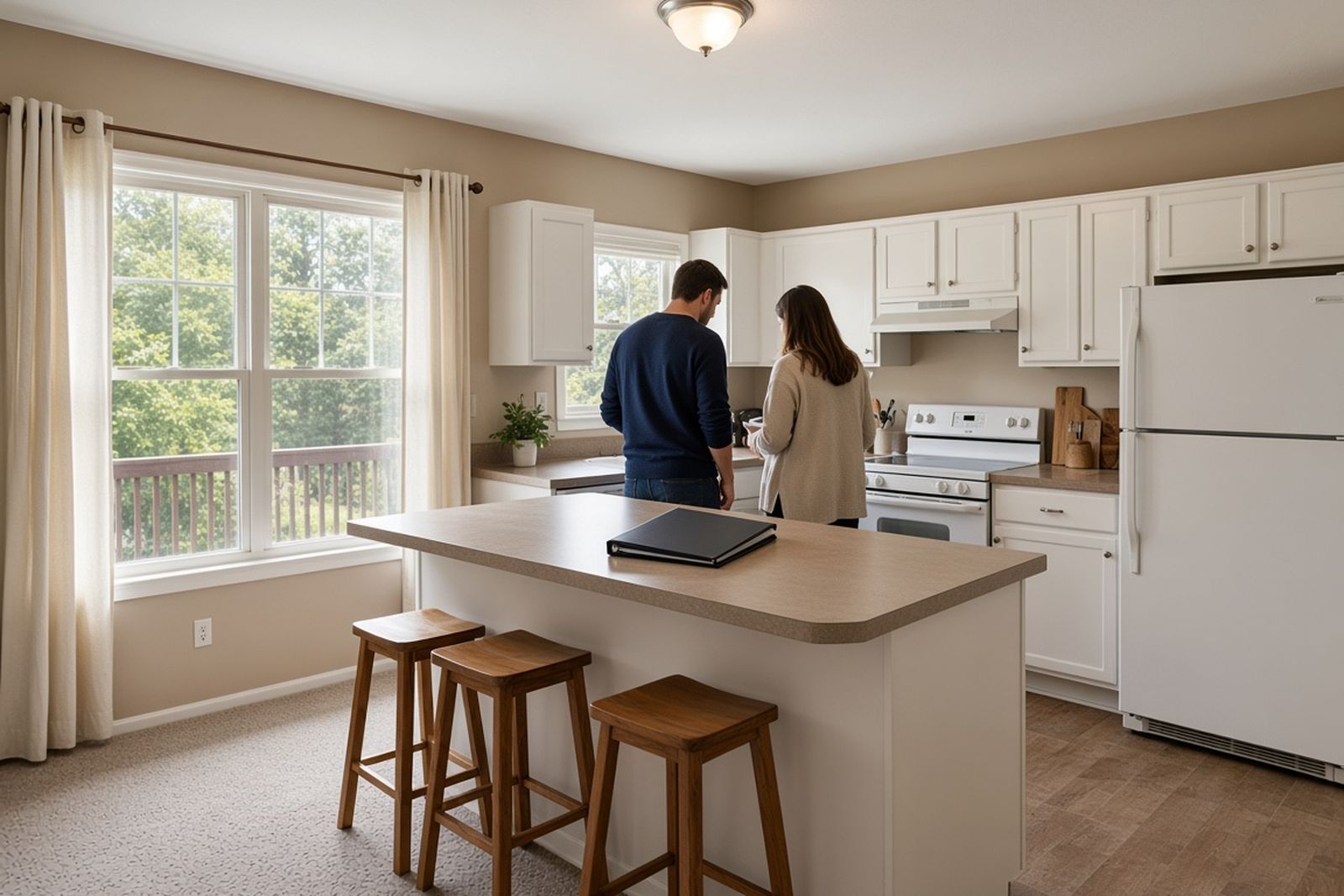
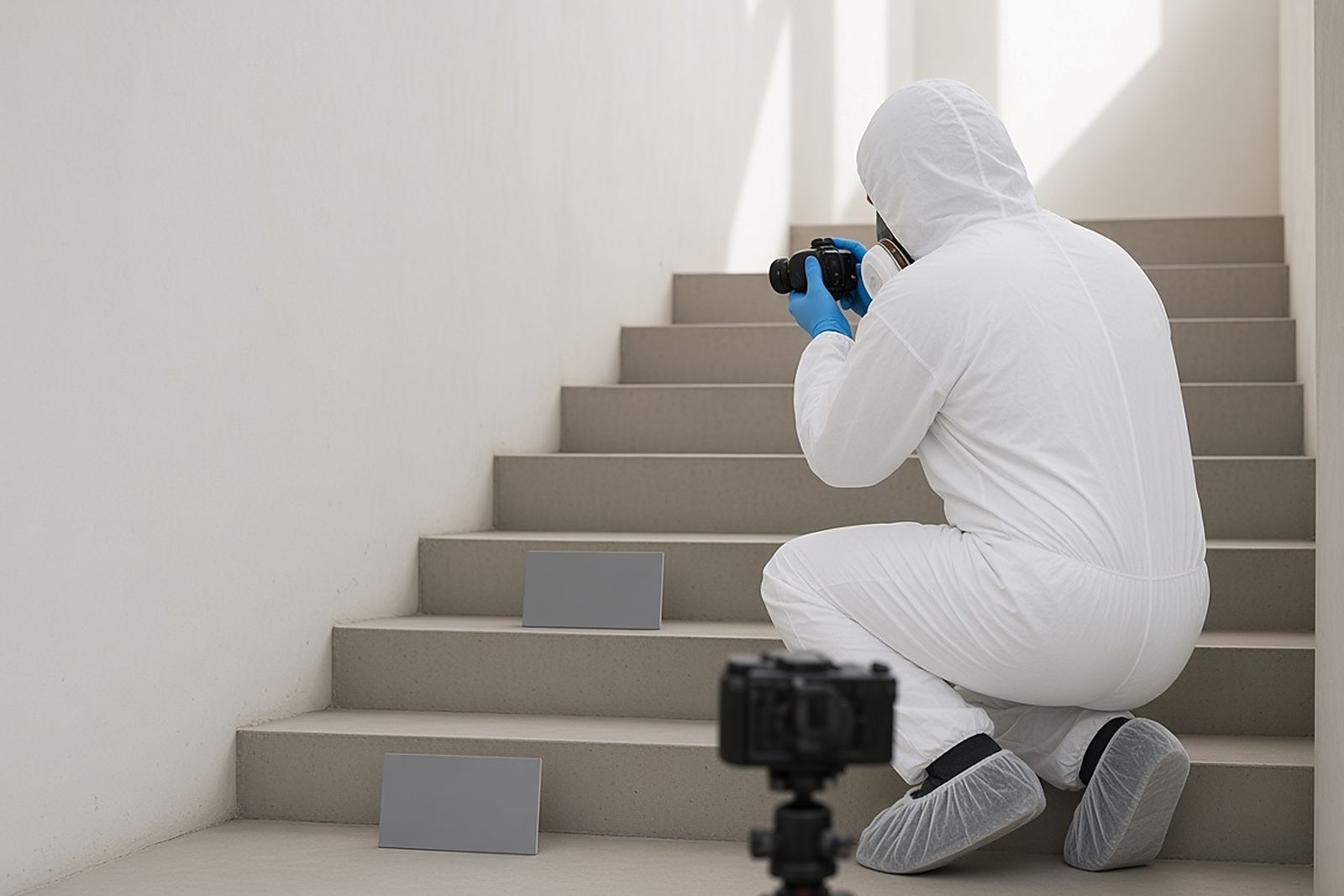
Next, the supervisor photographs the exterior entry, then each room from the doorway before stepping inside. That creates a record of how the home looked when the company received it, including any items investigators moved or left behind, such as evidence markers, tape or gloves.
The supervisor also asks the son whether investigators mentioned anything they might still want, such as documents or devices. He says the detective asked him to keep his mother's desk papers intact, so the scope marks the desk as do-not-disturb beyond cleaning its exterior surface.
Finally, the supervisor checks basic safety conditions: whether utilities are on, whether any broken glass or damaged fixtures remain from the event or the investigation, and whether the home was left unlocked at any point. Those notes go into the scope so the crew knows what to expect.
Mapping the rooms and paths
The main area of contamination is the living room, where the supervisor documents staining on hardwood flooring, a fabric sofa, an area rug and the lower portion of one wall. Investigators cut out a section of the rug and a square of drywall as evidence, leaving exposed insulation.
The supervisor then follows the paths people used during and after the event. Small traces appear on the hallway runner, the front door interior and a stair rail. The kitchen and upstairs bedrooms show no contamination, though a bathroom sink shows traces that were likely tracked there during the emergency response.
Fingerprint powder is present on the front and back doors, several windows, the kitchen counter edge and a dresser upstairs. Residue from chemical reagents is noted on the living room floor. Each is photographed and logged by room.
This map matters because homicide scenes rarely stay in one room. A scope that only mentions the living room would leave a family with residue on a stair rail they touch every day.
Removal vs cleaning: each decision explained
Each decision in the scope follows a simple pattern: what was found, where, and why the chosen action fits. Porous items that absorbed fluid are removed. Sealed, hard surfaces are cleaned and disinfected. Anything uncertain gets inspected more closely before a decision.
In this example, the sofa and the remaining area rug are recommended for disposal, and the son approves in writing. The hallway runner shows only small spots, but because it is thin and sits over a pad, the supervisor recommends removing it rather than trying to clean it. The hardwood floor is inspected at its seams; one board shows staining below the finish, so a small section is removed, and the subfloor beneath is cleaned, disinfected, dried and sealed.
Around the evidence cut-out, the exposed insulation is removed and bagged, the wall cavity is inspected, and the framing is cleaned, disinfected and allowed to dry. The scope notes that the cavity was found clean and dry before it was left open for a drywall contractor.
- Remove with approval: sofa, area rug, hallway runner and pad
- Remove: one hardwood section and insulation at the cut-out
- Clean, disinfect and seal: exposed subfloor section
- Clean and disinfect: wall framing, stair rail, door, bathroom sink
- Remove fingerprint powder: every door, window and surface logged
- Remove reagent residue: living room floor
Products, containment, waste and belongings
The scope names the disinfectant and states that surfaces will stay wet for the full contact time on its label. It lists the cleaner used to remove fingerprint powder and notes that powder will be cleaned before disinfection so it is not smeared across a wider area.
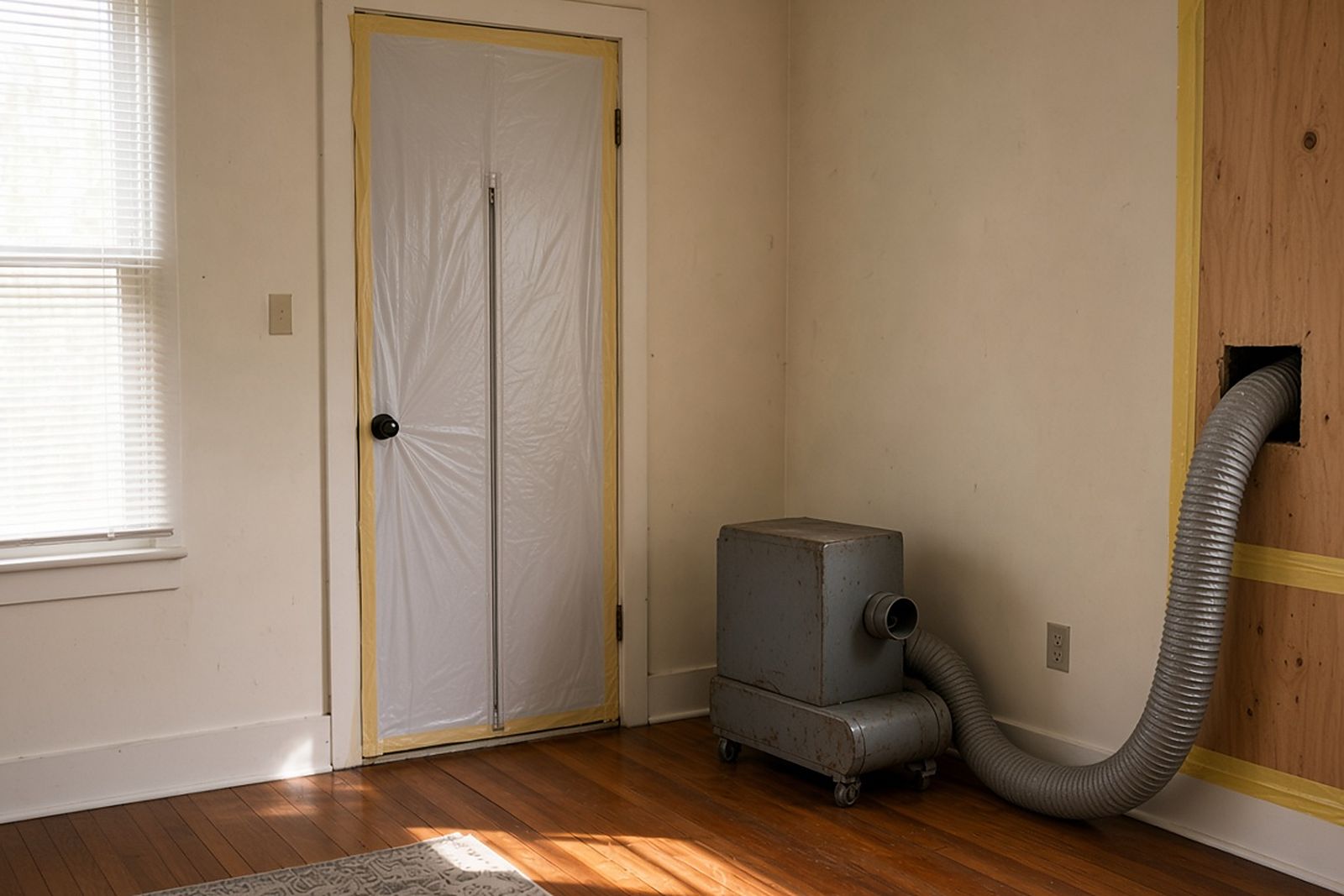
Containment is planned around the stairs and hallway, which are the only route out. The crew lays protective sheeting along that path, seals the living room doorway during removal and covers the nearest HVAC return.
Waste is split into regulated medical waste, such as materials with blood contamination, and ordinary construction debris from unaffected areas. Regulated waste is packaged, labeled and handed to a licensed hauler, with the disposal record promised to the son. The scope names the hauler, so the son can confirm its registration with his state's medical waste program if he wishes.
The son asks that family photos, his mother's jewelry box and a quilt on the upstairs bed be set aside. The scope lists those items, says they will be cleaned only if needed, and packed and labeled for him.
The scope also states that any documents found during the work will be left in place or set aside unread, and that the desk will not be disturbed. Nothing personal will be discarded without written approval.
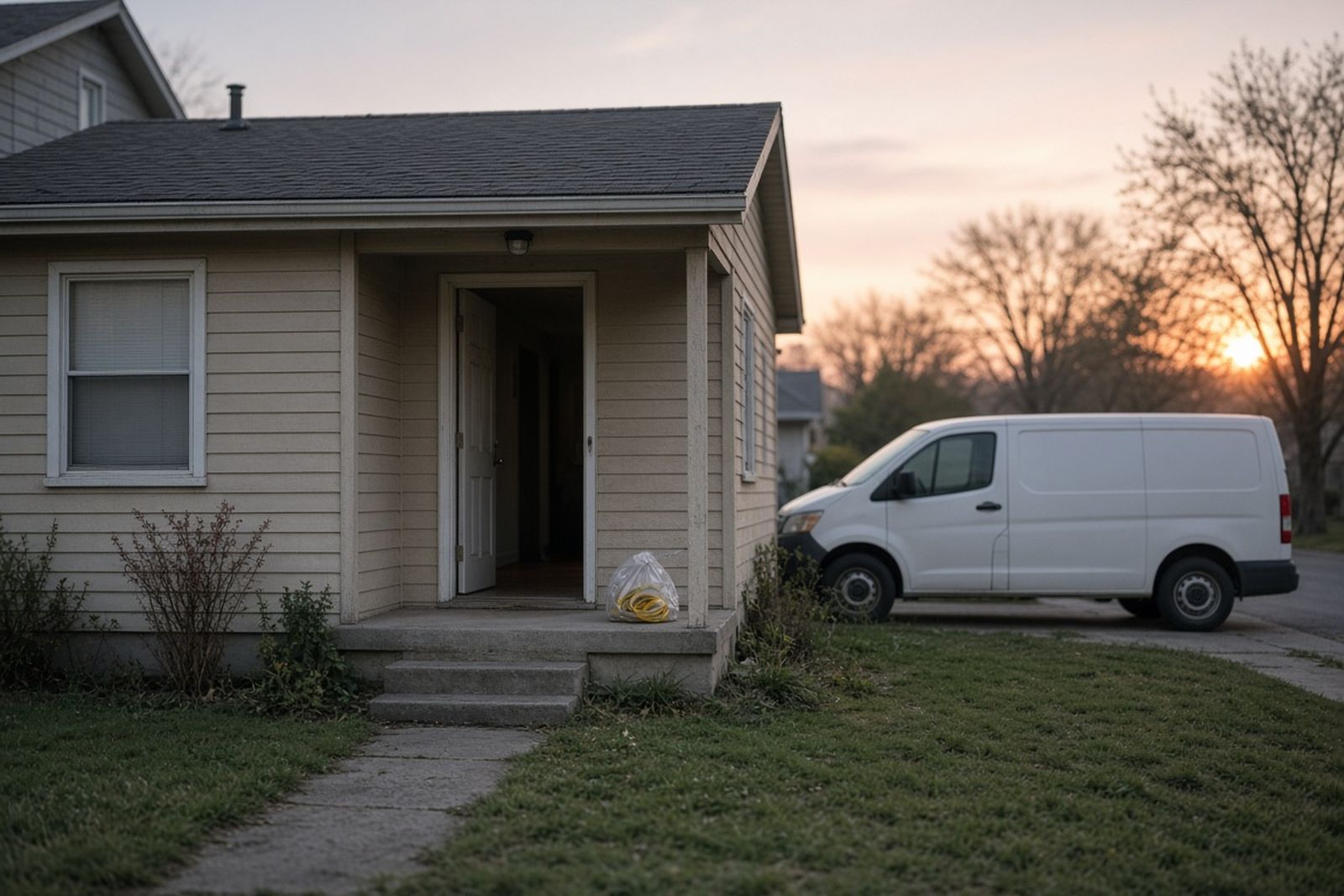
Privacy is written in as well. The crew will use unmarked vehicles, bring waste out through the rear door and decline to speak with neighbors or reporters. That reflects a concern many families share after a crime that drew local attention.
Exclusions, changes, closeout and the lesson
Exclusions are listed plainly: drywall replacement, flooring installation, painting, furniture replacement and any work in the garage until it is released. Those are restoration steps, not remediation.
If the crew finds more contamination than expected, the rule is to pause, photograph and get the son's written approval before continuing. In this example, that happens once, when staining is found under a second floorboard. The son approves by email.
At closeout, the son receives photos of every area, the removal list with reasons, notes on powder and reagent cleanup, disinfectant details, the wall cavity finding, the change approval and the waste record. His cousin does the walkthrough on his behalf. The advocate uses the invoices and report to help him complete his compensation application.
The final invoice matches the scope line by line, with the approved change shown separately. Because every cost is tied to a finding, the compensation program and the homeowner's insurer can each see exactly what they are being asked to consider, and the son does not have to explain the work himself.
A defensible scope explains itself line by line. When each action traces back to a photographed finding, it is easier to trust the work, easier to support a claim and easier to hand off to a restoration contractor.
It also shows how much you can delegate. The son in this example made only a handful of decisions, and never had to walk into the living room himself.
Families bereaved by homicide often need support long after the house is clean. Victim advocates, homicide survivor groups and trauma-informed counselors can help, and reaching out to them is a strength.