Short answer
After investigators release the home, a homicide cleanup team assesses the scene, writes a scope, and agrees with the family on which belongings to set aside. The crew then contains the work area, removes contaminated materials, cleans evidence residue, disinfects, handles regulated waste and verifies results. Families should expect discretion, clear communication, documentation for insurance and compensation claims, and no pressure to be present.
Release first, then the first phone call
In a homicide, the home is part of an active investigation. Detectives, crime scene technicians and the medical examiner's staff may all need time inside, and they may return more than once before releasing the property. During that time, no one, including family and cleanup professionals, can alter the scene.
When the home is released, the investigating agency will usually tell the property owner, the next of kin or the person who holds the lease. Ask for the release in plain terms and write down the date and time. If part of the property, such as a car, garage or specific room, remains under hold, the cleanup company needs to know so it does not enter that area.
It is also worth asking whether the investigating agency has any requests about items in the home, such as documents or electronics they may still want to review. Procedures differ between agencies, so the detective or victim advocate assigned to your case is the best source of guidance.
Your first contact is usually a phone call with an intake coordinator or supervisor. They will ask for the address, which areas were affected, the kind of flooring and furniture involved, when the home was released and whether anyone lives there now. A respectful provider will not ask you to describe what happened in detail.
Many families prefer to hand this call to someone else. A relative, close friend, landlord or victim advocate can speak with providers on your behalf, as long as the person with authority over the property agrees. You can still make the key decisions without having to repeat difficult information again and again.
Expect the provider to explain how they price work, when they can arrive and what documents they will provide. If anything is unclear, ask again. You are not being difficult by wanting to understand.
The assessment and your loved one's belongings
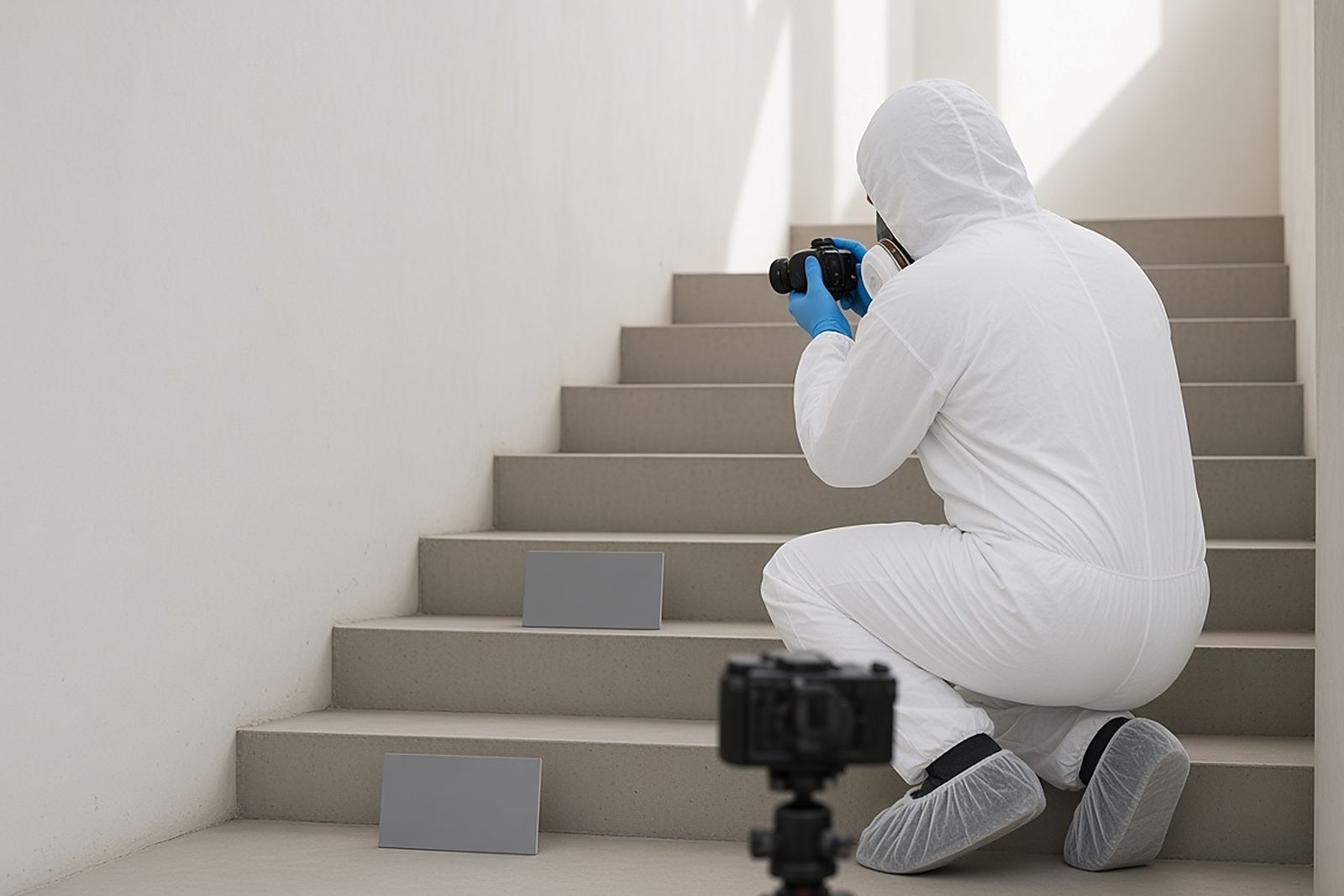
A supervisor or lead technician walks through the affected areas in protective equipment. They look for visible contamination and for spread beneath and behind materials, note any residue left by investigators, such as fingerprint powder or chemical reagents, and identify evidence cut-outs in carpet or drywall. They also note belongings that may be salvageable.
Photos taken during the assessment become part of the written scope and often support insurance and victim compensation claims. You do not need to look at them unless you want to.
At the end of the assessment, you should receive a written scope that lists each area, whether materials will be cleaned or removed, how evidence residue will be addressed, how waste will be handled and what is excluded. If urgent containment is needed first, such as sealing off odor, the provider should explain that clearly.
This is often the question families care about most, and a good provider will raise it before you have to. Before any removal begins, the crew should ask what matters to you. Common requests include photographs, jewelry, wallets, phones, important papers, clothing, religious items and children's drawings.
Items in the affected area are assessed carefully. Hard items can often be cleaned and disinfected. Some fabrics and papers can be restored, while others cannot. If something cannot be safely returned, the provider should tell you before discarding it and, if you wish, photograph it for you.
Returned items are usually placed in sealed bags or boxes and labeled. Some families want them delivered right away. Others ask the provider to hold them until they feel ready. Either choice is fine.
- Make a short list of must-find items, even if you are not sure where they are
- Tell the crew about any items with cultural or religious significance
- Ask for an inventory of everything removed or set aside
- Decide who will receive returned items, and when
What will the crew do inside the home?
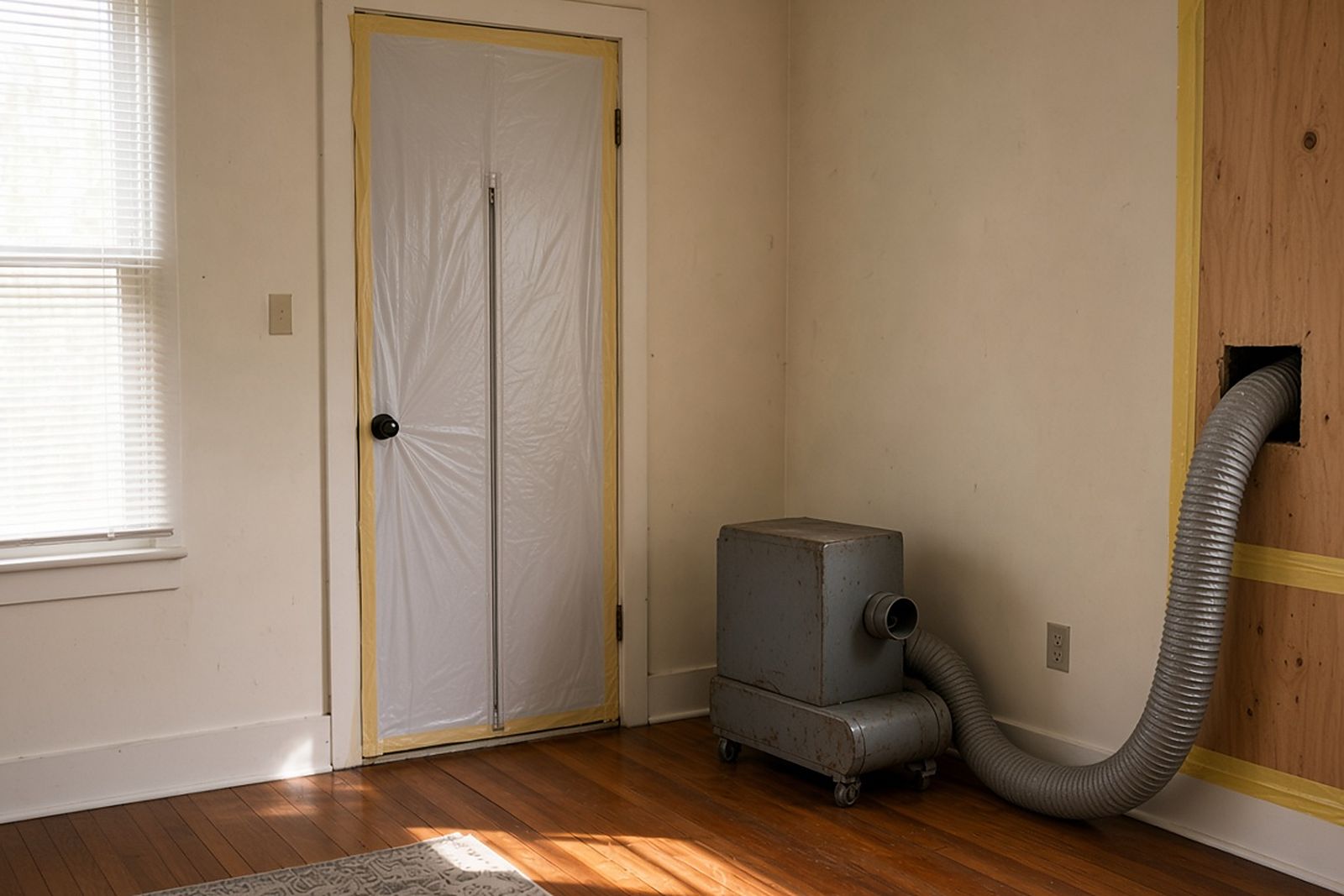
First, they set up containment. That may include plastic sheeting over doorways, protective coverings on floors along their path and shutting down or sealing HVAC vents. They establish an area for putting on and taking off protective gear so that contamination is not carried into clean rooms.
Workers exposed to blood are covered by the federal bloodborne pathogens standard, which calls for training, protective equipment and a hepatitis B vaccination offer. Asking a provider how they meet that standard is a reasonable way to gauge how seriously they take worker safety.
The cleanup itself moves from removal to detailed cleaning. Porous materials that absorbed fluids are cut out and bagged, and the crew checks subfloor and wall cavities for spread. Hard surfaces are cleaned and disinfected with appropriate products and contact times. Evidence residue is removed with methods suited to each surface. If the crew finds more contamination than expected, they should pause and tell you before expanding the work.
One family's cleanup, sketched
The following sketch is illustrative, drawn from common circumstances rather than a real family. A woman is killed in the living room of the house she shares with her teenage son and her mother. Detectives release the home after three days. The family has been staying with a cousin, and the woman's brother agrees to coordinate the cleanup.
The brother gives the provider a short list: his sister's wedding ring, a photo album on the bookshelf, the son's school laptop and a quilt their grandmother made. During assessment, the supervisor finds that the carpet, pad and a section of subfloor must be removed, and that a sofa cannot be saved. Fingerprint powder is on the front door, a lamp and a side table.
The crew works over two days. The ring, album and laptop are cleaned and returned in sealed containers. The quilt was outside the affected area and is simply bagged and returned. The brother receives photos, an inventory, a waste record and a note recommending a flooring contractor. The family returns home the following week, after new flooring is installed.
The family, the home and every detail above are fictional, offered only to show the sequence; each real case is different.
How will the team respect our privacy?
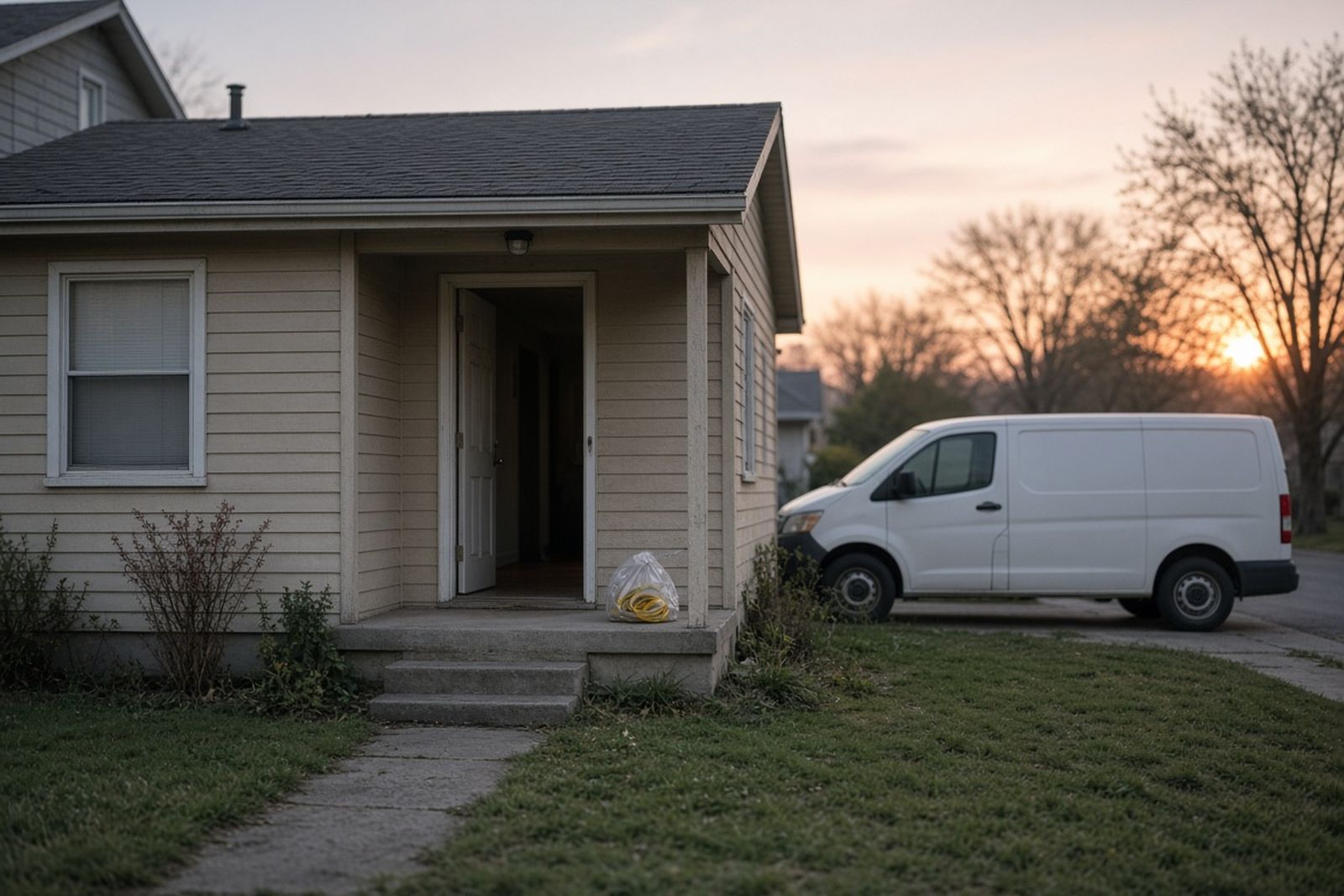
Homicides can draw attention from neighbors and sometimes the media. Many providers use unmarked vehicles, wear plain clothing when arriving and leaving and carry protective gear inside rather than suiting up in the driveway. They should never discuss the case with neighbors or reporters.
If you have particular concerns, such as a court case, a news story or a family member who should not be informed, share them with the provider. They can adjust scheduling and communication accordingly.
Discretion also extends to paperwork. Invoices, scopes and photos may contain sensitive details, so ask who will receive copies and how they will be sent. Some families prefer that documents go only to one coordinator or to the attorney handling the estate. A careful provider will follow those instructions and confirm them in writing, so nothing reaches a relative, landlord or insurer you did not intend.
Closeout, and support after the crew leaves
Before leaving, the crew should walk through each affected area, confirm that contamination has been removed or disinfected and check that nothing was missed beneath or behind materials. Some providers use surface testing, such as ATP readings, to support their verification. Ask which method they use and whether results are included in your paperwork.
You should receive a closing summary with before-and-after photos, an inventory of removed materials and belongings, waste disposal records and any recommendations for repair. These documents are valuable for insurance and for your state's victim compensation program.
Expect some areas to look unfinished. Subfloor may be bare, and drywall may be open. Cleanup and reconstruction are separate phases, and repairs are usually handled by a general contractor afterward.
Cleanup restores the physical space, but grief after homicide often continues for a long time and may involve court proceedings, media attention and difficult anniversaries. Victim advocates attached to the prosecutor's office can explain the criminal process, help with compensation claims and connect you with counseling.
Many communities have homicide survivor support groups where families meet others who understand. If returning to the home feels impossible, that is a valid feeling. Some families decide to move, and some find that changes to the room help. There is no right timeline, and there is no wrong way to grieve.