Short answer
Size does not decide quality. Look at the business that will really do the work in your home. Check its crew's training and insurance and any helpers it hires. Ask about its experience with police releases, police residue and victim compensation paperwork. Ask whether it can handle a large job and how it protects your privacy. Find out who stands behind the work and keeps the records afterward.
National brand or local company: who actually does the work
A national brand is not better by default, and neither is a local one. National brands often advertise steady quality, phone lines that answer day and night and large networks. Local companies often advertise personal attention and community roots. Both can do excellent work, and both can let you down.
After a homicide, the choice feels very heavy. You may be dealing with detectives, reporters, a grieving family and a property that must be restored. The best way to choose is to ask every company the same practical questions and compare the answers. Do not rely on the size of the logo.
A relative, friend, attorney or victim advocate can make these calls for you. You do not need to describe what happened. The company needs only the address, the areas involved, whether the police have released the home and basic details about the property.
Many national cleanup brands work through franchises, partner firms or local companies they hire. When you call a national number, the job is often handed to a business in your region. That business may be excellent. But it is the one whose crew, training and insurance matter to you.
Ask for the legal name of the company that will do the work. Ask where its crew is based and who will supervise at your home. Local companies sometimes hire other firms for parts of a job too. That may be cleaning the heating and cooling system, removing flooring or working on outdoor concrete. Ask them the very same question.
Ask for that information by email or in the contract. If a company cannot or will not tell you who will be inside your property, that is a reason to keep looking.
Checking training, insurance and records
Crews who may touch blood should be covered by their employer's safety program for germs carried in blood. Under OSHA's Bloodborne Pathogens Standard, that program offers training, protective gear and vaccination. A company with a real program will be at ease describing it and explaining how it records training.
Ask for a certificate of liability insurance that names the business doing the work. If other firms are involved, ask for their certificates too. It is also fair to ask about workers' compensation coverage for the crew.
If a company mentions certifications or memberships, ask what each one requires and how you can confirm it. Rules vary by state and county; verify with the local authority whether your area requires any license or registration for this kind of work.
- The legal name of the business doing the work
- The on-site supervisor and where the crew is based
- The safety training program for bloodborne germs, and its records
- A liability insurance certificate for the company doing the work
- Any other firms it hires, and their insurance
- A licensed hauler for regulated waste
Local know-how vs national capacity
Local know-how can matter. Homicide cleanup starts only after the police release the property, and each agency handles release its own way. A company that often works in your area may know how local departments announce a release. It may know how to handle areas still on hold and what to do if detectives come back with questions.
Knowing your state's crime victim compensation program can also help. Some programs may help eligible families with cleanup costs, and they often expect certain paperwork. A company that has prepared invoices and reports for that program before can make things go more smoothly for you. But no company can promise approval.
A national brand's local operator may have this experience too. Ask any company how many homicide cleanups it has done in your area and whether it has worked with victim advocates.
Some homicide scenes stay within a single room. Others span several rooms, stairs, a vehicle, a yard or a business with public areas. A larger job may need more workers, more equipment and careful planning to finish in a reasonable time.
National networks can sometimes bring extra crews and equipment from nearby regions. A well-established local company may have enough staff, or trusted partners, to grow the team. Ask each company how many people it would assign to your job and how long it expects the job to take. Ask what it would do if the work grows.
For businesses and buildings with many units, ask about after-hours work, working with building security and experience working near the public. These things often matter more than whether the company is local or national.
How do privacy and media attention factor in?
A homicide can draw news coverage and neighborhood attention for days. A company of any size should use unmarked vehicles if you ask and set up its equipment quietly. It should refuse to discuss the job with reporters, neighbors or anyone outside the contacts you approved.
In a smaller community, a local crew may include people who knew the victim or your family. Some families welcome that. Others would much prefer strangers. A national brand's local operator may draw from the same community. So ask directly whether any crew members have a tie to your family and whether you can request others.
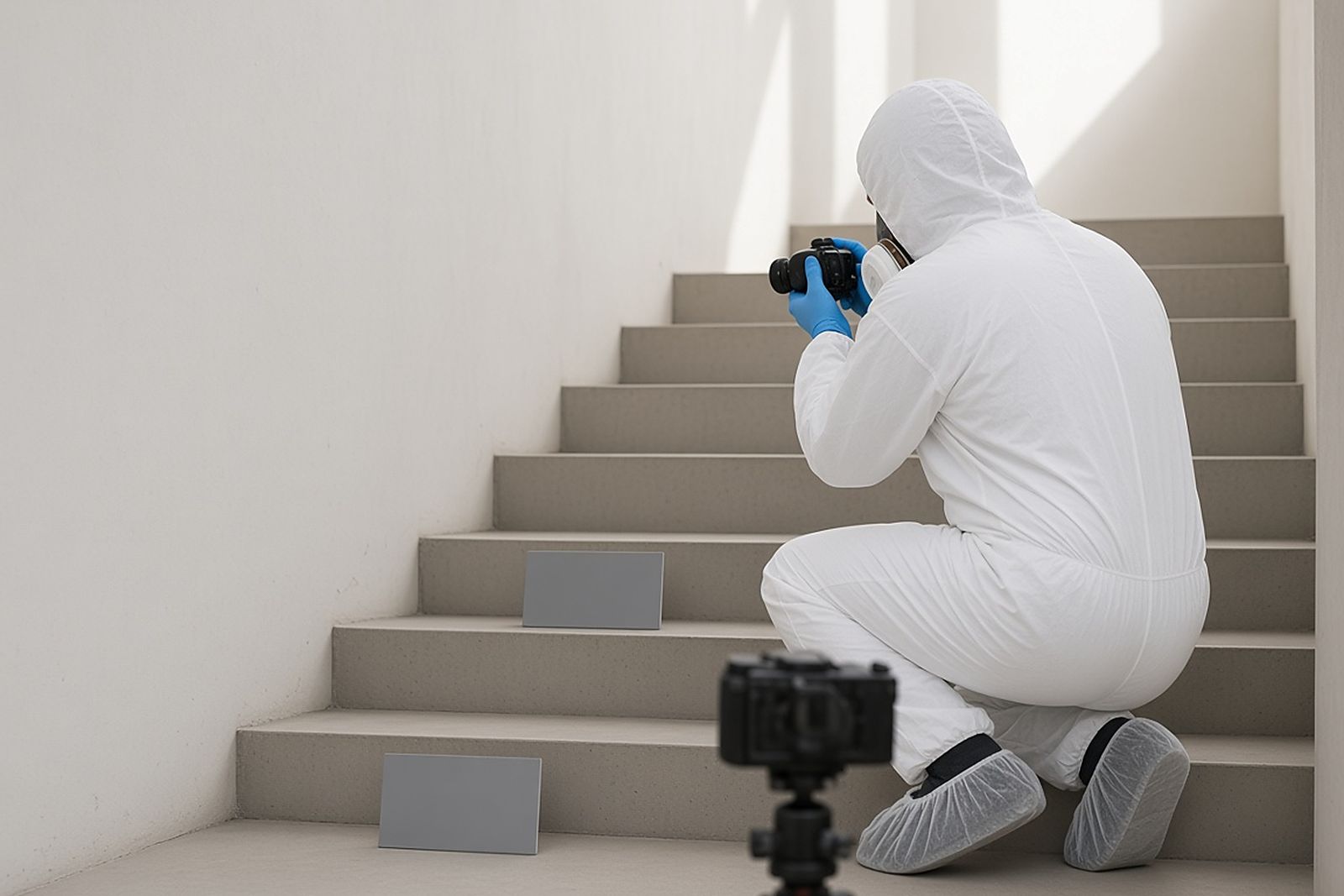
Ask, too, how photos and reports are stored and who can see them. Sensitive records should be shared only with people you approve.
If the case is in the news, ask whether the company has worked with reporters nearby before. Ask what the crew would do if a reporter walked up. A calm, practiced answer suggests they will protect your family's privacy under pressure.
Comparing estimates and weighing trade-offs
Comparing prices only works when the planned work matches. One estimate may include removing fingerprint powder from every door and window. Another may treat that as an extra. One may cover outdoor areas such as a porch or driveway, while another covers only the inside. A lower total can simply mean less work.
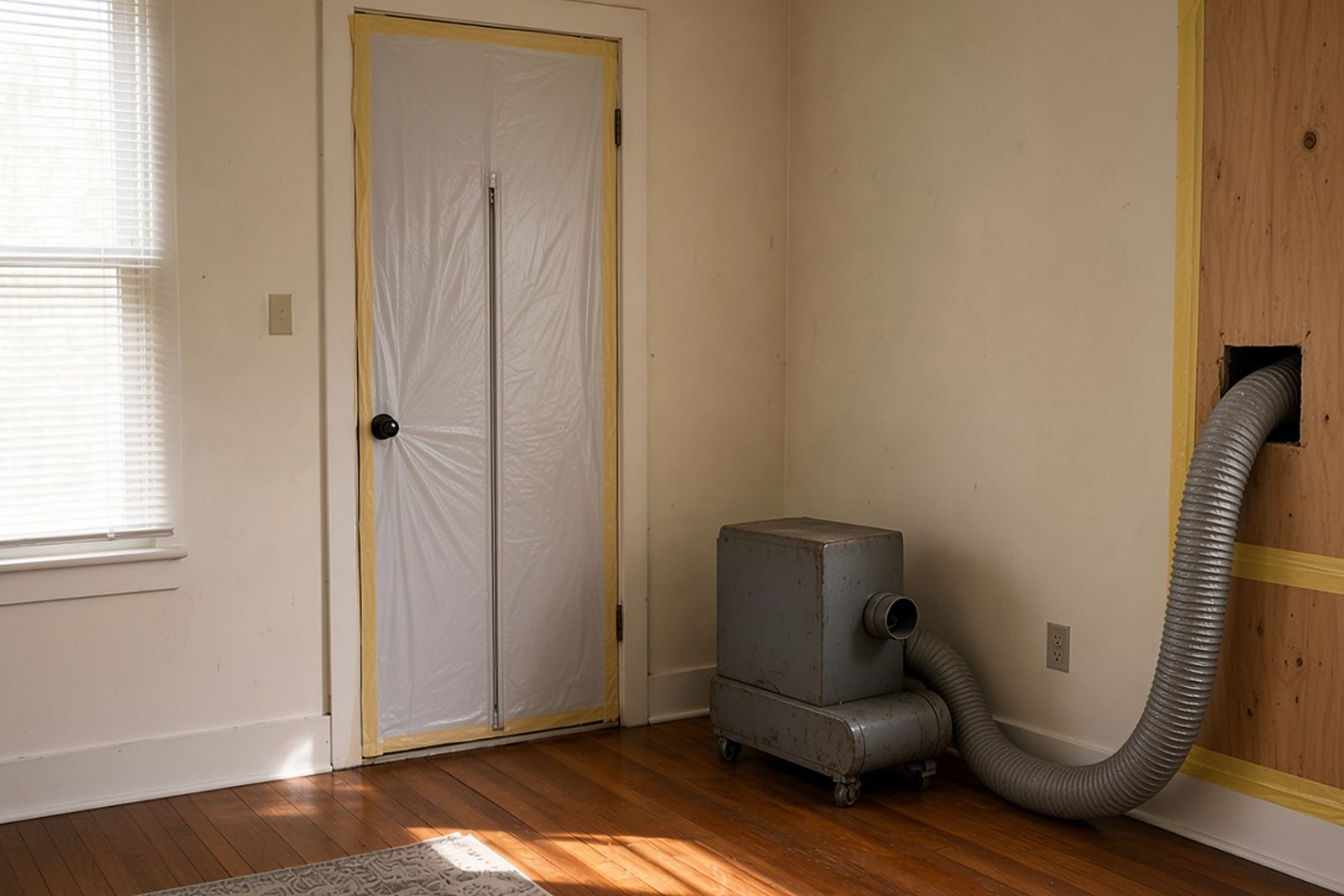
Ask each company for a written work plan. It should list every affected area, the materials to be removed and the surfaces to be cleaned and disinfected. It should say how police residue will be handled, how your belongings will be protected and how waste will be disposed of. It should also say what is left out. Then compare line by line, or ask your helper or advocate to do it.
National brands may use standard pricing tools, while local companies may price each job on its own. Either can be fair. What matters is that the method is explained to you. Any change to the plan should need your written approval, with photos that show why.
Be careful with a firm price quoted over the phone before anyone has seen the property or photos. A homicide often leaves damage that is not obvious at first. An honest company will tell you that up front.
The trade-offs get clearer when a scene is spread out. Say it runs from a living room to a front porch and driveway, and the person deciding is an executor who lives in another state.
A franchise may name its operator and send insurance and training details promptly. It may offer to bring a second crew from a nearby city for the outdoor work, which shortens the job. An independent local company may have equally good paperwork. It may have prepared papers for the state compensation program many times. But it may need to schedule the driveway work on a separate day.
An executor who cannot travel back often may fairly value the shorter schedule. A family more concerned with compensation paperwork may fairly value the local track record. The right answer depends on the details, not the label.
Who stands behind the work, and what should decide it?
Weeks after cleanup, an odor may return, or a contractor may find a stain beneath a floor. Ask every company, in writing, what it will do if that happens. Ask who pays for a return visit when the problem falls within the original work plan.
With a national brand, find out whether the brand or the local operator handles complaints. With a local company, ask about its policy on return visits. In both cases, ask how long reports and photos are kept. Ask how you can request copies for an insurer, a compensation program or a future sale.
Keep a single folder, on paper or on your computer. Put in the work plan, the insurance certificates, your approvals of changes, the waste records and the final report. Whichever company you choose, that folder will answer most questions that come up later. It spares you from reliving the details to piece them together.
Choose the company whose answers are clear, specific and in writing, and that treats you with patience. Some things matter more than size. They are a written work plan tied to what was seen, careful handling of belongings, separate cleanup of police residue, proper disposal and a complete report.
Most of all, protect your own wellbeing while you make these choices. Victim advocates, homicide survivor groups and counselors trained in trauma can support you through the weeks ahead. If anyone in your family reaches a point of crisis, the 988 Suicide and Crisis Lifeline is available by call or text at 988.