Short answer
Environmentally responsible homicide cleanup handles two kinds of residue, biological contamination and investigative materials such as fingerprint powder, without sending either where it does not belong. It removes only what is truly affected, protects soil and storm drains at outdoor scenes, sorts regulated from ordinary waste, uses registered products as labeled, relies on a licensed hauler and hands you disposal records.
What makes homicide cleanup an environmental question?
Most people think of homicide cleanup as a matter of safety and respect, and it is. But every scene also produces materials that must go somewhere: saturated carpet and furniture, drywall, protective gear, cleaning solutions and residue left behind by the investigation. How those materials are sorted, treated and transported affects sanitation workers, neighbors, waterways and landfills.
Homicide scenes also tend to be more complex than other death scenes. They may span several rooms, an entryway, a porch or a driveway. They often include fingerprint powders and chemical reagents in addition to blood. Each of those factors raises its own environmental considerations.
A responsible provider thinks about all of this without slowing down the work or asking the family to carry extra decisions. Knowing what good practice looks like lets you, or someone helping you, spot a provider who cuts corners.
Vehicles add another layer. If a homicide involved a car or truck, the upholstery, carpet and headliner may need attention, and the provider should handle that waste with the same care as materials from a house. Ask whether vehicle cleanup is part of the same scope or a separate job.
Fingerprint powder and reagent residue
Investigators use different powders and chemicals to find and preserve evidence. Some powders are fine carbon or mineral dusts; others contain metallic particles. Reagents used to reveal traces can leave chemical films on floors and walls. None of these are meant to stay in a home.
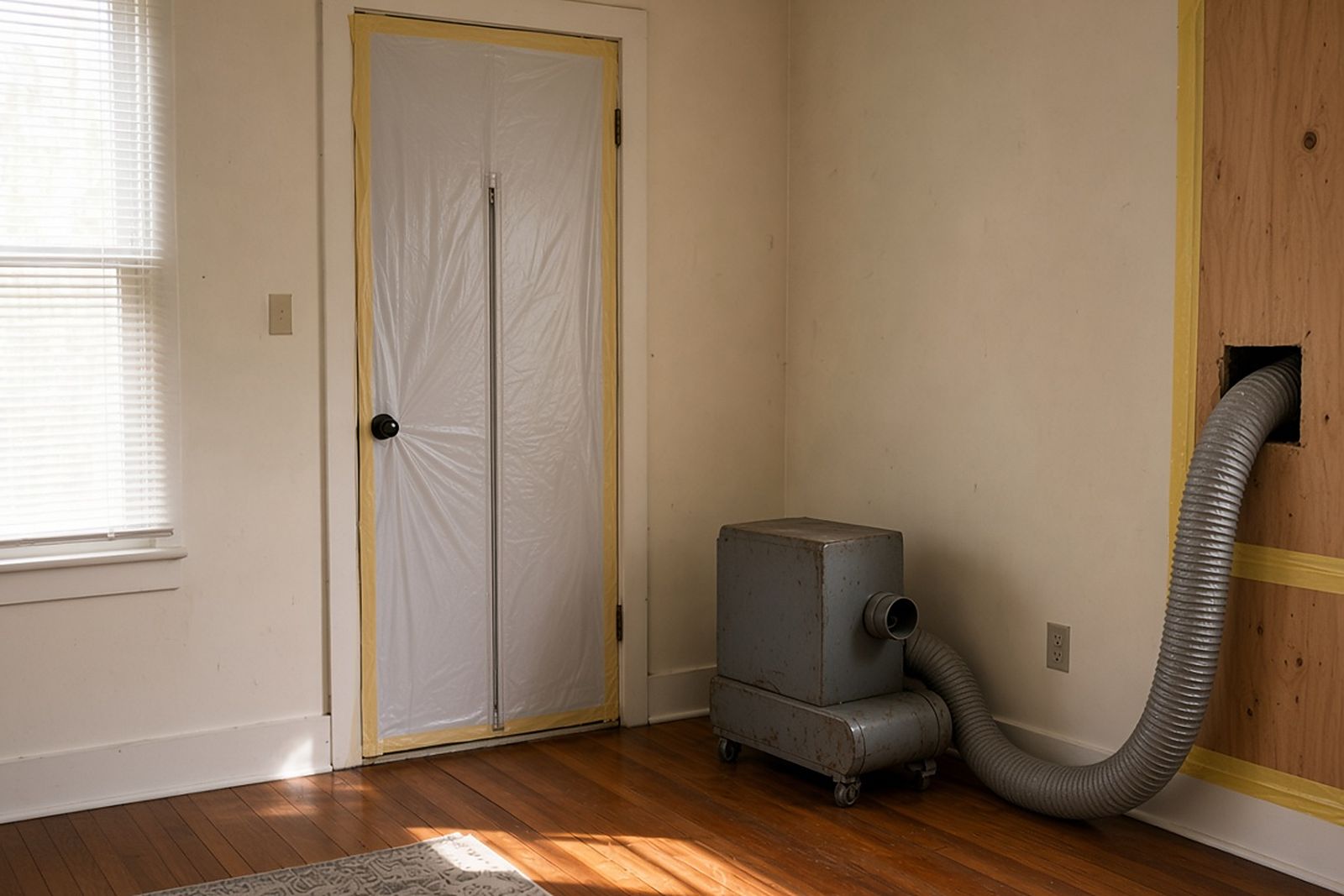
Responsible cleanup removes this residue carefully so it is not spread into the air or rubbed deeper into surfaces. That often means using damp methods rather than dry sweeping, and collecting the used wipes and pads for proper disposal rather than rinsing large amounts down a drain.
Ask your provider how they remove powder from textured surfaces, painted walls and upholstery, and where the collected residue goes. A thoughtful answer shows they have handled this before and have considered both your home and what happens after the material leaves it.
Outdoor scenes, soil and storm drains
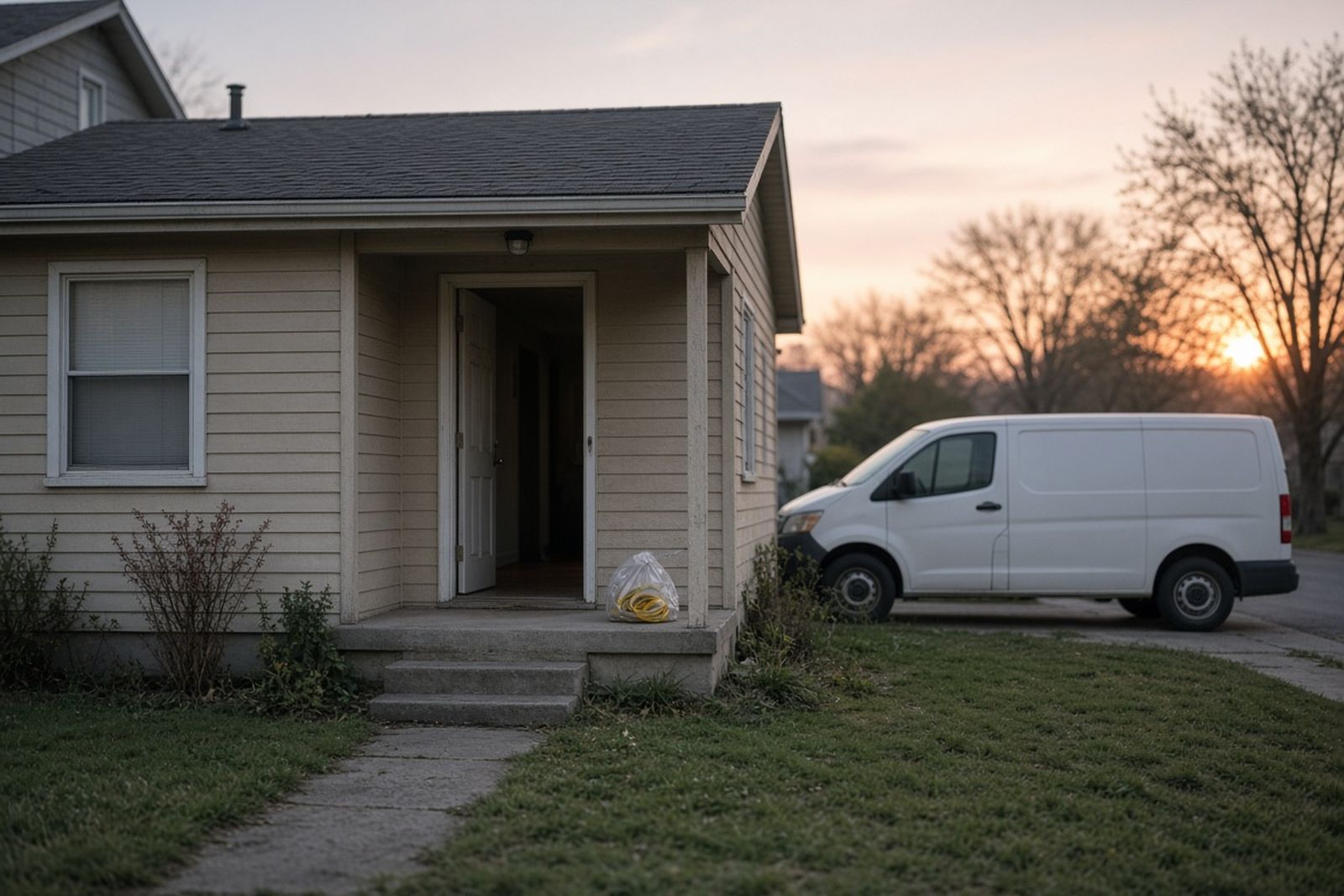
Some homicides occur on porches, in yards, driveways, parking areas or near building entrances. Outdoor scenes create a particular environmental risk: rain or a garden hose can carry contamination into soil or straight into a storm drain, which in many communities flows directly to creeks, rivers or lakes without treatment.
A responsible provider will not simply hose down a driveway. They may block nearby drains, use absorbents to collect liquids, clean with methods that capture rinse water and remove contaminated soil or mulch where necessary. Concrete and pavers are porous, so they may require repeated cleaning or, in some cases, sealing or replacement.
Rules about discharges to storm drains and disposal of contaminated soil differ from place to place. Your city's stormwater program or public works department can explain the local rules, and your provider should be able to say how it will meet them at your property.
How can a provider avoid discarding more than necessary?
In the aftermath of violence, it can feel easier to clear everything from the affected rooms. That approach creates enormous waste and can strip a family of belongings that were never touched. Responsible cleanup is selective.
The provider should inspect each item and decide, with your approval, whether it must be removed, can be cleaned or can stay in place. Items outside the affected area should not be discarded at all. Anything of sentimental value deserves a conversation, even if it looks damaged.
Items investigators handled, such as drawers they searched or electronics they examined, may only need fingerprint powder removed rather than disposal. Asking for a photographed list of recommended removals, before anything leaves the home, protects both your belongings and the environment.
- Remove only porous items that absorbed biological material
- Clean powder from items investigators touched rather than discarding them
- Leave unaffected rooms and belongings in place
- Photograph and list recommended removals before they go
- Get written approval for anything personal
Sorting waste: regulated vs ordinary
Waste from a homicide scene usually falls into a few groups. Items soaked or caked with blood and contaminated sharps are generally treated as regulated waste, which requires special handling. Clean debris removed only to gain access, such as undamaged trim, may be ordinary construction waste. Collected powder residue and spent cleaning materials may need their own handling depending on what they contain.
Sorting correctly keeps contaminated materials out of household trash and landfills that are not designed for them, while keeping clean materials out of costly, energy-intensive treatment streams. Over-classifying and under-classifying both have consequences.
Packaging, haulers and sharps
Regulated waste should be packaged in labeled containers and handed to a licensed hauler for treatment at a permitted facility. You should receive a record showing that transfer. Ask your provider which record-keeping requirements apply where you live and which document you will receive.
Sharps deserve a special mention. Broken glass from a window or light fixture, or other sharp debris contaminated with blood, should go into rigid, puncture-resistant containers rather than bags. That protects the crew, the hauler and anyone who handles the waste downstream.
Products: follow the label
Responsible chemistry starts with the label. The provider should use a disinfectant registered for the pathogens of concern and follow its directions for dilution, application and contact time. The EPA maintains List S, a list of registered disinfectants with label claims against the bloodborne pathogens HIV, hepatitis B and hepatitis C, which gives providers and families a straightforward reference.
Using more product than the label calls for does not make a surface safer; it adds residue and runoff. Mixing products can create hazardous fumes. Covering odors with strong fragrances only hides a problem that should be solved at its source.
Ask for the product names in your final report. Knowing what was used in your home is reasonable, and a provider who follows labels closely will have no trouble telling you.
From porch to hallway: the principles applied
Consider how these principles apply when a death on a porch or front step leads indoors, for example because the injured person was carried inside before paramedics arrived. At a rental, the landlord and the family may hire the provider together.
The inspection may find contamination on wooden porch boards, concrete steps, part of the front walk, an entry rug and the hallway floor, with fingerprint powder on the front door and windows. Before cleaning outside, the crew should place absorbent barriers around any nearby storm drain and planting beds, clean the steps and walk while capturing rinse water, and remove affected mulch or soil.
Inside, the entry rug is removed and sealed flooring such as vinyl is cleaned and disinfected. Porch boards are cleaned and, where staining went deep, replaced. Powder comes off the door and windows with damp wipes, which are bagged. Regulated waste goes to a licensed hauler, and whoever hired the provider receives the disposal record. Unaffected belongings, like a jacket hanging in the hall, go back to the family.
How should I weigh environmental promises from a provider?
Words like green or eco-conscious can describe real practices, or they can be decoration. Ask what the claim means in your case: which products, which sorting steps, which hauler and what records you will receive.
Be wary of any suggestion that a special product lets a saturated mattress, sofa or rug be kept. When biological material has soaked deeply into porous materials, removal is usually the responsible choice. Keeping a contaminated item to reduce waste only moves the risk onto the people who live with it.
Beyond your job: the provider's own habits
You can also ask about the provider's own habits beyond your job. Do they reuse durable equipment such as sprayers and air scrubbers after proper decontamination? Do they return uncontaminated items they moved, like cabinet doors or shelving, instead of discarding them? Small, routine choices add up across hundreds of jobs.
Most of all, a responsible provider will be glad to show its work. Records are what separate real practice from marketing.
Where does care for the family fit into all this?
Environmental responsibility and care for people go together. The same attention that keeps a storm drain clean also keeps a family photo out of a waste bin. You should not have to trade one for the other.
Families bereaved by homicide often face long, difficult months. Victim advocates can connect you with counseling, homicide survivor groups and practical help, and leaning on them is a sensible choice.
If you are the person coordinating the cleanup, remember to look after yourself as well. Asking a relative or advocate to review waste records and removal lists is a perfectly reasonable way to share the load.