Short answer
Before homicide cleanup begins, a provider should assess ten risks: bloodborne pathogens, contamination beyond the obvious area, changes during the investigation hold, sharps and damaged materials, forensic residue, airborne dust and odor, hazards inside walls and floors, items that may matter to the case, site security and public attention, and psychological trauma. Each should be named in the walkthrough and matched to a written control.
A risk assessment of its own
Homicide scenes share many hazards with other biohazard work, but they combine them in ways that call for careful planning. The scene may be large and spread across rooms. It may have been held for days during the investigation. The case may continue long after cleanup ends. Family members are often grieving in or near the home.
A professional provider should walk the property before any work begins and identify each risk that applies. The ten below are a useful framework for families, property owners and advocates who want to understand what a careful plan looks like.
The order of the list is not a ranking. At one scene the biggest concern may be how far material spread, while at another it may be a damaged staircase or a crowd outside. What matters is that every risk is considered on purpose rather than discovered by accident halfway through the job.
Requirements for training, waste handling and reporting differ by jurisdiction, so ask the provider which agencies oversee its work at your address.
Risk 1: bloodborne pathogens
Risk 1 is bloodborne pathogens. Blood can carry hepatitis B, hepatitis C and HIV, and dried residue still carries risk. Technicians follow universal precautions, wear fluid-resistant suits, doubled gloves, eye protection and suitable respirators, and work within an employer program that includes training and hepatitis B vaccination under the OSHA Bloodborne Pathogens Standard.
Risks 2 and 3: hidden spread and the investigation hold
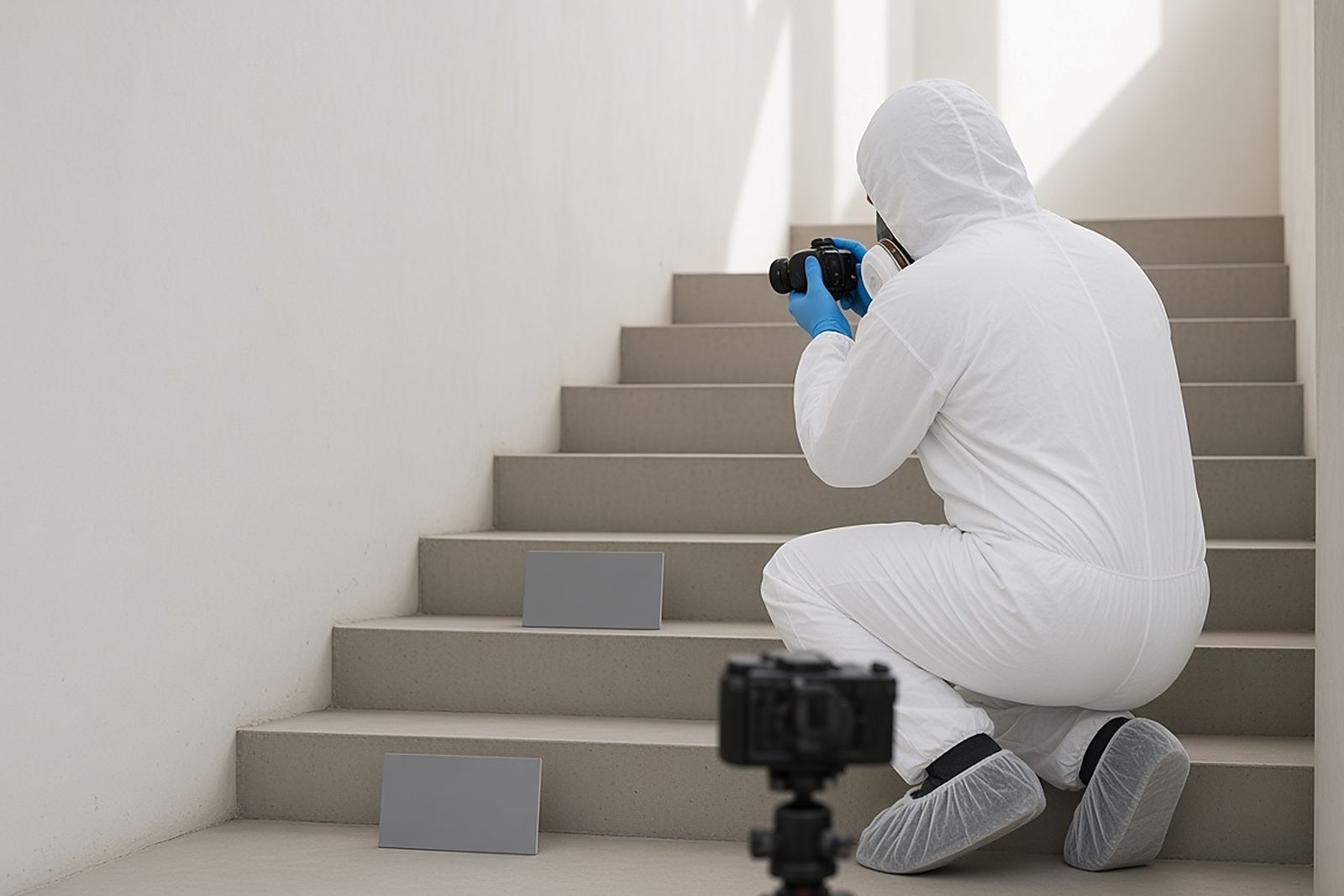
Risk 2 is contamination beyond the obvious area. Fine droplets may reach ceilings, fans, blinds and furniture across the room. Responders and investigators moving through the space may have carried traces into hallways, stairways, entries and vehicles. An assessment that looks only at the main area will miss these, and crews working without containment can spread them further.
Risk 3 is change during the investigation hold. While police keep the property closed, blood dries and bonds to surfaces, fluid migrates deeper into flooring and walls, bacteria multiply and odor builds, especially in warm weather. The longer the hold, the more the scope may need to include structural removal and odor control.
Risks 4 to 6: sharps, forensic residue, dust and odor
Risk 4 is sharps and damaged materials. Violence can leave broken glass, splintered wood and damaged fixtures. Carpet tack strips and staples become exposed during flooring removal. Crews use cut-resistant outer gloves, tools rather than hands to collect fragments, and puncture-resistant containers.
Risk 5 is forensic residue. Fingerprint powder, adhesive from evidence tape and other processing materials may be present on doors, windows, walls and furniture in several rooms. Some powders are extremely fine and become airborne when disturbed, while others smear when wet. Crews lift loose powder with soft brushes or HEPA vacuums before cleaning with products suited to each finish.
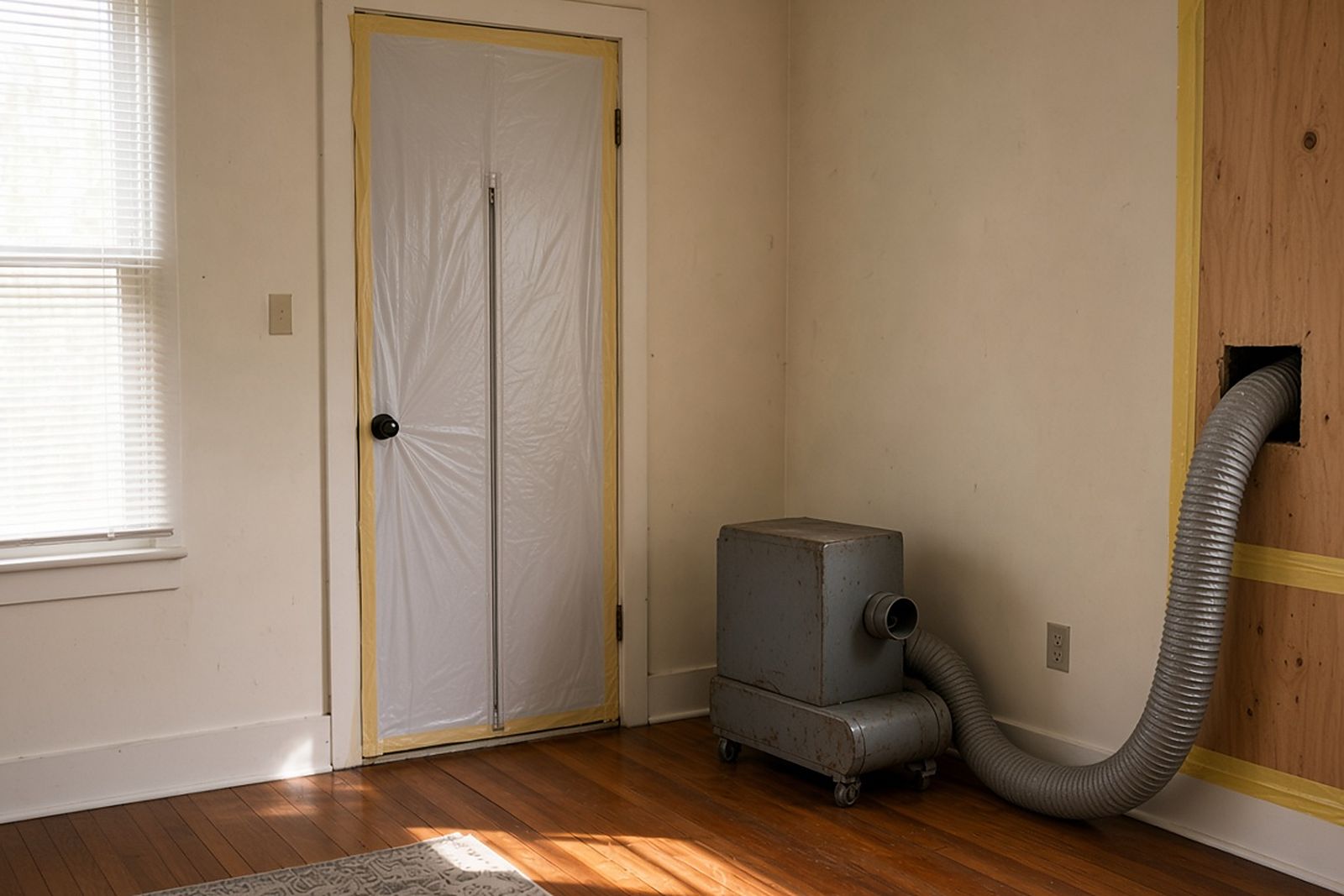
Risk 6 is airborne dust and odor. Cutting drywall and subfloor produces dust. Odor from a longer hold can cause nausea and headaches in closed rooms. Crews assess respirator needs, run HEPA air scrubbers or negative air machines where dust is expected and cover vents so particles and odor do not travel through ductwork. Wearing full protective gear in a warm home also raises the risk of heat stress, so supervisors plan rest and hydration breaks.
- Cut-resistant gloves and rigid containers for glass and sharps
- HEPA vacuuming of loose forensic powder before wet cleaning
- Respirators matched to dust, vapors or odor
- Vent covers and air filtration during removal
- Work and rest cycles to prevent heat illness
Risk 7: hazards inside walls and floors
Risk 7 is concealed building hazards. When fluid has soaked into subfloor or the bottom of drywall, removal may be necessary. Walls and floors hide electrical wiring, plumbing, gas lines and ductwork. Cutting blindly can cause shocks, leaks or damage that turns a cleanup into a major repair.
Professionals check for utilities before cutting, use controlled-depth saws and oscillating tools, shut off power to affected circuits when needed and document what they open. In older homes, they also consider whether materials such as old flooring or wall finishes need testing before disturbance, since some older building materials require special handling.
Risk 8: items that may matter to the case
Risk 8 is items that may matter to the case. Homicide investigations and prosecutions can continue for a long time. Although police collect what they need before release, crews may still find items that seem significant, such as a phone, a damaged object or something out of place. The safe practice is to stop, leave the item untouched and contact the investigating agency before proceeding.
Risk 9: site security and public attention
Risk 9 is site security and public attention. A home may have damaged locks or windows. News coverage and curious onlookers can draw people to the property. In some cases, the people involved in the event were known to the household. CDC data from the National Violent Death Reporting System show that among 2022 homicides with known circumstances, 34.9% were precipitated by an argument or conflict and 15.0% were related to intimate partner violence. Families who have safety concerns should share them with law enforcement and the provider, so the work can be scheduled and secured accordingly.
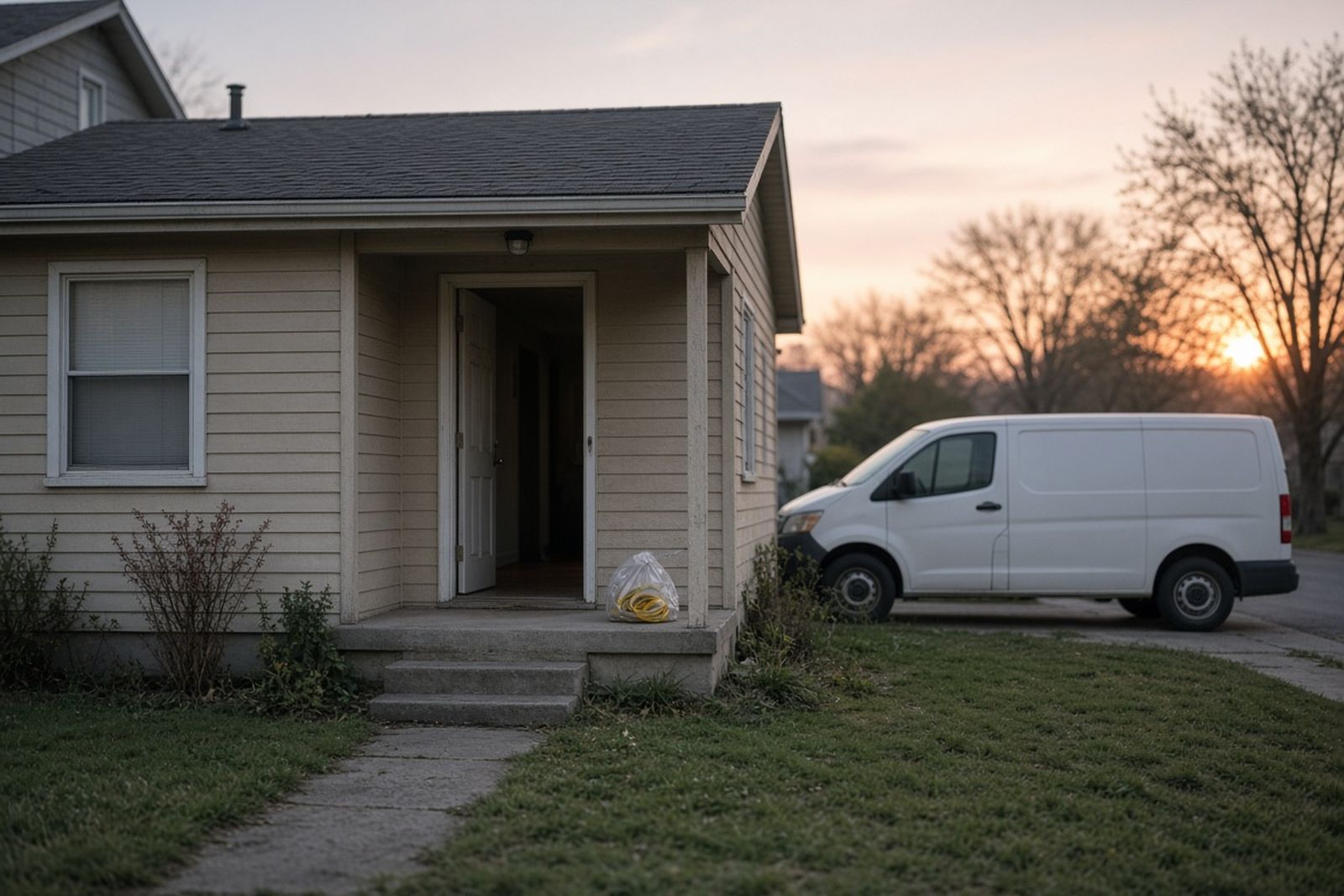
Discretion reduces attention. Many providers use unmarked vehicles, bring equipment in without fanfare and put on protective gear indoors.
Belongings add a quieter security concern. Wallets, jewelry, electronics and documents may be scattered in or near the affected area. A careful crew inventories what it finds, keeps saved items in labeled containers and hands them only to the person the family has named, which protects both the family and the crew from misunderstandings later.
Risk 10: psychological trauma
Risk 10 is psychological trauma, for families and for crews. Cleaning the place where a loved one was killed can leave lasting images, and simply being present during the work can be distressing. Research published in JAMA Network Open in 2024 found that among adults bereaved by a traumatic death, including homicide, 40.3% met presumptive criteria for PTSD and 23.7% for prolonged grief disorder.
For that reason, a careful provider will not ask family members to enter the affected area, will avoid graphic descriptions and will offer to communicate through a designated relative, friend or advocate. Crews themselves benefit from training, task rotation and access to support after difficult jobs.
A thorough assessment, illustrated
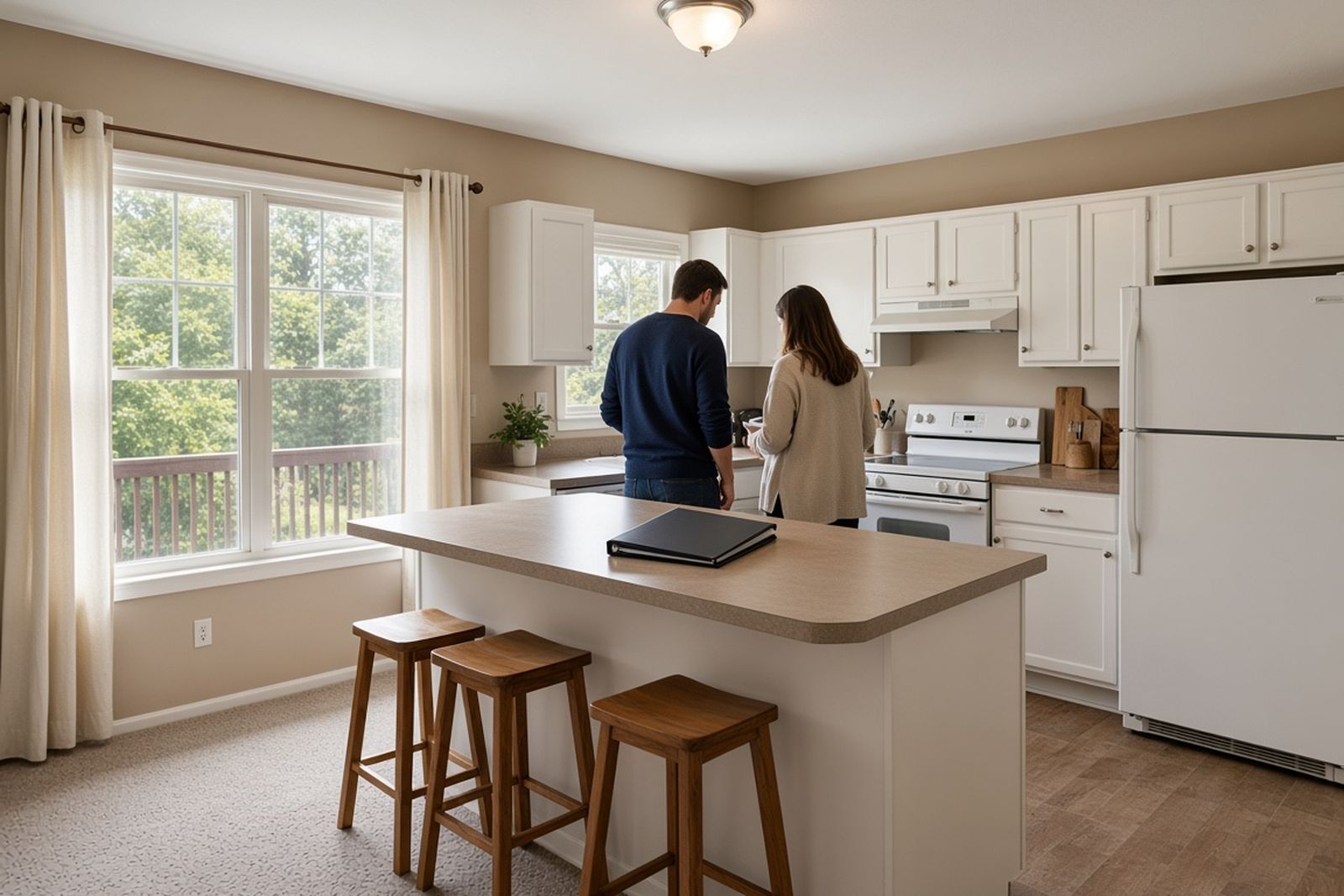
The following walkthrough is illustrative, not drawn from a real case. A man is killed in the upstairs bedroom of a rented townhouse. Police hold the unit for five days. A victim advocate helps his mother arrange cleanup, and the landlord authorizes the work.
The supervisor walks the unit with the landlord present. She notes material on the bedroom carpet and a nightstand, droplets on the ceiling and a light fixture, traces on the stairs and fingerprint powder on the front door and two windows. The warm weather during the hold has produced odor. The bedroom door frame is damaged, and a news van was parked outside the day before.
Her written plan includes containment at the bedroom door and stair landing, removal of carpet and pad with a check for wiring before cutting the subfloor, cut-resistant gloves for the damaged door frame, HEPA vacuuming of powder, vent covers and air filtration, scheduled breaks for heat, and early-morning arrival in an unmarked van. She agrees to call the detective before discarding a cracked phone case found under the bed. The mother receives updates only through the advocate, as she requested.
This scenario is fictional, but it shows how ten general risks become specific decisions at one property.
What questions should families ask before work begins?
Ask which of the ten risks apply to your property and how each will be controlled. Ask what protective equipment the crew will use and how they prevent contamination from spreading to clean rooms. Ask what they will do if they find an item that might matter to the investigation.
Ask how they protect your privacy and security, whether they can coordinate with a victim advocate and how they will package and transport regulated waste. Ask for a written plan, photos, a list of materials removed and disposal records when the work is finished.
If a provider cannot explain these points calmly and specifically, it is reasonable to look for another.
What can families do to stay safe in the meantime?
Keep the affected area closed and keep children and pets away. Do not attempt to clean or move items from the scene. If you have safety concerns about the property or the people involved, tell the investigating agency and ask about options for securing the home.
Lean on the people and services around you. Victim advocates can help with practical tasks, from arranging cleanup to applying for compensation, and can connect you with homicide survivor support groups and counseling. Protecting yourself is part of caring for the person you lost.
If you must enter the home before cleanup, for example to collect medication or care for a pet, ask the provider or a victim advocate to go with you, and use a route that avoids the affected rooms.