Short answer
Homicide cleanup PPE is planned after a hazard assessment of the released scene. The crew lead evaluates how much blood is present and where it traveled, whether it has dried, broken glass or damaged fixtures, forensic residues left by investigators, planned demolition and ventilation. Those findings set glove layers, suits, eye and face protection, footwear and respirator use for each task and room.
Assessment first, checklist second
Homicide scenes rarely look alike. Some are confined to a single room. Others extend across hallways, staircases and furniture, or into a vehicle or garage. The amount of blood, the surfaces it reached and how long the scene stayed sealed during the investigation all change what workers need.
OSHA's general PPE standard asks employers to assess hazards first, then choose equipment, then certify the assessment in writing. For homicide cleanup, that sequence is more than a formality. It is how a crew lead avoids sending a technician into a saturated room wearing gear meant for a light cleanup.
The assessment also protects the family. A crew that plans carefully is far less likely to track contamination into rooms the family will use, or to damage belongings that could have been saved.
Families are sometimes surprised that a crew spends time on this planning before starting. That pause is a good sign. It means the team is thinking about each room rather than rushing through a job that deserves care.
Where do homicide scenes usually happen, and why does that matter for gear?
Many homicides occur in the places people live. CDC's National Violent Death Reporting System found that in 2021, 40.4% of recorded homicides took place in a house or apartment. Residential settings bring carpet, upholstered furniture, mattresses, wood floors and drywall, all porous materials that absorb fluids and often have to be cut out.
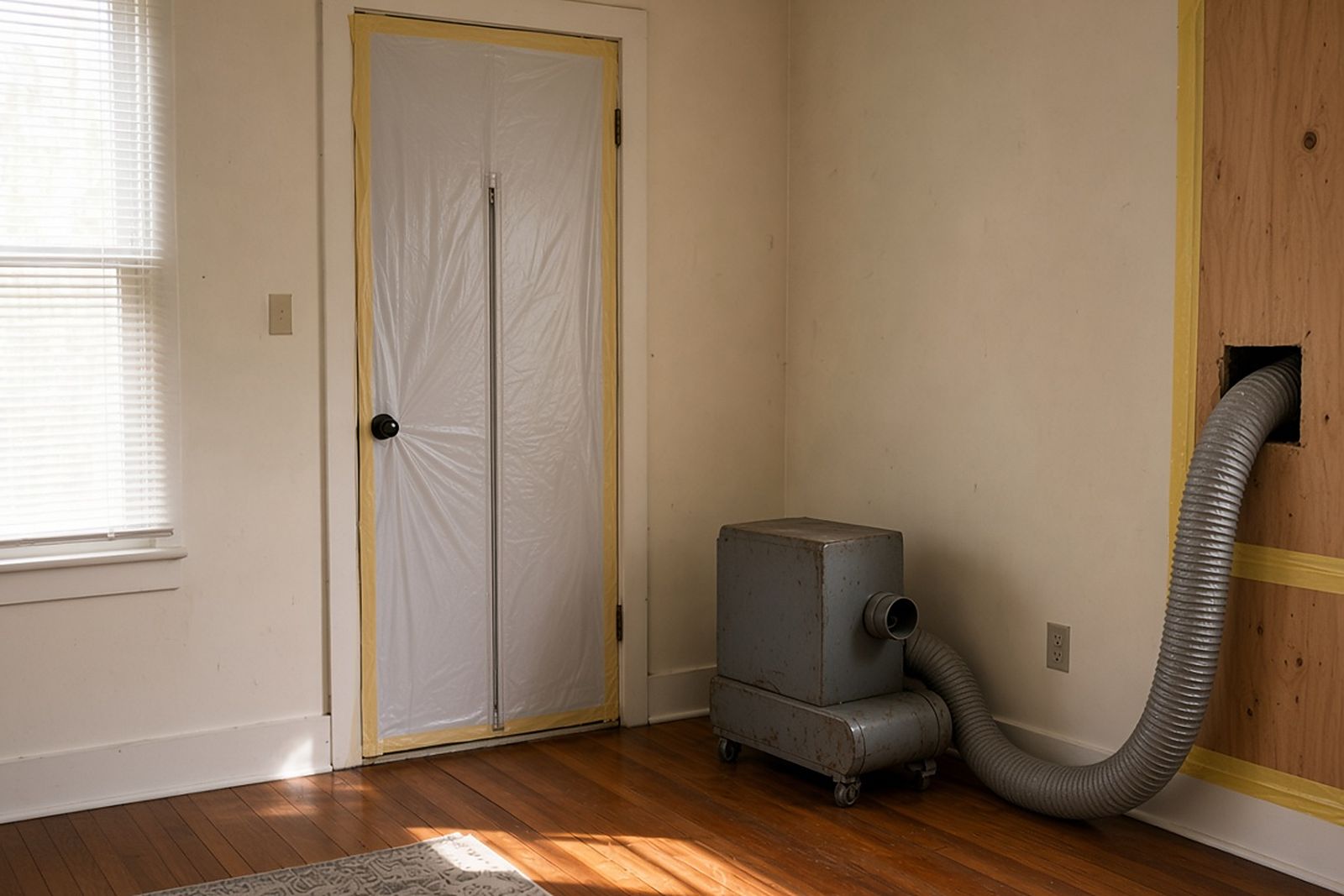
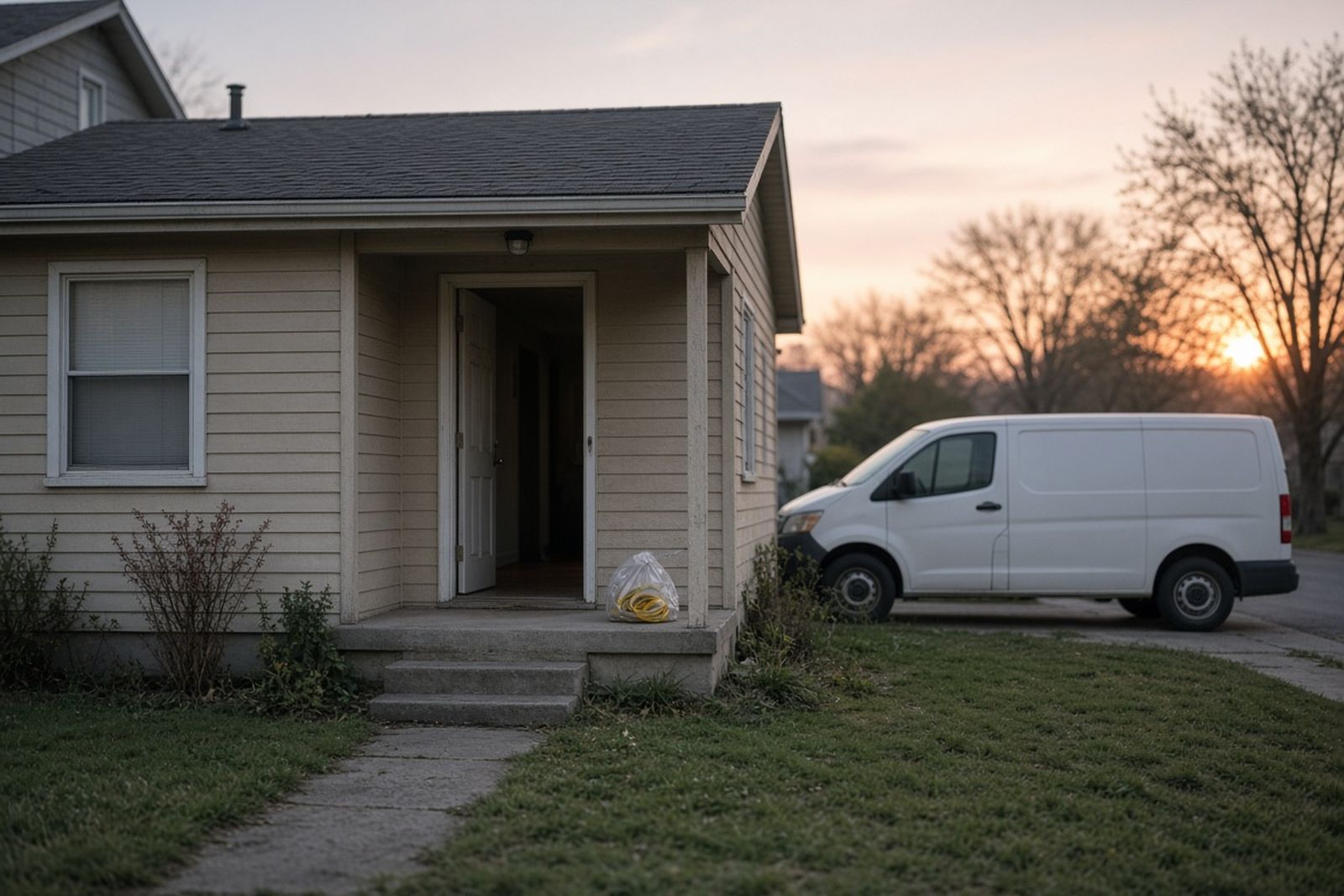
Homes also present tight working spaces, stairs, shared walls and neighbors close by. A crew planning PPE for a residence thinks about how technicians will move saturated materials through narrow halls, how dust from demolition will be contained and where workers can safely put on and remove gear without being seen from the street.
Commercial and outdoor scenes raise different questions, such as public access, weather and hard surfaces, and the assessment adjusts for those as well.
What the crew lead looks for
The walkthrough happens only after law enforcement has released the property. The lead confirms the release, enters with a flashlight and notes every hazard the team will face.
Forensic processing deserves special mention. Investigators may leave behind fingerprint powders, chemical reagents, evidence markers or cut sections of flooring. Those residues can irritate skin and lungs and may need their own cleaning approach.
- How much blood is present and how far it spread
- Whether material is wet, tacky or dried
- Porous surfaces that may require removal
- Broken glass, damaged furniture, splintered wood or other sharps
- Residues from forensic processing
- Room size, airflow and temperature
- Chemicals planned for cleaning and disinfection
- Routes for carrying out contaminated items
Gloves, suits, eye protection and footwear
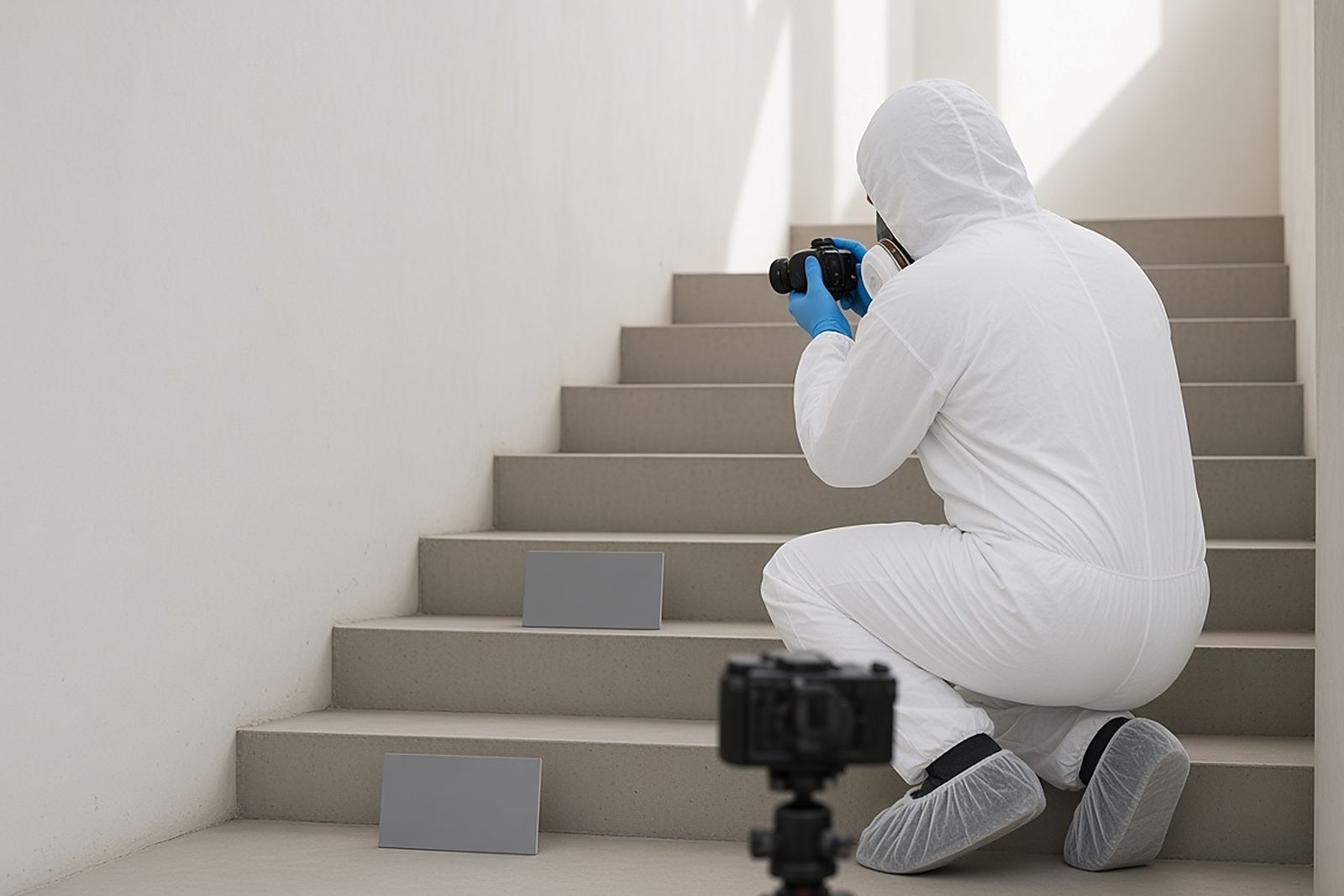
Gloves come first. Crews typically double glove, with a thin nitrile layer against the skin and a heavier outer glove. A cut-resistant layer is added whenever glass, metal or wood fragments are present. Outer gloves are replaced frequently, and always when a technician moves from a contaminated zone to a clean one.
Bodies are covered with fluid-resistant or impervious coveralls, chosen by how much wet material the team expects to handle. Hoods cover hair and neck, and tape seals the wrists and ankles. Boot covers or chemical-resistant boots protect feet and keep contamination from being carried through the house.
Eyes and faces are protected with goggles or face shields whenever splashing is possible, which includes lifting saturated carpet, scrubbing and spraying disinfectant. Respirators are added when the assessment finds airborne particles, strong chemical vapors or poor ventilation.
Heat is a hidden hazard inside all of this equipment. Impervious suits and respirators trap warmth, and a home that has been closed for days may already be warm. Careful leads schedule breaks, provide water and rotate workers through the hardest tasks.
When do respirators become necessary?
Homicide cleanup often involves demolition. Removing blood-soaked drywall, carpet pad or subflooring releases dust and fibers that may carry contamination. Disinfectants used afterward can build up in closed rooms. Either situation can call for a respirator.
Choosing one is a technical decision. Half-face and full-face respirators accept different filters and cartridges, and the crew lead matches them to the particles and vapors expected. Under OSHA's 1998 respiratory protection standard, workers using tight-fitting respirators must be fit-tested before first use and at least annually, after a medical evaluation.
A full-face respirator also protects the eyes, so crews working in rooms with both splash and airborne hazards often choose it to reduce the number of separate items they wear.
If HIV doesn't survive long on surfaces, why is so much gear needed?
Families sometimes hear that bloodborne viruses die quickly outside the body and wonder whether all the equipment is excessive. It is true that CDC stated in 2024 that HIV does not survive long outside the human body, such as on surfaces, and cannot reproduce outside a human host.
Other pathogens are hardier, though, and no one can tell from a stain which ones might be present. That is why crews follow universal precautions and treat every trace of blood as potentially infectious. It is a consistent practice applied to every job, not an assumption about the person who died.
Protection also covers more than infection. Glass cuts, chemical splashes, dust and heavy lifting are all real risks at homicide scenes, and the right equipment addresses each one.
Zoning a multi-room scene
A scene that covers more than one room is usually divided into zones, each with its own gear. Where blood has dried on a hardwood hallway and a broken mirror has left fragments, technicians may wear nitrile inner gloves, cut-resistant outer gloves, fluid-resistant coveralls, boot covers and goggles.
Where bedroom carpet, pad and a mattress have to be removed and the subfloor inspected, the team upgrades to impervious suits and full-face respirators, since cutting releases particles in a closed room.
Fingerprint powder on door frames is cleaned with a separate method and noted on the assessment so workers avoid spreading it. A decontamination station at an exit door lets technicians remove gear in order, bag it and seal it before stepping outside. Throughout the work, the family stays away from the house and one relative receives updates by phone.
Taking gear off without carrying contamination out
The riskiest moment for many workers is not the cleaning itself but the few minutes spent taking protective equipment off. A glove pulled carelessly can flick residue onto a wrist. A suit peeled the wrong way can brush the inside of a sleeve against contaminated fabric.
Professional crews set up a decontamination area at the exit of each work zone. Technicians remove outer gloves and boot covers first, then roll the suit down and inside out, then take off eye protection and the respirator by the straps, and finally remove inner gloves and wash their hands. Each item goes straight into a labeled bag that is sealed before it leaves the house.
At a large homicide scene, crews may change gear several times a day as they move between zones or take breaks. Frequent changes use more supplies, but they are part of what keeps a contained room from contaminating the rest of the home.
Used gear is handled as regulated waste when it is contaminated. It is packaged with the other materials removed from the scene and documented alongside them.
Questions families can ask
You do not need to evaluate gear yourself. It is enough to ask a provider how they plan PPE and to listen for specific, calm answers. A victim advocate, relative or friend can ask these questions for you if that feels easier.
Worker protection rules come from OSHA or your state's plan. Waste handling and business registration come from separate agencies, and a provider should be able to name which ones oversee its work at your address.
Choosing a team that protects itself properly is also a way of protecting your family's home and the memory of the person you lost. Please take care of yourself during this time, and accept support from advocates, counselors and people who love you.
- Will you complete a written hazard assessment after the police release the scene?
- How will you handle broken glass and other sharps?
- How do you address fingerprint powder or other forensic residue?
- Will technicians wear respirators, and are they fit tested?
- Where will the crew change in and out of gear, out of view of neighbors?