Free homicide cleanup tool
Homicide Cleanup Provider Vetting Checklist
Fifteen questions to ask any remediation provider, a readiness score, and a copyable list of what is still unanswered.
Checking out a provider after a homicide covers everything you would ask any biohazard company. It also adds questions about how they treat the people involved. This checklist asks about training under 29 CFR 1910.1030, the rule that protects workers from germs carried in blood. It covers proof of insurance, sealing off several rooms, and which disinfectants are used and how long the disinfectant must stay wet. It also covers handling sharp objects and bullet debris, investigation residue, hauling regulated waste with the waste shipping record, and a written check of the work. Then it adds questions that matter to families and landlords. Do crews arrive in unmarked vehicles? How are belongings listed before disposal? What happens if evidence is found? How are neighbors protected from exposure? Who will be the single contact? Tick what was confirmed and watch the readiness score. Then copy the open questions to send in writing.
The checklist is built for whoever is making the calls. After a homicide, that is often not the closest family member. An advocate, a sibling, a lawyer's staff, or a property manager can use it for the family. They can bring back a clear picture of each provider. Reaching a provider through this network does not mean the provider has been checked. The network is for learning, and you must check every provider yourself. Providers who often work homicide scenes should answer the family questions without pause, because they have been asked before. Those who seem surprised by them may not be the right fit for this kind of work.
How to use it
- 1Decide who will make the calls. Share the checklist with them, so the family does not have to repeat hard conversations.
- 2Ask each provider every question, including the ones about discretion, belongings, and evidence. Tick only answers that could be confirmed.
- 3Compare readiness scores across providers. Give weight to the family questions as well as the technical ones.
- 4Send the list of open questions to the provider in writing. Keep the answers with the estate or property file.
Prefer to ask a person?
Your request is sent to the follow-up inbox. A coordinator can reply by email. Not for emergencies; call 911 first if anyone is in danger.
Vet a provider before you sign
Homicide Cleanup provider vetting checklist
Start with the questions specific to this kind of job. Tick each one once the provider has answered it in writing or shown you the document. Your progress stays on this device only.
Readiness: 0 of 21 confirmed (0%)
21 questions still need a written answer. Copy the list and send it to the provider before you sign anything.
A worked example
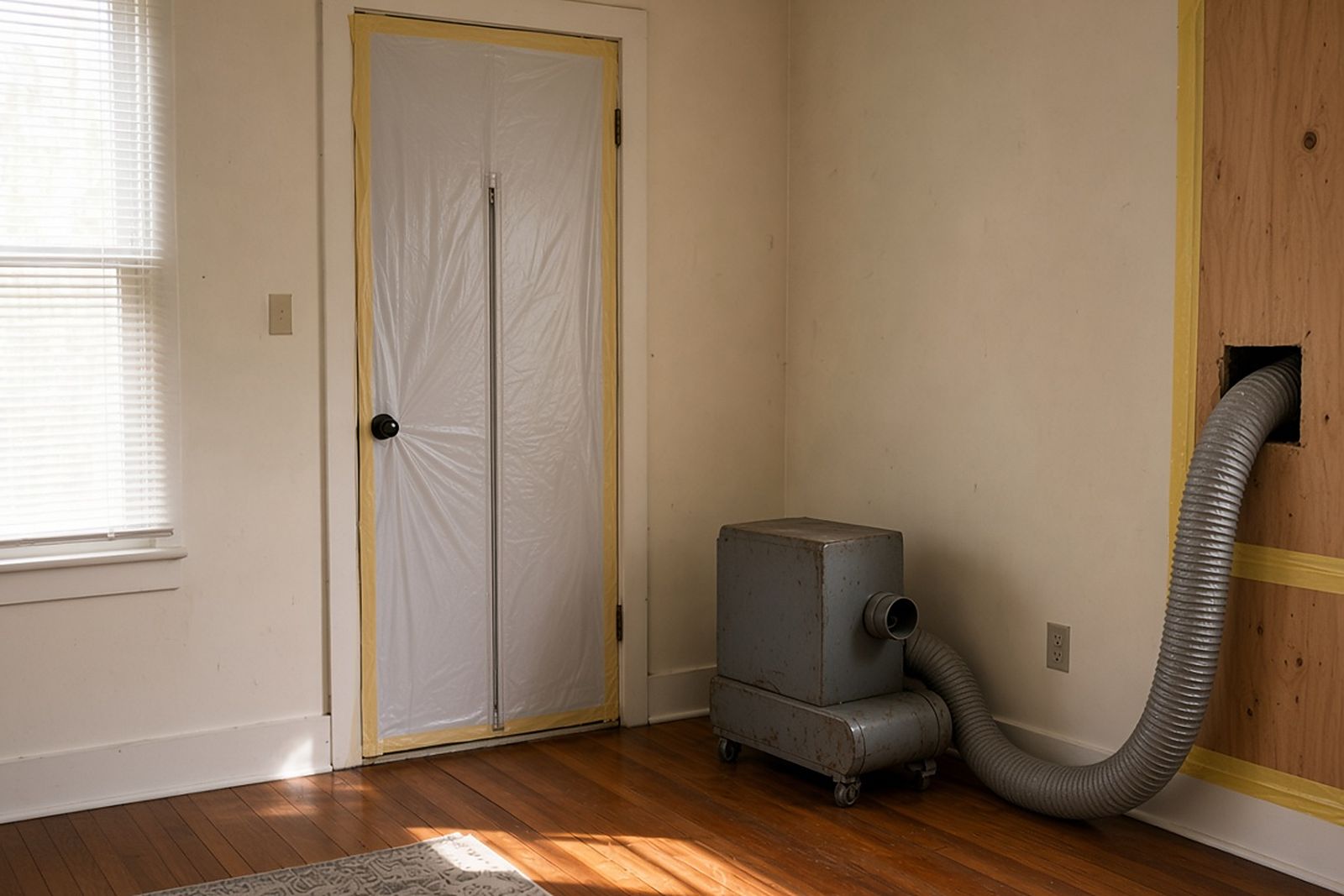
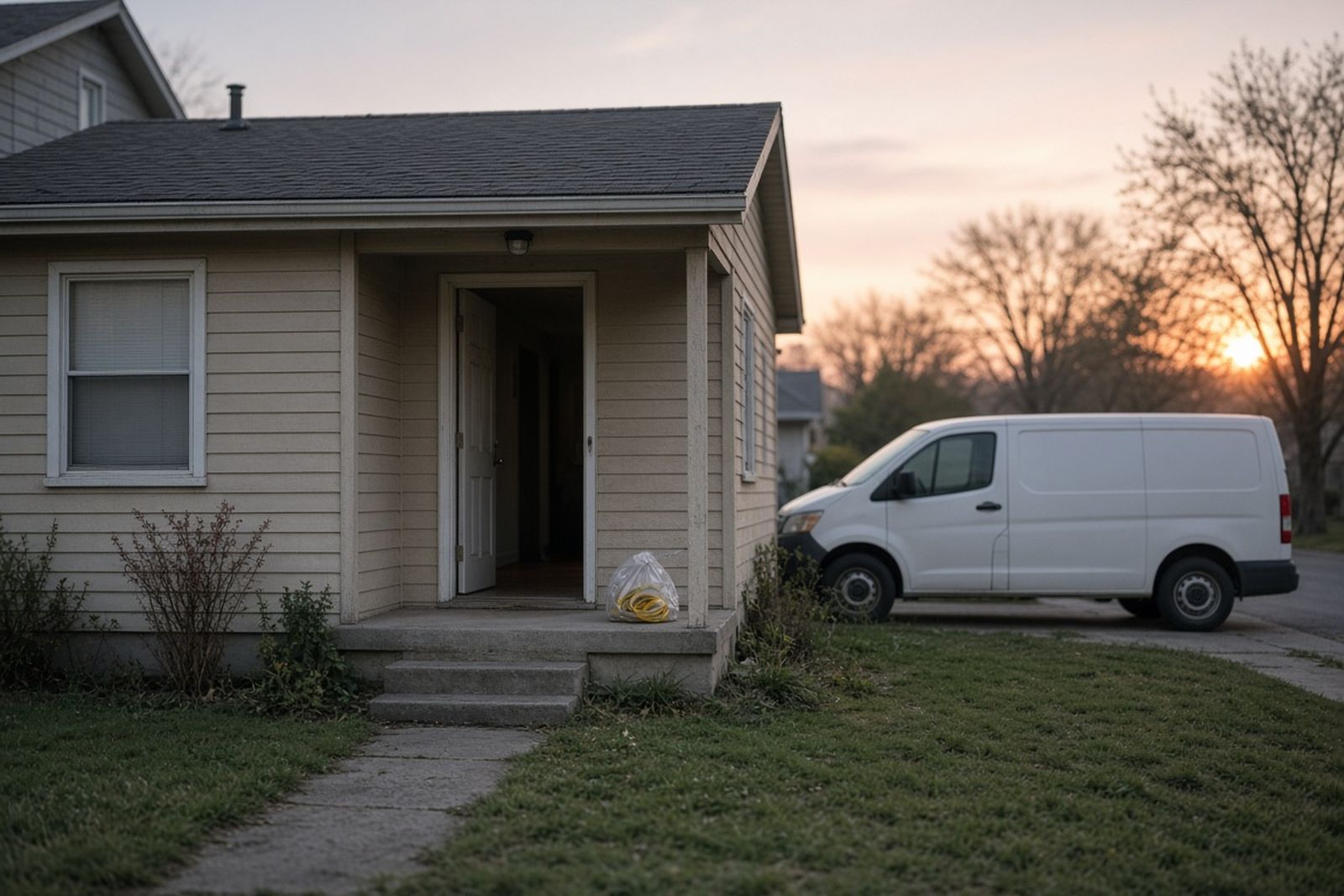
Here is a made-up example. A property manager runs a small apartment building where a tenant was killed in his unit. The family lives in another state and has asked the manager to find a provider. On the first call, the manager uses the checklist. The provider confirms it follows a written plan for protecting workers from germs carried in blood. It will send proof of insurance. It plans to seal off zones with air filters and plastic walls that keep dust inside the work area, because the unit shares a hallway and an air shaft with neighbors. It will use a special filtered vacuum to clean the fingerprint powder left in the hallway. Asked about quiet arrival, the provider confirms unmarked vehicles and after-hours waste removal through the back stairwell. Asked about belongings, it describes a photo list of anything that must be thrown away. It will also set aside papers and personal items for the family to review from afar. The provider names its disinfectant and how long it must stay wet. But it is unsure how it will check the work and cannot say who will haul the waste. The readiness score is fairly high. The open list holds two items: how the work is checked and who hauls the waste. The manager emails those two questions. The next morning, the manager gets a sample report from a quick swab test that shows leftover organic residue (it does not detect germs), along with the hauler's name. The manager sends the finished checklist to the family with a recommendation.

Numbers behind vetting checklist decisions
- 10 working days
Under 29 CFR 1910.1030, employers must offer the hepatitis B vaccine within 10 working days of assigning a worker to tasks with occupational blood exposure.
Read with care: Applies to employees, not sole proprietors; state-plan states may have equivalent rules.
Source: OSHA (2001)United States, employers covered by the OSHA Bloodborne Pathogens Standard
- 61.4%
In 2024, 61.4% of U.S. murder offenses were cleared by arrest or exceptional means, the highest violent-crime clearance rate.
Read with care: FBI estimates are based on data from 16,675 agencies covering 95.6% of the U.S. population; expanded homicide details cover only victims with supplemental data reported.
Source: FBI (2024)United States, 2024, offenses known to law enforcement
- $0 to employees
Since February 13, 2008, OSHA has required employers to provide required personal protective equipment at no cost to employees.
Read with care: Exceptions exist for non-specialty footwear, prescription eyewear and lost or deliberately damaged PPE.
Source: OSHA (2008)US general industry employers
- 34,696
Federal OSHA conducted 34,696 inspections in fiscal year 2024 and has roughly one compliance officer for every 70,000 workers.
Read with care: Excludes inspections by state-plan agencies.
Source: OSHA (2024)United States, federal OSHA, FY2024
These figures are public research and agency data, not this network's own job records. Keep each number with its population, year and limits; none of them predicts cost, timing or outcome at a specific property.
Provider Vetting Checklist questions for homicide cleanup
Why does the checklist include a question about how the provider talks to the family?
Because the way a provider talks with the family shapes how they live through the worst weeks of their lives. Some providers explain choices about belongings plainly, avoid graphic language, and respect a request to route all contact through one person. That is as important as technical skill. Ask how they handle this, and listen for a thoughtful answer.
What is the right answer to the evidence question?
The crew should stop work and secure the area without touching the item. It should then call the investigating agency and wait for instructions before starting again. Homicide scenes are sometimes released with something missed. A provider who understands this protects both the case and the property owner. Any other answer is a serious concern.
Should I ask about the provider's experience with victim compensation programs?
Yes. Providers who have worked with these programs know what paperwork is expected. They may be able to lay out the bill to match, or bill the program directly where that is allowed. This does not guarantee you will be paid back, and the rules on who qualifies vary by state and county. But knowing the process can save the family effort at a hard time.
How should a landlord weigh multi-unit containment questions?
Give them a lot of weight. Shared hallways, elevators, stacked pipes, and air systems can carry contamination and odor to neighbors. The landlord is responsible for their exposure. Ask exactly how the crew and waste will move through the building and how the hallway will be protected. Ask whether the building's air system will be checked. Vague answers here are a reason to keep looking.
Does a high readiness score mean the provider is approved by the network?
No. The score shows how many of your questions got answers that could be confirmed. The network does not audit or endorse providers. It makes no claims about any provider's certifications. The score is a tool for your own comparison. The finished checklist is worth keeping in the estate or property records.
Can I use the checklist after a provider has already started working?
Yes. Going through it partway through the job can help you spot gaps while there is still time to fix them. Examples include no written process for changes or unclear waste records. Share any concerns calmly with the crew lead or company managers. If several important items are still unanswered, you can pause the work. Ask for written answers before the crew goes on.
What if two providers score similarly on the checklist?
Look at the answers behind the scores. One provider may be stronger on belongings and family communication. Another may be stronger on paperwork or scheduling. Decide which matters more for your situation. You might also think about how each company made you feel during the call. When the paperwork is close, comfort and trust can be a sound way to decide.
Related community polls
Every count is a real visitor vote; nothing is seeded or padded. One vote per poll per device, and you can change your answer.
What was hardest to arrange after the scene was released?
When did you first learn that a victim compensation program might help?
Other homicide cleanup tools
Cost Range Estimator
Set the affected area, surface types, severity and extras to see an educational cost range and the factors that move it.
OpenInsurance Claim Organizer
A guided checklist from finding the policy to tracking the carrier decision, with a printable summary of where the claim stands.
OpenFirst 24 Hours Planner
Tell the planner a few facts about the situation and get an ordered list of who to call, what not to touch, and what to photograph.
OpenWaste & Disposal Classifier
Five questions about the material point to the likely waste category and which authority to confirm the rules with.
OpenDIY or Call a Pro? Risk Check
Eight yes-or-no questions that produce a risk level and explain when professional help is the safer choice.
OpenMore on homicide cleanup
Homicide Cleanup services
Learn what homicide cleanup involves for families, estates, and landlords. Topics range from sealing off several rooms to lists of belongings and final records.
Costs explained
What drives the price, published cost ranges, and how to read a written quote line by line.

Insurance and payment
Which policies may respond, how to document a claim, and what to do if coverage is denied.
Community polls
Shared experience from families, advocates, and landlords on what was hardest after a homicide and what help mattered.
Knowledge quiz
A calm review of police holds, authority, sealing off work areas, disinfecting, waste, and records. The study guide is written for grieving families and the people helping them.
Articles and resources
Articles on the family and landlord side of a homicide. Topics include release timing, belongings, privacy, compensation programs, disclosure, and renting a unit again.