Knowledge check with explanations

Homicide Cleanup quiz and study guide

Find out what you already understand, then read the parts you missed.

This quiz is for people who suddenly find themselves in charge of a property where someone was killed. That might be a surviving spouse, an adult child, a personal representative, a landlord, or a property manager. It checks whether you understand the ideas that will shape the coming weeks. These include how police holds work and who has the right to approve cleanup. They also include why sealing off rooms matters when several rooms are affected, and how cleaning and disinfecting differ. The quiz covers where soiled materials go and what a final record should include. None of it is technical just for the sake of it. Every idea connects to a choice you may have to make, often while grieving. The quiz is a way to practice those choices calmly.

Get an email reply about homicide cleanup

Send a short message to the follow-up inbox. A coordinator can reply by email. This form does not send emergency help; call 911 first if anyone is in danger.

Tell us what you need help with. Share a short description; please leave out medical details, access codes, and other sensitive information.

A request does not confirm a booking. For immediate danger, contact local emergency services.

Or email info@prompartybuses.com

Homicide scenes bring burdens that other trauma scenes do not. The investigation may hold the property for a long time. It may even start again after release if new evidence comes up. Several parties may have a role in paying for or approving the work, from the estate to a landlord to a victim compensation program. Privacy concerns can be intense. The study guide below is written with these facts in mind, and the quiz questions come straight from it. If any of these ideas are new to you, read the guide first. Then take the quiz and review the explanations for anything you missed. The goal is to feel confident when talking with detectives, providers, adjusters, and advocates.

Homicide Cleanup knowledge check

15 questions about real homicide cleanup situations: staying safe, what happens, cost, choosing help and the rules. Every answer comes with a short explanation.

Why this quiz matters

Knowing these basics makes it easier to spot bad advice and ask a company the right questions. This quiz is educational — it does not certify anyone. After the quiz, review the explanations for questions you missed. For professional guidance on your specific situation, use the contact form at the top of the page for an email reply. Homicide Cleanup is classified as extreme-risk — every question here relates to real hazards where professional remediation is essential.

Progress1 / 15
SafetyQ1

After a homicide, why should the crew check hallways, stairs, door handles, and even a car?

Study guide: the six ideas behind the questions

Read these before or after the quiz. They cover the concepts every question draws on, written for homicide cleanup specifically.

1Hazard recognition in a violent-death scene

A homicide usually leaves more blood and tissue over a wider area than most other trauma events. The contamination is rarely limited to one spot. Movement during and after the event spreads material along hallways, onto stairs, and into rooms that look untouched. Dried blood can still carry germs, and it can get into the air when disturbed. Bullet fragments, broken glass, and knives or other sharp weapons may remain even after evidence is collected. Investigators also leave fingerprint powder, chemical sprays, and evidence markers. For a family member or landlord, the practical rule is simple. Assume the affected area is bigger than it looks. Keep everyone out until a provider has mapped it.

2Investigative holds, release, and who holds authority

After a homicide, the investigating agency controls the property until it is formally released. That can take much longer than for other events. Release should come from the lead detective or an assigned officer. Ask for it in writing, or at least write down the name, date, and time. Investigators may ask to come back even after release. Providers should stop and call the agency if they find possible evidence. Once the property is released, the right to approve cleanup passes to the person with legal control. That may be the surviving owner, the estate's personal representative once appointed, or the landlord for a rental. Rules vary by state and county. Check with the local authority and, if there is an estate, the probate court.

3Containment across multiple rooms

Homicide scenes often cover several rooms or floors. So sealing off the work area is less about closing one doorway and more about managing zones. Providers use barriers to keep soiled areas apart from clean ones. They set a path for crews and waste that does not cross living space. They also use air filters and plastic walls that keep dust inside the work area, so particles are pulled away from the rest of the building. In apartments and condos, shared hallways, elevators, and air systems raise the stakes for neighbors. If the building's air system ran during the event or the investigation, its filters and vents may carry contamination and should be checked. Families and managers should ask the provider to explain the zone plan before work begins. Keep everyone on the clean side of it.

4Cleaning first, then disinfecting

Cleaning and disinfecting are separate steps with separate jobs. Cleaning physically removes blood, tissue, and residue. Disinfecting means putting an EPA-registered product on a cleaned surface. The product must stay wet for the contact time printed on the label, so any germs left are killed. Skipping the cleaning step, or cutting the contact time short, ruins the whole effort, no matter how strong the product smells. Soft, absorbent materials often cannot be fully disinfected once soaked. These include carpet, padding, drywall, mattresses, and upholstered furniture. That is why homicide cleanups often involve removing flooring, cutting out parts of walls, and throwing away furniture. This removal is not too much. It is the only reliable way to get rid of a hidden source that would keep the space unsafe and smelly.

5The waste path for a large-volume scene

Soaked materials, protective gear, absorbents, and sharp objects from a homicide scene are usually regulated medical waste. They are sealed in labeled containers. Sharp objects go into boxes that cannot be punctured. A licensed hauler takes the waste, with the waste shipping record, to a permitted treatment site. A scene that covers several rooms can produce a lot of waste. So the provider needs a plan that protects hallways, elevators, and the outside of the building, and keeps removal quiet. The victim's belongings that cannot be saved follow the same route. The family should get a chance to review that list first. Rules vary by state and county, so check with the local environmental or health office. Keep the waste shipping record with the property records.

6Documentation, verification, and the property file

A homicide cleanup should end with a written record, not a handshake. That record lists each room, what was removed, and what was cleaned. It names each disinfectant used and how long the disinfectant stayed wet. It also gives the results of any surface tests done before and after. One example is a quick swab test that shows leftover organic residue (it does not detect germs). Photos tied to a room drawing are important because many parties will rely on the file. These may include the estate, an insurer, a victim compensation program, and maybe a future buyer or tenant. Waste shipping records and any list of thrown-away belongings belong in the same folder. If the agency allows it, take your own photos from outside the affected area before work begins. Ask the provider to explain in writing how it will check its work before you approve the job.
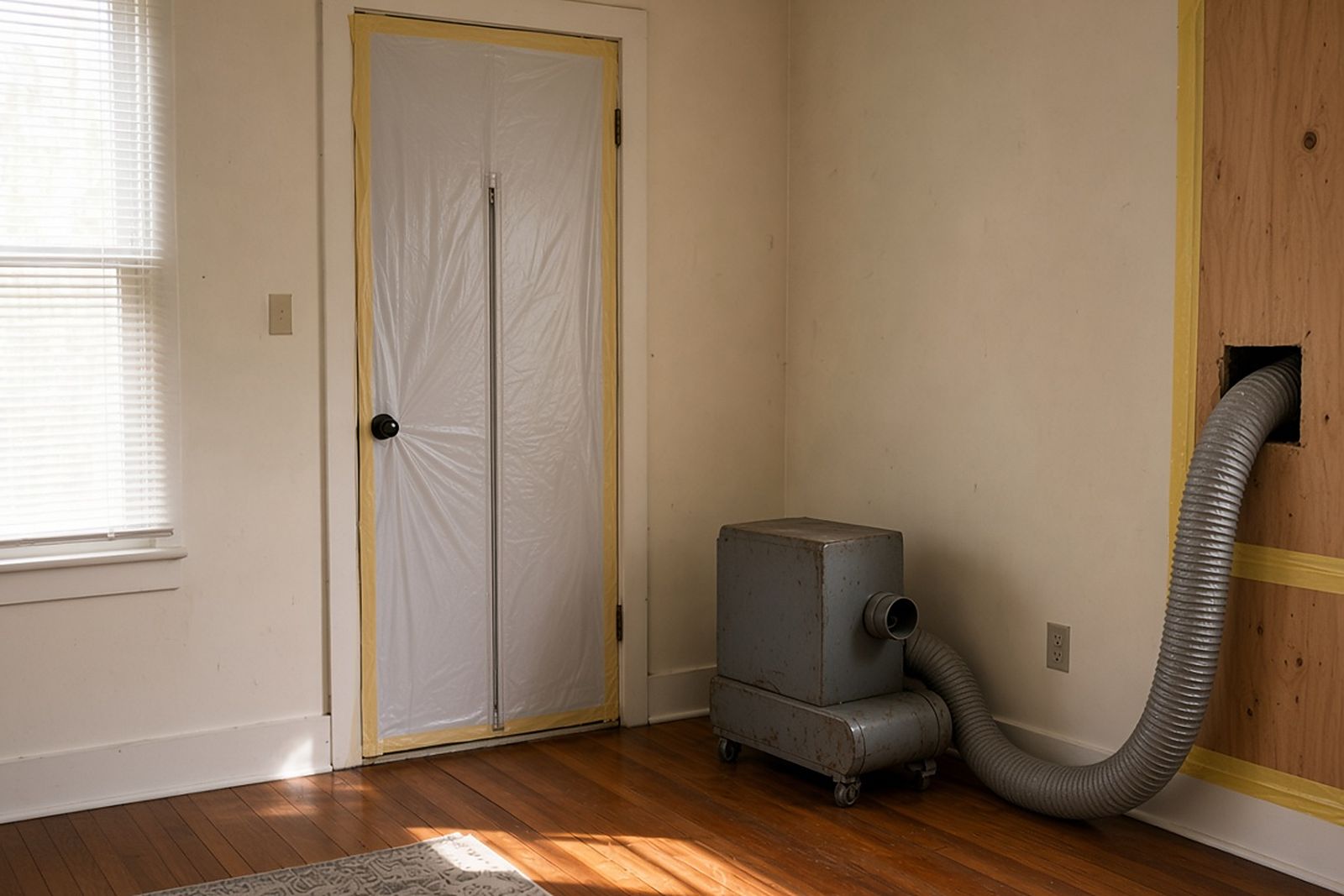
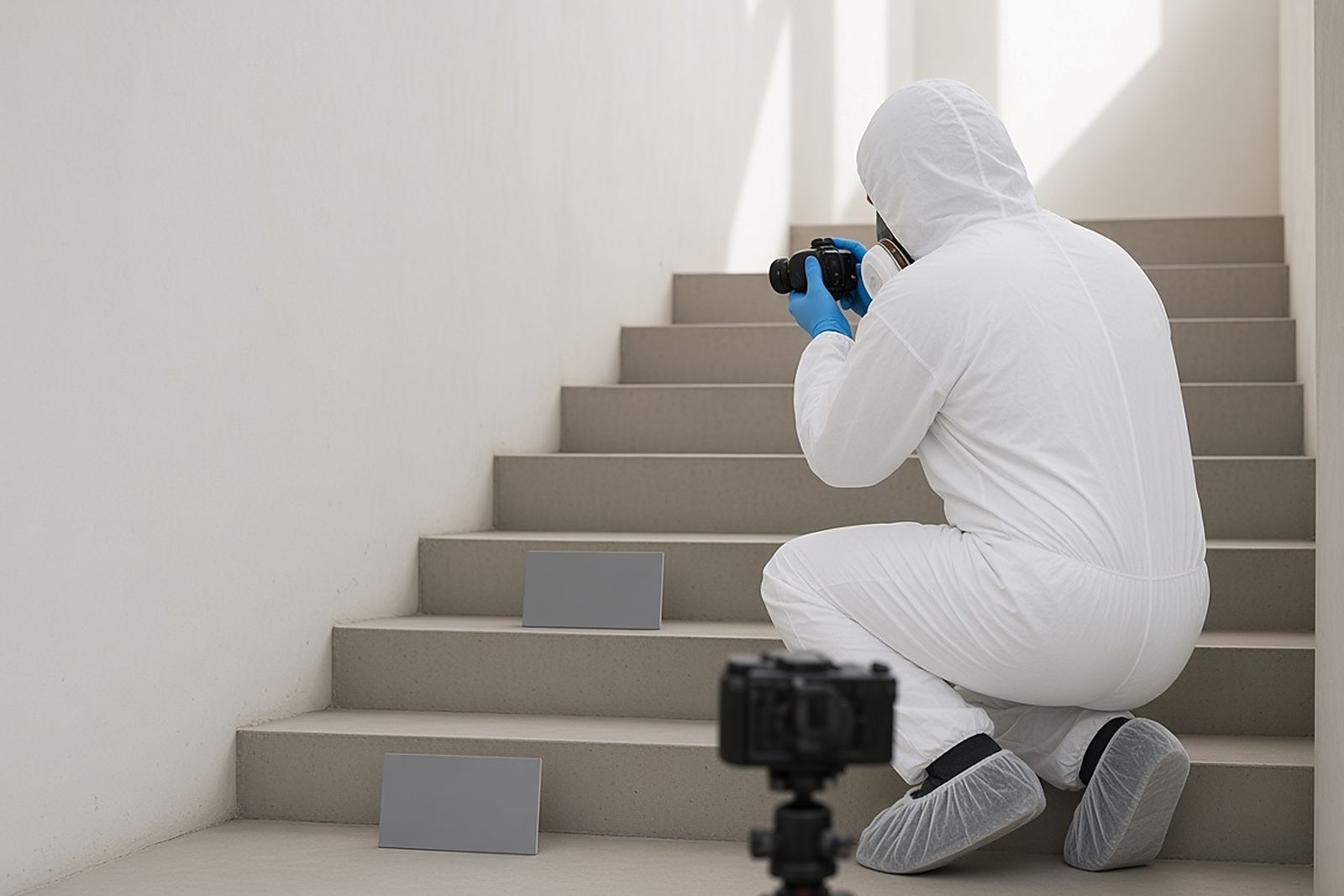
Negative-air machine with flexible duct beside a doorway sealed with a plastic zipper barrier
Illustrative photo, not a job record. Negative-air machine with flexible duct beside a doorway sealed with a plastic zipper barrier.

Homicide Cleanup facts the quiz draws on

10 working days

Under 29 CFR 1910.1030, employers must offer the hepatitis B vaccine within 10 working days of assigning a worker to tasks with occupational blood exposure.

Read with care: Applies to employees, not sole proprietors; state-plan states may have equivalent rules.

Source: OSHA (2001)United States, employers covered by the OSHA Bloodborne Pathogens Standard

61.4%

In 2024, 61.4% of U.S. murder offenses were cleared by arrest or exceptional means, the highest violent-crime clearance rate.

Read with care: FBI estimates are based on data from 16,675 agencies covering 95.6% of the U.S. population; expanded homicide details cover only victims with supplemental data reported.

Source: FBI (2024)United States, 2024, offenses known to law enforcement

$0 to employees

Since February 13, 2008, OSHA has required employers to provide required personal protective equipment at no cost to employees.

Read with care: Exceptions exist for non-specialty footwear, prescription eyewear and lost or deliberately damaged PPE.

Source: OSHA (2008)US general industry employers

157.4 per 10,000

Janitors and cleaners in private industry had 157.4 nonfatal injuries and illnesses involving days away from work per 10,000 full-time workers in 2019.

Read with care: Counts only cases with days away from work and does not isolate injuries from chemical or biohazard exposure.

Source: BLS (2019)United States, private industry, janitors and cleaners except maids and housekeeping cleaners

These figures are public research and agency data, not this network's own job records. Keep each number with its population, year and limits; none of them predicts cost, timing or outcome at a specific property.

Questions about the homicide cleanup quiz

Is this quiz appropriate for a grieving family member to take?

It is written to be. It has no graphic content and focuses on choices, not details of the event. Even so, it may be easier for a friend, an advocate, or an estate representative to take it first. They can then walk you through the parts that matter. You do not have to finish it.

Why does the quiz cover estates and probate?

Because when the victim owned the property alone, no one may have the right to approve work until a personal representative is appointed. That delay affects everything from cleanup timing to insurance. Knowing the basic order of steps helps families ask the probate court or a lawyer the right questions early. Rules vary by state and county, so check locally.

Does the quiz explain victim compensation eligibility?

Only in general terms. It covers what these programs are and why you should ask about them soon. Who qualifies, which costs are covered, the deadlines, and how insurance is handled all differ by state. So the quiz points you to the program in the state where the crime happened. It does not describe any one state's rules.

What counts as "other potentially infectious materials" in a provider's plan?

It means blood and other body fluids that can carry disease. The phrase comes from the OSHA bloodborne pathogens standard (29 CFR 1910.1030). It covers body fluids and tissues beyond blood that can spread disease. Providers and adjusters often use a short form of this phrase in their plans and reports. Knowing what it means helps you read their papers.

How does this quiz differ from the general crime scene quiz?

The general quiz on the sister site covers all kinds of crime scenes. These include burglaries, assaults, mess left by police searches, tear gas, and vehicles. This quiz stays with the aftermath of a killing. It covers long police holds, family and estate authority, landlord duties, victim support programs, privacy, and cleanup across several rooms. The basics overlap, but the focus is different.

Can a landlord use the quiz to prepare staff?

Yes. Property managers and maintenance staff are often the first people asked to deal with a unit after a homicide. The quiz helps them understand why they should not go in before release and why they must not try to clean. It also shows what paperwork to expect from a provider. Pair it with the first 24 hours planner for a practical order of steps.

Will the quiz tell me whether my property is safe to reoccupy?

No. Only a provider who has inspected the property and checked its work can answer that. The answer should be in writing, with test results and photos. The quiz can help you tell whether the paperwork you receive is complete. That is a different question, but it is still worth knowing.

What other visitors think

Poll results

Every count is a real visitor vote; nothing is seeded or padded. One vote per poll per device, and you can change your answer.

Your experience

What was hardest to arrange after the scene was released?

No visitor votes yet
Cost

When did you first learn that a victim compensation program might help?

No visitor votes yet