Short answer
No national license covers homicide cleanup. So judge a company by records you can check. Look for current training on bloodborne germs and a hepatitis B shot offered to staff. Look for respirator fit testing and protective gear paid for by the employer. Check insurance and any local registration for trauma or medical waste work. Ask for a clear policy on items police may need. And expect careful job records that could hold up to questions later.
Why credentials matter more after a homicide
Every biohazard cleanup calls for trained workers. But homicide scenes add layers that make skills and training even more important. The affected area can be larger than it first looks, sometimes across several rooms. The investigation may still be open, and the case could end up in court. The family is coping with a sudden, violent loss and may be in the home while work is planned.
A crew that is not ready for all of that can make serious mistakes. It might miss blood in a hallway or throw out an item that detectives later need. It might say something careless to a grieving parent. Training and records are how a company shows, before it walks in, that it is ready for those duties.
There is no single national credential for this work. So you will need to build the picture from several sources. The sections below explain what to ask for and why each item matters after a homicide.
Worker safety training: the baseline
Workers who clean blood and other body fluids that can carry disease are covered by OSHA's bloodborne pathogens standard, 29 CFR 1910.1030, when they are employees. That rule calls for training when a worker starts and at least once a year after that. It also calls for a written plan to limit exposure and set work habits that lower risk.
Vaccines are part of it too. OSHA's rule tells employers to offer the hepatitis B shot within 10 working days of giving a worker tasks with blood exposure on the job. Protective gear is also the employer's job. Since February 13, 2008, OSHA has required employers to give workers the required protective gear at no cost.
These are minimums, not signs of excellence. Still, a company that cannot clearly confirm them is not ready for a scene where both the amount of material and the emotional strain may be high. Ask when the last training took place and who gave it.
Also ask how the company handles an exposure, such as a torn glove or a cut through protective clothing. The rule expects a written process for checking the worker and following up after an exposure. A company that can walk you through that process in a few sentences has probably practiced it. That is just what you want from a crew working in a hard setting.
Should a homicide cleanup crew understand evidence and investigations?
Cleanup workers are not investigators, and they should never act like them. Yet a homicide cleanup company does need a working grasp of how investigations unfold. Its work begins where the police work ends, and sometimes it runs into loose ends.
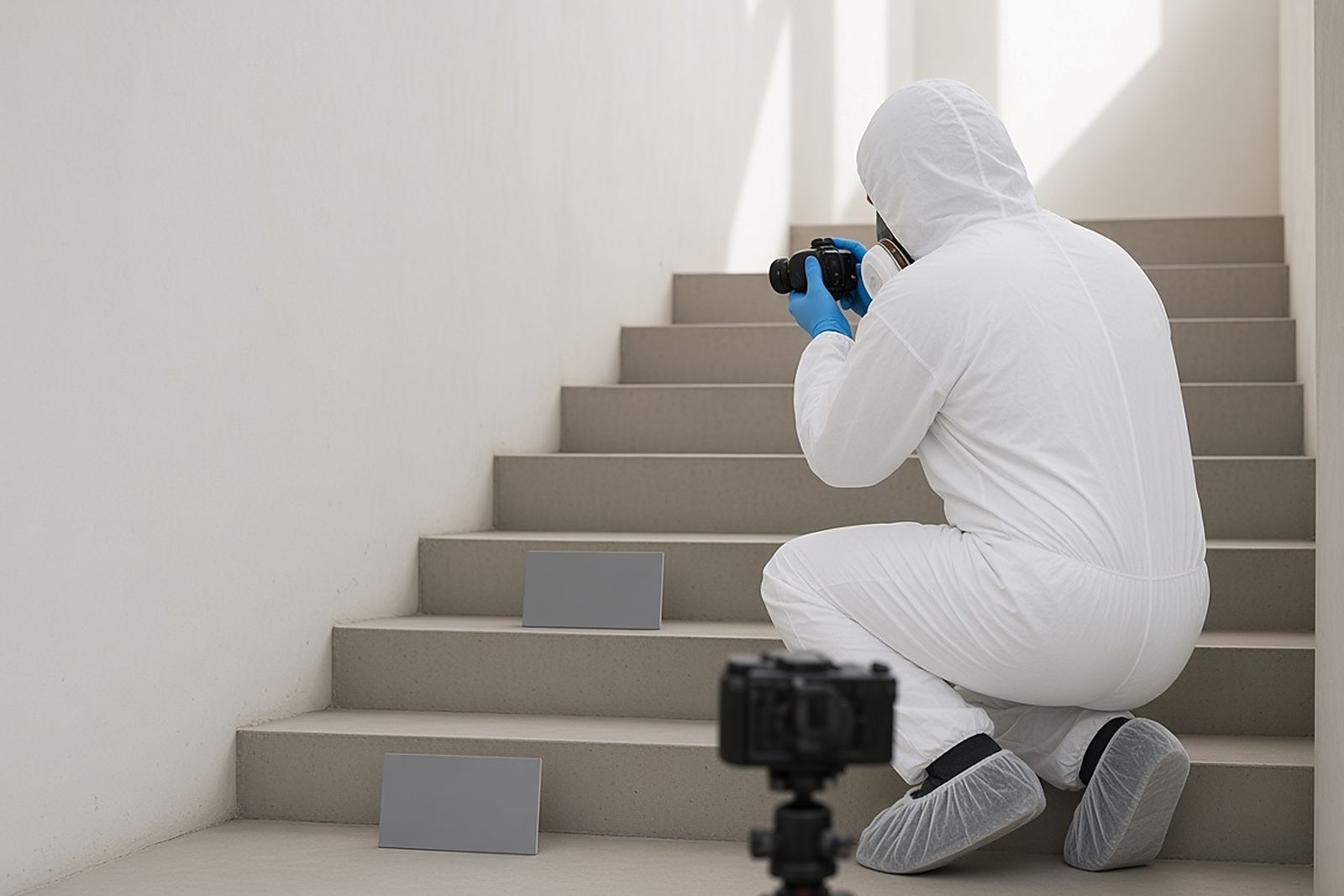
Ask how the company confirms that police have released the scene. Ask whether it asks for the agency name or case number. Ask what the crew does if it finds something that might matter to the case. Examples are a phone, a bullet piece in drywall or papers tucked behind furniture. A professional answer is to stop and photograph the item where it is. Then the crew contacts the family or the detective before going on.
Also ask how photos and notes are stored and who can see them. If the case goes to trial, lawyers may ask about the condition of the property. Organized, private records protect the family. They also show that the company handled the scene responsibly.
Homicide scenes involving guns can also leave damage that is easy to miss, such as holes through drywall, furniture or doors. Crews trained for these jobs know to trace that damage carefully, because blood can follow the same path. Ask whether the company has handled scenes like this. Ask how it checks the far side of walls and cabinets.
Skills for working with grieving families
There is no government standard for this. But it may be the credential families notice most. People who have lost someone to homicide often say they feel exposed and powerless in the days that follow. A crew that speaks gently, explains each step and respects limits can ease that burden. A careless one can make it worse.
Ask whether workers get any training in speaking with people who have been through trauma. Ask how they respond if a family member arrives during work. Ask how they are prepared to answer questions without sharing graphic details. Ask whether there is one coordinator who will be the family's main contact.
Some families value a company that can refer them to local victim advocates or grief support. A company does not need to be a counselor. But knowing where to point people is a sign of maturity in this field.
It is fair to ask how the company supports its own workers, too. Staff who talk through hard jobs often and can get support tend to stay calm and alert on difficult jobs. A company that brushes off the question may not have thought about the toll this work takes. That can show in how its people behave inside your home.
Records to request before you sign
It helps to ask for a short set of papers all at once. That keeps the talk focused and lets you compare companies side by side. A well-run company will usually have these ready to send by email.
- Current proof of general liability and workers' compensation insurance
- A summary or copy of the written plan to limit exposure to bloodborne germs
- Proof of current training and respirator fit testing for the crew assigned to you
- Any state or county registration numbers for trauma scene or medical waste work
- The name of the licensed hauler or site that will receive regulated waste
- A sample final report packet with private details removed
What about state and local registrations?
Some states and counties regulate parts of this work. Examples are hauling and disposing of medical waste, or registering businesses that clean trauma scenes. Others have few specific rules. The details can also change over time.
A good place to start is your state health department or environmental agency. It can tell you whether a registration program exists and whether a certain company is listed.
If a company says it is registered, ask for the program name and number and look it up yourself. If it says no registration applies, ask how it knows. Think about confirming that with the agency. Either way, you will learn something about how carefully the company treats rules.
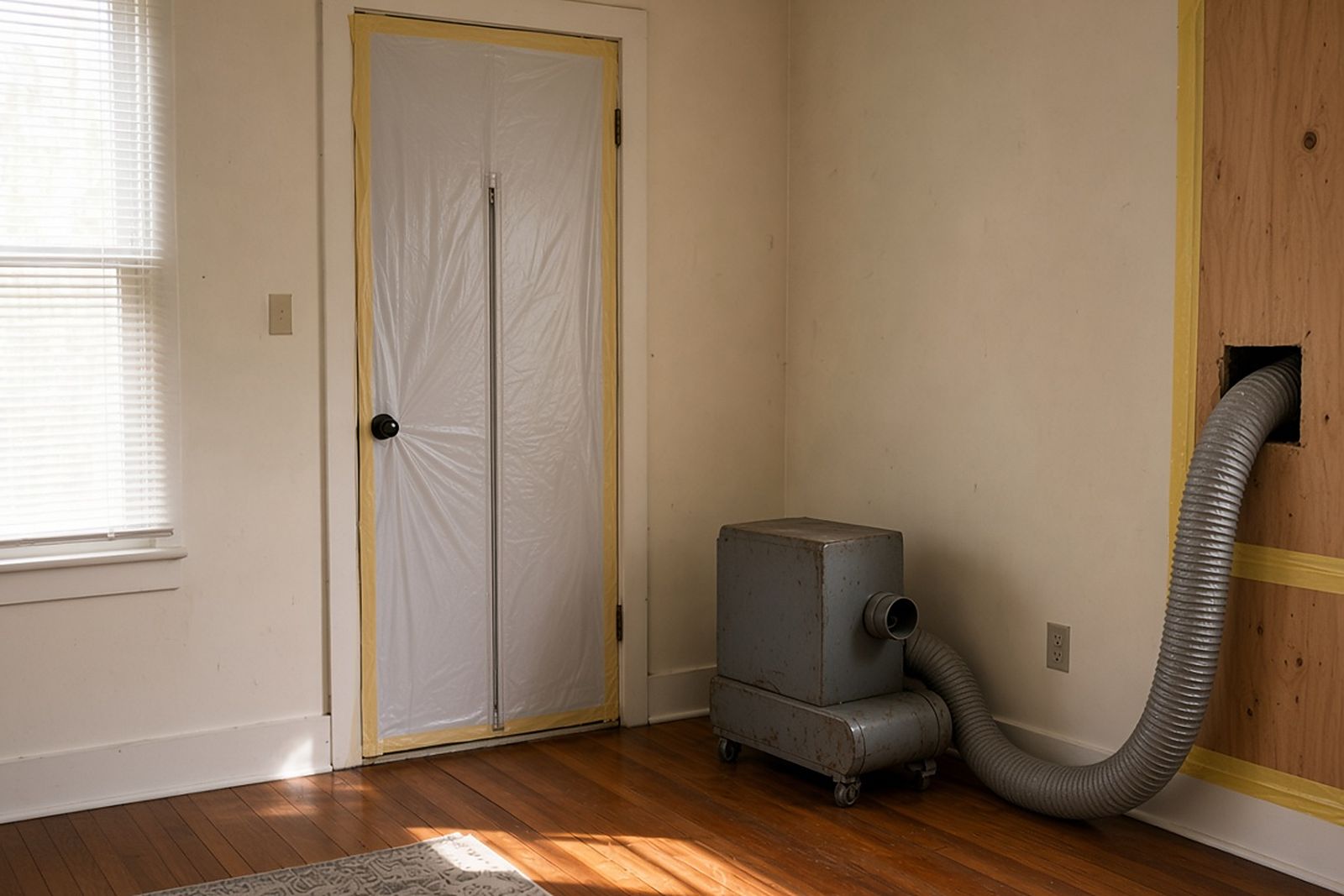
Keep in mind that local building departments may get involved if the cleanup means removing drywall, flooring or other parts of the building. Permits for repairs are separate from cleanup registration. A good company will tell you when that line is likely to be crossed.
Documentation for questions that come later
After a homicide, the property may be part of an insurance claim or a crime victim payment request. It may be sold, a lease may end or lawyers may have questions. In each case, clear records about the cleanup can spare the family stress.
A strong final packet usually includes the written scope of work and any approved changes. It has photos taken before, during and after key steps. It lists personal items saved or removed. It includes waste disposal papers and a summary of the final check. Some companies also include surface test results to back up what the eye can see.
Ask how long the company keeps job records and how you can ask for copies later. A company that treats records as an afterthought may not be able to help if a question comes up months after the crew leaves.
One request, three kinds of replies
A simple test works well. A friend or relative can run it while the family deals with detectives and funeral plans. Email the same list of requests to each company and compare what comes back.
Replies tend to sort themselves quickly. One company may answer with a paragraph about compassion but no papers. Another may send an insurance certificate with a different business name on it. A third may send current insurance certificates and a summary of its exposure plan. It may confirm that the assigned crew finished training and fit testing this year. It may also name its waste hauler and send a sample final packet.
A short follow-up call can confirm the rest. For example, will the crew pause and call the detective if it finds anything unexpected? The packet the chosen company hands over at the end is the one the family may later share with a victim payment program or a buyer.
Can a company be well credentialed and still be the wrong choice?
Yes. Papers tell you whether a company meets important standards. They do not tell you whether its people will treat your family with patience. They do not show whether it talks clearly or respects your privacy. Pay attention to how you feel after each talk.
The right company pairs skills you can check with steady, kind behavior. It will not rush you. It will not ask about the crime beyond what the work needs. It will be glad to show its records. If you find a company like that, you have found one worth trusting with a home that holds so much meaning.